









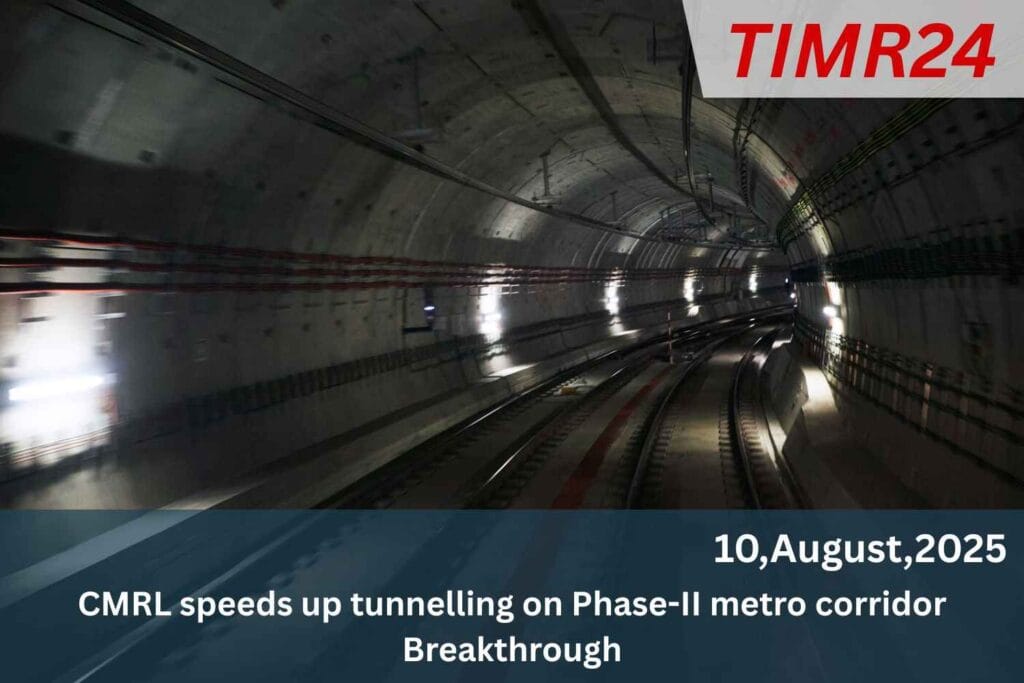
Tunnelling operations have begun in key urban areas from Chet pet to Nungambakkam, with a tunnel boring machine (TBM) being transported to the Chet pet metro station site. The TBM will construct a twin tunnel beneath the Sterling Road junction, covering 850m. Phase-2 of the project, covering 118.1km, is expected to be completed by 2028. Excavation work at the Chet pet metro station site has been completed, and a base slab has been constructed. The tunnels will be constructed at a depth of 22m in Chet pet and gradually reduce to 15m as they progress towards the Sterling Road junction.
1. Overview of CMRL Phase-II Metro Corridor
The Chennai Metro Rail Limited (CMRL) has recently announced a significant acceleration in the tunnelling works on the Phase-II metro corridor. This breakthrough development marks a crucial step toward enhancing urban mobility in Chennai, addressing the city’s growing transport demands, and facilitating seamless connectivity across key areas. The Phase-II project of Chennai Metro is an ambitious expansion plan designed to extend the existing network and cover more parts of the city. The corridor includes multiple new routes aimed at decongesting roads, reducing travel time, and offering commuters a reliable public transport option. With several kilometres of underground and elevated tracks, the project requires advanced. (Chennai Metro Rail)
2. Significance of Accelerated Tunnelling
tunnelling techniques to navigate through Chennai’s dense urban environment. The acceleration in tunnelling work is expected to fast-track the overall project timeline and improve readiness for upcoming phases. Tunnelling is a critical phase in metro construction, especially for underground corridors that need precise engineering and safety protocols. By speeding up this process, CMRL aims to:
- Reduce the overall project duration
- Minimize disruptions on surface traffic
- Expedite testing and commissioning of metro lines
- Faster tunnelling also reflects the efficient use of technology such as Tunnel Boring Machines (TBMs), enhanced workforce management, and streamlined project coordination.
3. Technological Innovations in Tunnelling
CMRL employs state-of-the-art TBMs that ensure smooth excavation while maintaining structural integrity around tunnels. These machines are capable of cutting through diverse soil conditions, ensuring safety and stability. Additionally, continuous monitoring through sensors and real-time data analytics helps engineers detect any ground movement, enabling timely interventions and reducing risks. This technological edge is a key factor behind the accelerated tunnelling pace.
4. Impact on Commuters and Urban Development
Once completed, the Phase-II metro corridors will connect vital commercial, residential, and industrial zones. This improved connectivity will:
- Provide a faster, comfortable alternative to road travel
- Reduce traffic congestion and vehicular pollution
- Spur economic activities around metro stations through transit-oriented development
- The metro expansion also aligns with Chennai’s vision to become a smart city with efficient infrastructure and sustainable urban transport.
5. Project Timeline and Milestones
The accelerated tunnelling is part of a broader effort to meet project deadlines set by the government and urban planners. According to recent updates
- Tunnelling is expected to complete several months ahead of the initial schedule
- Subsequent phases such as track laying, signaling, and station finishing will begin earlier
- Full operationalization of the new corridors is targeted within the next few years.
6. Challenges and Solutions
Tunnelling in Chennai poses challenges such as:
- Navigating through water-logged and soft soil areas
- Avoiding damage to existing underground utilities and infrastructure
- Ensuring minimal disturbance to daily city life
- CMRL has addressed these by using specialized equipment, conducting detailed geological surveys, and implementing strict safety protocols. Coordination with local authorities ensures smooth handling of logistical challenges.
7. Environmental and Safety Considerations
CMRL emphasizes minimizing the environmental footprint during construction. Measures include:
- Managing debris and spoil from tunnelling responsibly
- Using eco-friendly construction practices
- Ensuring safety of workers and surrounding communities through rigorous training and monitoring
8. Future Prospects and Expansion
The success of Phase-II tunnelling acceleration sets a positive precedent for future metro projects in Chennai and other Indian cities. It demonstrates how efficient project management and technology adoption can transform urban transit development. CMRL continues to explore new corridors and extensions, aiming to build a comprehensive metro network that meets Chennai’s future mobility needs (Smart City).
q1. What is the recent breakthrough in CMRL’s Phase-II metro corridor?
CMRL has accelerated tunnelling work, achieving significant progress ahead of schedule on the Phase-II metro corridor.
q2. How does speeding up tunnelling benefit the metro project?
Faster tunnelling reduces overall construction time, helping the metro become operational sooner and easing urban traffic faster.
q3. Which areas are covered under the Phase-II metro corridor?
Phase-II covers several new stretches expanding the existing network, connecting key parts of the city to improve connectivity.
q4. What technologies or methods are being used to speed up tunnelling?
Advanced Tunnel Boring Machines (TBMs) and optimized engineering techniques are used to enhance the tunnelling speed safely.
q5. When is the expected completion date for the Phase-II corridor?
With the accelerated tunnelling, Phase-II is projected to be completed earlier than originally planned, though official dates depend on overall project progress.