





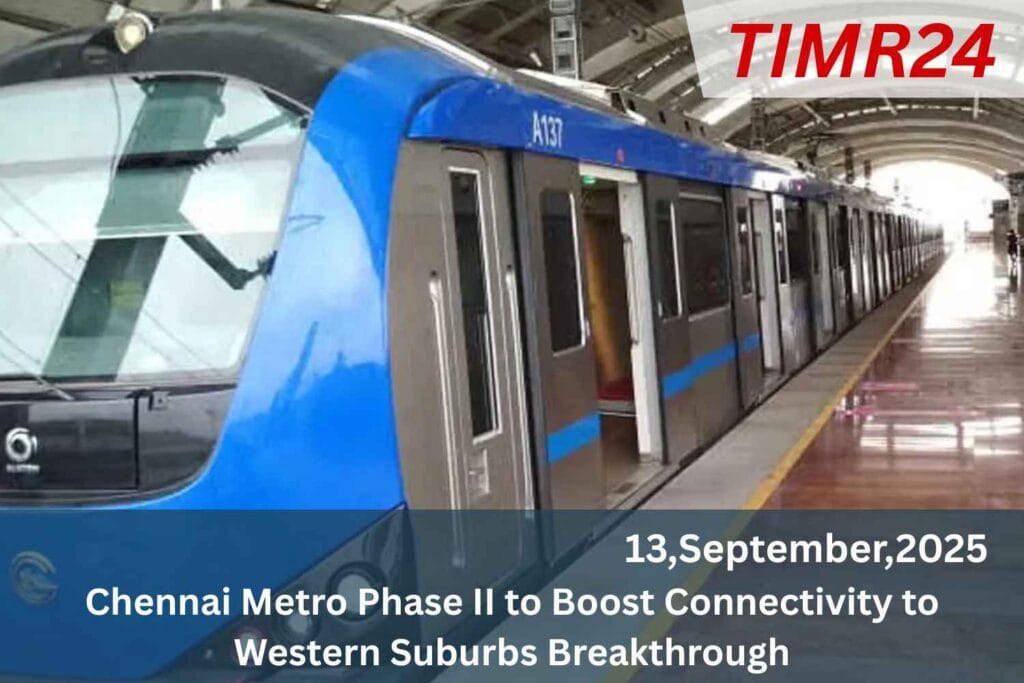
Chennai Metro Rail Limited (CMRL) plans to extend the Phase II corridor from Koyambedu to Pattabiram by 2030, integrating three state highway flyovers and a new multi-modal transit hub at Avadi. The 22 km project is part of the Rs 632.46 billion Phase II initiative, funded by central and state allocations and multilateral loans. The extension aims to improve connectivity to areas heavily reliant on suburban rail, offering direct metro access to Chennai Central, Egmore, and the airport via the Koyambedu interchange. The Chennai Metro Phase II expansion has emerged as one of the most ambitious urban transport projects in India, designed to reshape the way.
The city moves and grows. Building on the success of Phase I, this new expansion extends deeper into suburban regions, with a special focus on the western corridors, where the population is rapidly rising, businesses are flourishing, and real estate is witnessing steady demand. By adding close to 118.9 kilometres of metro network and introducing 128 new stations, Chennai is preparing itself for a future where public transport becomes the backbone of city life. Unlike the earlier phase, which largely served the core areas, Phase II pushes the boundaries outward, bringing distant suburbs such as Porur and Poonamallee much closer to the city center.
Transformation of Western Suburbs
For years, the western suburbs of Chennai have played the role of feeder regions for the urban core. With thousands of residents traveling daily from areas like Porur, Poonamallee, Koyambedu, and Madhavaram, the dependence on buses, autos, and private vehicles created significant congestion on arterial roads such as Mount–Poonamallee Road and Arcot Road. Travel time during peak hours often stretched to over an hour for even short distances, impacting productivity and lifestyle. The arrival of Phase II, however, is expected to transform this scenario by ensuring seamless connectivity from the suburbs directly into the heart of Chennai. For instance, commuters from
Poonamallee will soon be able to reach central hubs like CMBT or Anna Salai in significantly reduced time, cutting the daily struggle in half (Metro Rail) Infrastructure and economic growth often go hand in hand, and the Chennai Metro Phase II project is no exception. As soon as construction began, the real estate market around proposed metro corridors started buzzing with activity. Developers announced residential and commercial projects targeting middle-class families and IT professionals seeking affordable housing with easy access to the city. Locations like Porur, already known for its IT parks and hospitals, are expected to see rising property values once.
The metro becomes operational. Similarly, Poonamallee, once considered too distant for convenient living, is transforming into a hub of modern apartments, schools, and retail outlets. This follows a trend already witnessed in Delhi and Bengaluru, where metro connectivity directly pushed up land values and spurred rapid commercial development While economic growth is a significant benefit, the social impact of Phase II is equally important. Reduced commute times mean that professionals and students will have more time for personal growth, family, and leisure. Women in particular will benefit from the safe, air-conditioned, and reliable travel option, which reduces.
Sustainable Urban Mobility
Dependence on crowded buses or unsafe late-night cabs. The metro also improves access to healthcare institutions, making it easier for suburban residents to reach super-specialty hospitals in central Chennai. Education hubs such as Anna University and Loyola College will also become more accessible for students coming from the outskirts, ensuring equal opportunities for all. The project also contributes heavily to sustainability goals. Traffic congestion and rising vehicle ownership have long been pressing issues for Chennai, contributing to pollution and health hazards. By offering a reliable alternative to cars and bikes, the metro is expected to reduce thousands of vehicles from.
The road daily. The result will be a noticeable drop in fuel consumption, carbon emissions, and road accidents. The metro trains are designed with energy-efficient systems, regenerative braking, and modern signaling technology, further cementing the city’s move toward sustainable urban mobility. This aligns closely with India’s National Urban Transport Policy, which encourages cities to adopt eco-friendly and inclusive mobility solutions A mega project of this scale requires substantial financial backing, and Chennai Metro Phase II has secured strong international support. Agencies such as Japan International Cooperation Agency (JICA) and the Asian Development Bank (ADB).
Integration with Existing Transport Systems
Have extended loans and expertise to ensure smooth execution. JICA, which has supported metro projects across India, brings not just funding but also technical know-how, ensuring global standards in design and safety. This backing guarantees that construction deadlines are met without compromising on quality, and commuters can expect state-of-the-art facilities when the corridors begin operations. One of the most crucial aspects of the expansion is its integration with the existing metro network, bus services, and suburban rail lines. By ensuring smooth interchange points, Phase II will allow passengers to seamlessly switch between different modes of travel. For example.
Passengers boarding at Madhavaram will have the option to transfer directly to corridors leading to Anna Salai or to the city’s airport. Such connectivity reduces the need for private cabs and autos, further improving affordability and convenience for the average commuter Chennai is increasingly becoming a global business hub, with IT companies, manufacturing firms, and service industries setting up offices across the city. The western suburbs, in particular, house several IT parks, industrial units, and logistics facilities. Phase II will give a major boost to work culture by improving access to employment centers. Reduced travel stress ensures higher productivity at work, while.
Companies will also find it easier to attract talent from across the city. At the same time, lifestyle options such as shopping malls, entertainment zones, and restaurants will thrive near metro stations, offering suburban residents the same level of convenience as those living in central Chennai. Looking ahead, the Chennai Metro Phase II project represents far more than just new trains or extended lines. It symbolizes a shift in how cities like Chennai adapt to the challenges of urbanization. By decongesting roads, promoting eco-friendly travel, boosting real estate growth, and improving overall quality of life, this expansion sets a benchmark for other Indian cities aiming for balanced.
Growth The western suburbs, once considered too far from the city’s pulse, will soon emerge as vibrant, self-sustained hubs with their own economic and social identity. The Chennai Metro Phase II expansion is not just an infrastructure project it is a promise of transformation. For residents of the western suburbs, it offers the assurance of faster, safer, and greener travel. For the economy, it unlocks new potential in real estate, (CMRL) commerce, and employment. For the environment, it brings a step closer to sustainability. Most importantly, it redefines Chennai’s identity as a modern metropolis ready to embrace the challenges of the future.
Q1 When will Chennai Metro Phase II be completed?
The project is expected to be completed in stages between 2025 and 2028.
Q2 Which areas in the western suburbs will benefit the most?
Key areas include Porur, Poonamallee, Koyambedu, and Madhavaram.
Q3 How will this metro expansion reduce traffic congestion?
By offering a fast, reliable, and eco-friendly public transport option, reducing dependency on private vehicles.
Q4 Is international funding involved in Chennai Metro Phase II?
Yes, funding support comes from international agencies like JICA and ADB.
Q5 Will this project boost real estate development?
Yes, property values and commercial growth around metro stations are expected to rise significantly.