














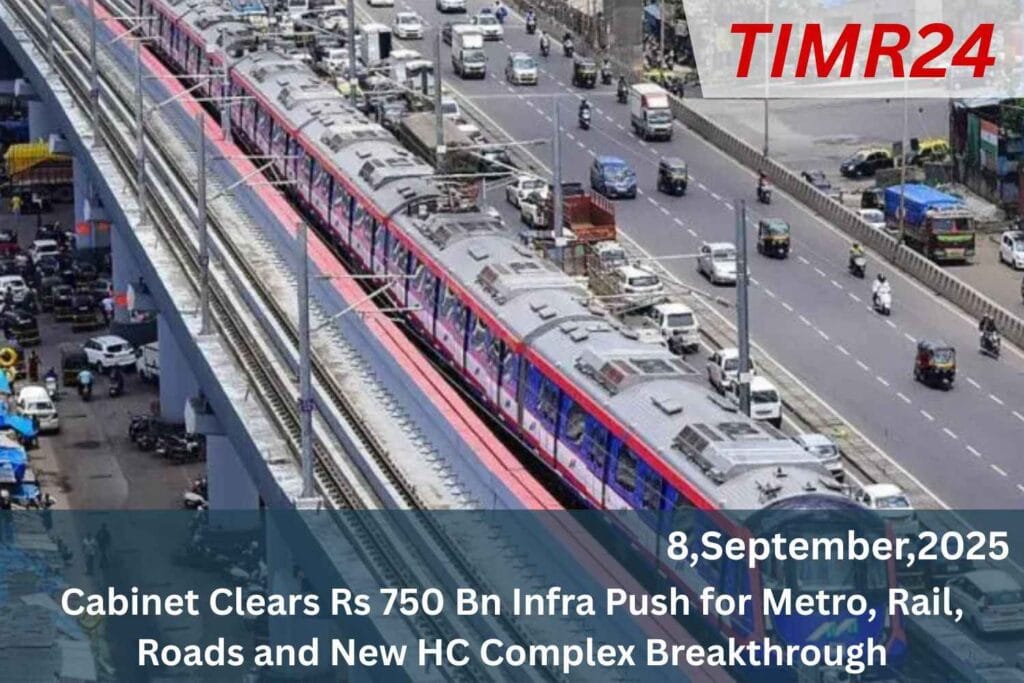
The Maharashtra cabinet has approved infrastructure projects worth nearly Rs 750 billion, including metro rail, suburban rail, roads, an international business hub in Nagpur, and a new Bombay High Court complex in Mumbai. Key approvals include 238 air-conditioned Mumbai suburban trains. India’s infrastructure story entered a new chapter when the Union Cabinet approved an ambitious ₹750 billion investment package covering metro rail networks, national railway upgrades, highways, and even the construction of a state-of-the-art High Court complex. This decision is not just about adding concrete and steel to the nation’s landscape, but about knitting together a more.
Connected, efficient, and fair society. By addressing urban congestion, inter-state mobility, and judicial accessibility in one integrated vision, the government is signaling that infrastructure is about more than transport it’s about the daily functioning of a growing economy and the aspirations of its citizens Metro projects have long been symbols of urban modernity, and with fresh allocations, new corridors are set to emerge in cities that are struggling with vehicular congestion and air pollution. The expansion is expected to benefit both Tier-1 metros like Delhi and Bengaluru as well as Tier-2 cities such as Lucknow and Indore, where rising populations demand sustainable transport solutions.
A stronger metro network means shorter commutes, cleaner air, and easier integration with other transport systems. If you’ve followed the recent (MMRDA) you can see how this investment ties into larger regional transit plans, improving not just mobility but also urban housing markets, real estate, and business hubs that spring up around metro corridors. Readers can also explore updates at the parallels in successful execution.
Railways Modernization and the Green Transition
Parallel to metro growth, Indian Railways will receive significant upgrades through electrification, smart signaling, and high-speed rail corridors. The government has made it clear that this push aligns with its Gati Shakti National Master Plan and the vision of carbon-neutral railways by 2030. With ₹750 billion being split across multiple sectors, the railways stand to gain technologically advanced rolling stock, automated traffic management, and better passenger services. For instance, investments are expected to build on the progress already seen in semi-high-speed trains like Vande Bharat Express, which has reduced travel times drastically across many routes.
More information on such long-term strategies can be found at where the government outlines its modernization mission. On a more practical level, these upgrades promise to ease freight bottlenecks and make rail more competitive against road haulage, thus lowering logistics costs for industries Road development remains a backbone of India’s transport policy, and the Cabinet’s decision ensures that highways and expressways continue to receive strong financial backing. Under the broader new corridors are being designed to connect manufacturing clusters, agricultural markets, and border regions with major ports and airports. This is not just about smoother road travel.
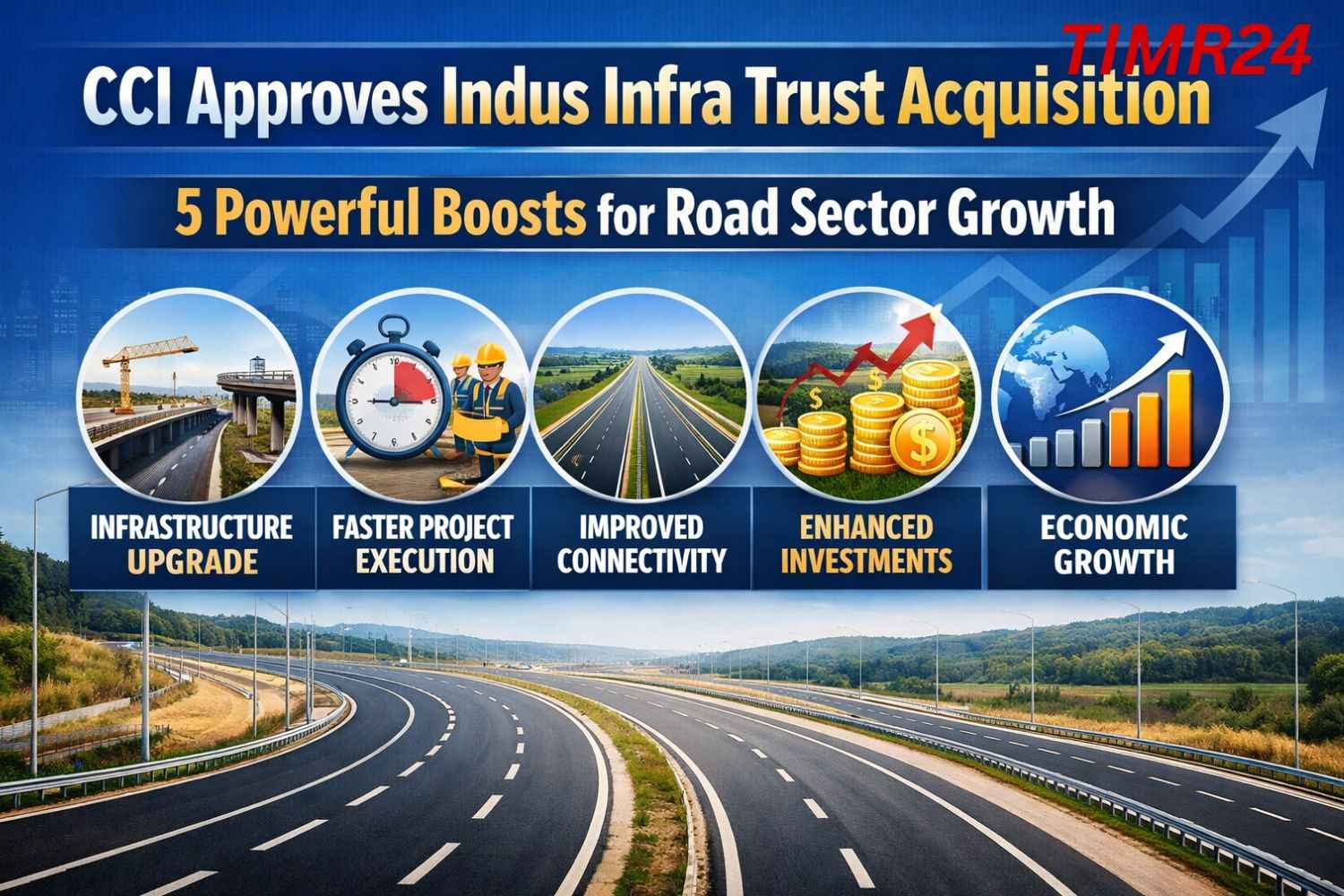
But about integrating the economy into a more seamless logistical network. The ₹750 billion infusion will also accelerate projects under the National Highways Authority of India, where expressway upgrades, four-lane expansions, and bypass construction reduce bottlenecks that currently add hours to truck journeys. For those tracking state-level updates, our coverage on (NH-965 Projects) shows how central funding directly benefits regional economies. The improved connectivity is also expected to support electric vehicle adoption, as highways get equipped with charging points and green rest stops.
Judicial Infrastructure and the High Court Complex
Perhaps the most unique aspect of the Cabinet clearance is the inclusion of a new High Court complex in the funding package. While transport infrastructure is often prioritized, judicial infrastructure has traditionally lagged, leading to overcrowded courts and delayed case hearings. This new complex, designed with smart digital facilities and eco-friendly architecture, will allow for speedier hearings, better case management, and improved accessibility for citizens. It aligns closely which is digitizing case records and enabling virtual hearings. By combining judicial reforms with physical infrastructure, the government is strengthening one of the pillars of democracy access to justice.
Our earlier piece on connects the dots between such initiatives and the larger modernization of India’s governance framework The multiplier effects of such a massive investment cannot be overstated. Construction activity alone is expected to generate thousands of jobs directly, with far more indirect opportunities in sectors like steel, cement, IT services, and real estate. For urban dwellers, improved metro systems mean less stress in daily commuting, and for businesses, faster rail and road connectivity reduces costs and expands markets. The judicial upgrades, meanwhile, promise a more predictable legal environment, which is vital for attracting both domestic and foreign investment.
Looking at Global Parallels
In addition, these projects carry environmental benefits metros and electrified railways help reduce carbon emissions, and smart highways are being designed with green corridors to balance development with sustainability. Globally, infrastructure investment is often viewed as a catalyst during times of economic transition. China’s urban transformation, for instance, has been underpinned by heavy investments in metro and rail systems Similarly, Europe’s reliance on integrated rail networks shows the benefits of coordinated long-term planning India’s latest step with ₹750 billion reflects similar ambition, while also being tailored to its unique demographic pressures and federal.
Structure By combining transport upgrades with judicial infrastructure, the package takes a holistic approach that few nations have attempted at such scale. The Cabinet’s decision to clear ₹750 billion in infrastructure projects is more than just a financial approval it is a strategic vision to reshape how people move, how goods are transported, and how justice is delivered. With metros extending deeper into cities, railways transitioning into modern, efficient networks, highways stitching the nation together, and courts entering the digital era, this is about preparing India not just for the next five years but for the next fifty. For those tracking India’s rise as an economic powerhouse.
Q1. What is the total investment cleared by the Cabinet?
The Cabinet approved a ₹750 billion investment for metro, rail, road projects, and a new High Court complex.
Q2. Which sectors will benefit from this infra push?
Urban metro expansion, national rail upgrades, highway development, and judicial infrastructure.
Q3. How will metro projects be impacted?
New metro lines will improve last-mile connectivity and reduce urban congestion.
Q4. Why is the High Court complex included in the package?
To modernize judicial infrastructure, speed up case handling, and provide advanced facilities.
Q5. What is the expected impact on the economy?
It will create jobs, boost connectivity, attract investments, and accelerate GDP growth.