






IST - Sunday, February 22, 2026 2:32 am
Hot News

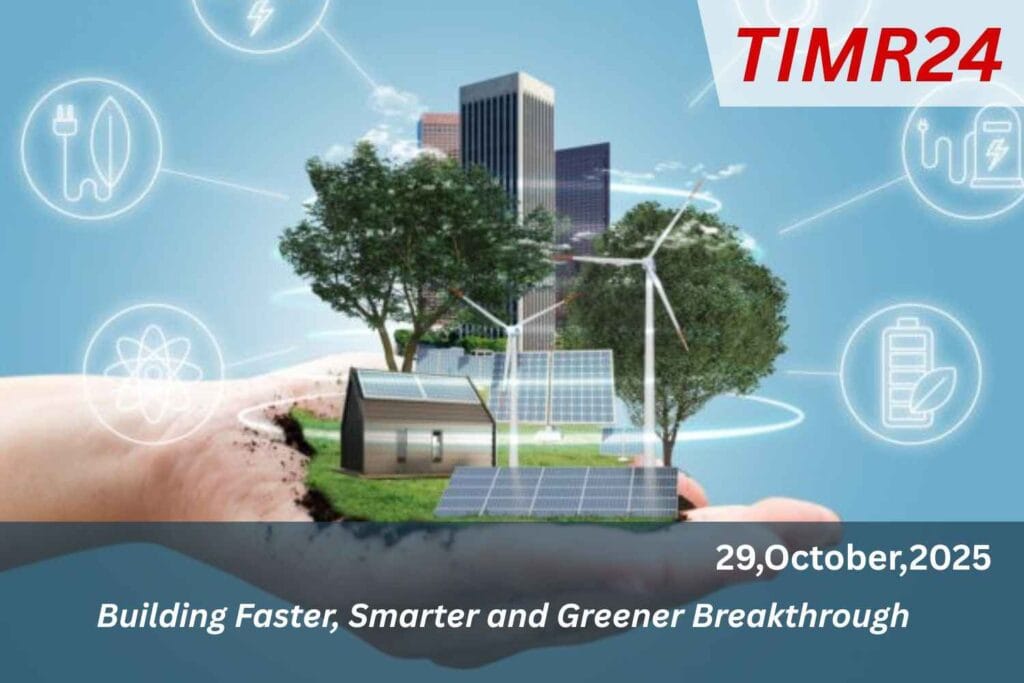
Building Faster, Smarter and Greener Breakthrough

Soniya Gupta

Updated on:

Building

U-Sphere, leveraging ULCCS’s legacy, focuses on speed, sustainability, and smart design to enhance construction efficiency in India. Director Rohit Prabhakar emphasizes the integrated model of ‘Speed-Build’, ‘Smart-Build’, and ‘Sustain-Build’. The company’s approach includes modern techniques like pre-engineered steel buildings, modular wall panels, and modular MEP systems, resulting in up to a 50% reduction in project duration without cost increases, while ensuring high quality through the use of technology such as BIM for precise planning and execution The world of construction is evolving at an unprecedented pace. As the demand for housing.

Infrastructure, and smart urban development continues to surge, builders, engineers, and governments are increasingly turning towards sustainable and technology-driven methods. The future of infrastructure lies in building faster, smarter, and greener (Real Estate Market) where speed meets intelligence and innovation aligns with sustainability. This modern approach not only accelerates construction timelines but also minimizes environmental impact while maximizing resource efficiency and quality Speed in construction no longer means compromising quality. The integration of advanced machinery, modular construction techniques, and 3D printing has enabled developers.

To build projects that once took years within months. Prefabrication where building components are made offsite and assembled on location has become a game-changer, reducing material waste and ensuring precision In India, major players such as are pioneering this shift through automation and robotics, achieving faster project delivery while maintaining world-class safety and efficiency. Large-scale infrastructure projects under the also reflect this transformation by using digital planning tools to synchronize efforts across ministries, ensuring time-bound execution of roadways, logistics parks, and industrial corridors.


Similarly, prefabricated homes and modular hospitals built during the pandemic proved how the sector can adapt quickly using new-age technology. These methods save nearly 30–50% of construction time while improving accuracy, sustainability, and quality assurance Smart construction is no longer a concept it’s a reality that defines the backbone of modern infrastructure. Through Building Information Modelling (BIM), Internet of Things (IoT), and AI-driven analytics, developers can monitor projects in real-time and predict challenges before they occur. Digital blueprints allow for seamless coordination between architects, engineers, and on-ground workers, enhancing transparency and decision-making.

For instance, employs AI and IoT solutions for predictive maintenance, ensuring minimal downtime and safety compliance. Drones are now widely used to survey sites, measure progress, and detect inefficiencies without human risk. This data-driven approach transforms (Worldgbc) construction sites into intelligent ecosystems that function with precision, collaboration, and foresight Moreover, digital project management systems have become integral for companies aiming to achieve smart execution. The exemplifies how technology and urban planning come together, using data integration and automated systems to develop cleaner.

Building Greener The Sustainability Revolution

Safer, and energy-efficient cities. These innovations ensure that India’s cities of tomorrow are not just modern but also sustainable and responsive to human needs Sustainability is the soul of modern construction. The global shift towards eco-friendly architecture stems from the urgent need to reduce carbon emissions and conserve natural resources. Builders are now embracing green materials, energy efficient systems, and renewable technologies to make construction more responsible and resilient Traditional materials like cement and steel are gradually being replaced or complemented by bamboo composites, fly ash concrete, and recycled aggregates.

Leading the charge by designing buildings that meet international environmental standards such as LEED (Leadership in Energy and Environmental Design) and IGBC (Indian Green Building Council) certifications. These projects include solar rooftops, rainwater harvesting, and intelligent lighting systems that significantly lower energy consumption The adoption of green cement made using industrial waste materials reduces emissions by up to 40%. Additionally, smart insulation and natural ventilation techniques are helping developers lower the carbon footprint of both residential and commercial structures. Energy-efficient designs are no longer optional.

They are the foundation of every future-ready building Government policies like the Energy Conservation Building Code (ECBC) and schemes under further strengthening this movement. Developers are also encouraged to use digital energy models that simulate performance before construction begins, ensuring that the final structure meets environmental goals from day one The real success of the construction revolution lies in merging smart technology with sustainability. Artificial intelligence and big data analytics now predict energy usage, optimize resource allocation, and minimize waste generation.

IoT-enabled systems in modern buildings monitor air quality, temperature, and energy consumption, making them self-regulating and eco-efficient For instance enabling homes and industries to shift toward renewable energy sources. Meanwhile providing developers with green financing options, ensuring that sustainability becomes financially viable too The focus is shifting from mere construction to creating smart ecosystems buildings that communicate, self-correct, and adapt. This technology-human synergy is transforming urban living, promoting both environmental well-being and economic growth.

To understand how large-scale coordination enhances execution speed, you can explore our related article  which showcases how inter-ministerial planning improves construction timelines and project accuracy, mirroring trends in green construction. Similarly demonstrates how digital logistics can manage massive operations, much like AI’s role in sustainable infrastructure With digital transformation, sustainable practices, and collective responsibility, we are constructing a new world that stands tall not only in concrete and steel but also in harmony and purpose.

Real estate giants across India are adapting to the “Faster, Smarter, Greener” philosophy. Developers such as Godrej, DLF, and Tata Realty are not only adopting environmentally conscious methods but are also leveraging advanced tech to reduce delays and enhance customer trust. Their commitment to zero-waste construction, recyclable materials, and smart homes with energy automation systems makes them pioneers in modern infrastructure Government-backed initiatives and private partnerships are also accelerating this change. The synergy between innovation, funding, and green policy ensures that India’s construction sector becomes a model for sustainable growth globally.

Shaping the Future of Urban Living

As urban populations grow and climate challenges intensify, the importance of sustainable and intelligent construction has never been greater. The future city will be an integrated entity powered by renewable energy, managed by AI, and designed with people and the planet at its core. This transformation is already visible in projects integrating eco-parks, smart grids, green mobility, and carbon-neutral buildings To stay updated on international sustainability frameworks, developers and architects can refer to the which provides global benchmarks for achieving net-zero carbon targets The vision for tomorrow’s.

Infrastructure is simple yet powerful to build efficiently, intelligently, and responsibly. Each project should contribute to reducing emissions, conserving energy, and enhancing the quality of life. As more stakeholders embrace these principles, the construction industry will evolve into one that doesn’t just build structures, but builds a better future for generations to come The journey towards building faster, smarter, and greener marks a significant leap forward for humanity. It’s about merging innovation with conscience where speed doesn’t mean recklessness, intelligence doesn’t ignore the environment, and growth doesn’t come at nature’s expense.

Q1. What does “Building Faster, Smarter, and Greener” mean?
It refers to using advanced technology, automation, and sustainable materials to improve speed, efficiency, and environmental performance in construction.

Q2. How does technology make construction faster?
Tools like 3D printing, modular construction, and AI-driven project management reduce time and labor while improving precision.

Q3. What are examples of smart construction technologies?
BIM (Building Information Modelling), IoT-based sensors, drones, and AI-driven planning software.

Q4. Why is green construction important for the environment?
It reduces carbon emissions, minimizes waste, and promotes energy-efficient designs for long-term environmental health.

Q5. Which companies are leading sustainable construction in India?
L&T, Tata Projects, Godrej Properties, and DLF are among the top developers promoting green and digital infrastructure.