
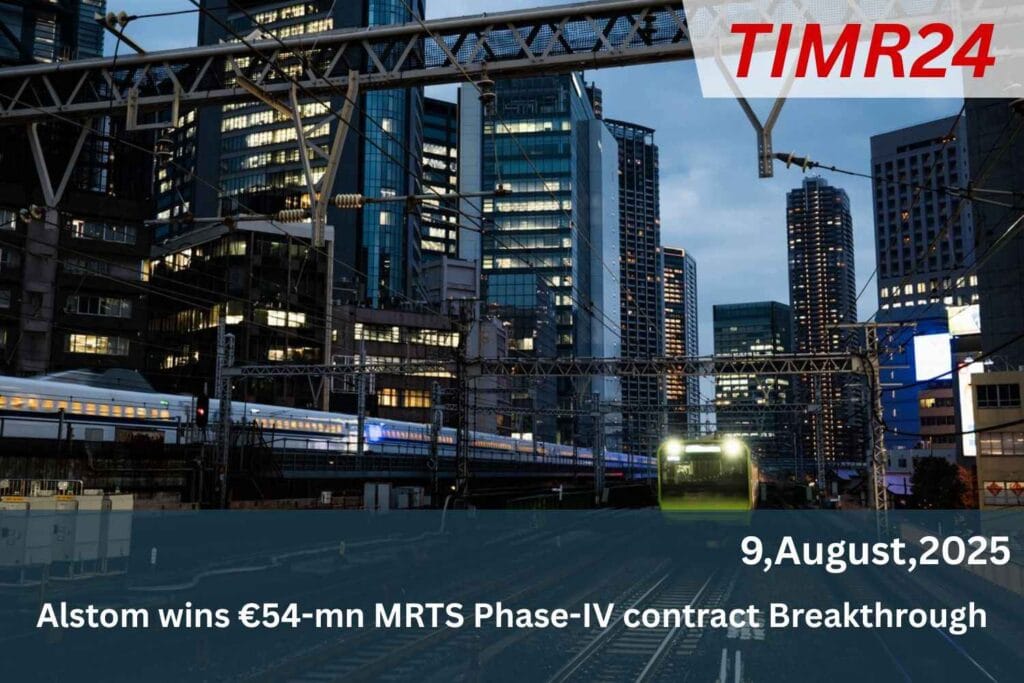
Alstom has secured €54 million contracts for train-control and signalling solutions for Delhi MRTS Phase-IV expansion. The contracts cover the metro line from Mukundpur to Maujpur and Aerocity to Tughlakabad Corridor. Alstom’s scalable communications-Based train control solutions will reduce energy consumption. French rolling stock manufacturer Alstom has been awarded a €54-million (approx. ₹480 crore) contract to supply state-of-the-art rolling stock and associated systems for the Mass Rapid Transit System (MRTS) Phase-IV project. This contract reinforces Alstom’s strong presence in India’s rapidly expanding urban transport sector and aligns with the government’s vision of enhancing metro connectivity.
Project Overview
The MRTS Phase-IV expansion aims to extend the existing metro network to underserved areas, improving connectivity, reducing travel time, and promoting sustainable urban mobility. The project is expected to cater to a significant daily ridership, easing congestion on city roads and cutting down vehicular emissions. You can read more about similar urban infrastructure developments in our (Metro Projects) Under this contract, Alstom will design, manufacture, supply, test, and commission advanced metro trainsets equipped with cutting-edge technology. The trains will be produced at Alstom’s manufacturing facility in India, supporting the Make in India initiative and generating local employment opportunities. For details on Alstom’s previous contributions.
Technological Advancements
The new trainsets will feature modern propulsion systems, energy-efficient designs, regenerative braking, and passenger-friendly amenities such as improved seating, digital passenger information systems, and enhanced safety measures. These upgrades are consistent with global standards and are intended to offer a world-class commuting experience. (Urban Transport). India’s metro systems. MRTS Phase-IV will integrate with existing metro corridors, providing seamless interchanges and expanding the reach of public transport. This connectivity will not only facilitate smoother daily commutes but also encourage more people to shift from private to public transport, contributing to reduced traffic congestion and lower carbon footprints. More about integration.
Economic and Social Benefits
The project is expected to boost local economies by improving accessibility to business hubs, educational institutions, and residential zones. It will also create thousands of direct and indirect jobs during the construction, manufacturing, and operational phases. Alstom’s involvement aligns with India’s push for sustainable infrastructure. The trains’ energy-saving features will help reduce operational costs and carbon emissions, supporting the National Electric Mobility Mission Plan. With construction and manufacturing activities set to commence shortly, the MRTS Phase-IV project will mark another milestone in India’s journey towards efficient, eco-friendly, and integrated public transport. The project is projected to be completed within the next few years, promising significant long-term benefits for commuters and the environment.
Aligned with India’s climate goals, Alstom’s trains will feature energy-saving technologies that reduce carbon emissions and operational costs. The project contributes to India’s National Electric Mobility Mission Plan, emphasizing sustainable transport solutions. For insights into sustainable urban transport policies, The MRTS Phase-IV contract is a key milestone in India’s quest for modern, eco-friendly metro systems. Construction and manufacturing are expected to begin soon, with completion aimed within a few years, delivering long-lasting benefits to commuters and the environment alike.
Q1. What is the value of the contract Alstom won for MRTS Phase-IV?
Alstom secured a contract worth €54 million (approximately ₹480 crore) to supply metro trainsets and related systems for the MRTS Phase-IV expansion project.
Q2. What role will Alstom play in the MRTS Phase-IV project?
Alstom will design, manufacture, supply, test, and commission advanced metro trains equipped with modern technology, with manufacturing taking place in India, supporting the Make in India initiative.
Q3. How will the MRTS Phase-IV project benefit commuters?
The project will extend metro connectivity, reduce travel time, ease traffic congestion, and offer safer, more comfortable, and energy-efficient train services to daily passengers.
Q4. What technological features will the new trains include?
The trains will feature energy-efficient propulsion systems, regenerative braking, digital passenger information systems, improved safety measures, and enhanced passenger comfort amenities.
Q5. How does this project contribute to sustainability goals?
Alstom’s energy-saving technologies in the trains will lower carbon emissions and operational costs, aligning with India’s sustainable urban transport and electric mobility initiatives.