











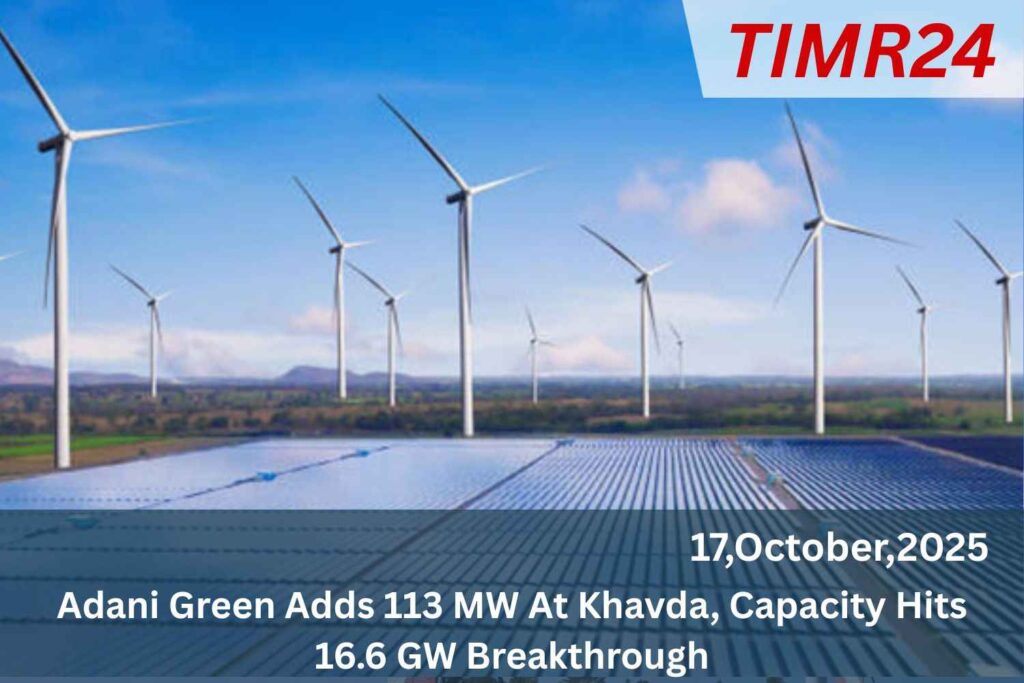
Adani Green Energy Limited (AGEL) has operationalized 112.5 MW of renewable power projects in Khavda, Gujarat, increasing its total generation capacity to 16,598.6 MW. The company’s subsidiary, Adani Renewable Energy Fifty Six Limited, has commissioned a solar project and a hybrid project. AGEL’s total operational renewable capacity now stands at 16.6 GW. Adani Green Energy Limited (AGEL), one of India’s most prominent renewable energy developers, has once again demonstrated its leadership in the clean energy sector by adding 113 megawatts (MW) of solar capacity at its massive Khavda Renewable Energy Park in Gujarat. This strategic addition has pushed.
The company’s total operational capacity to an impressive 16.6 gigawatts (GW), reaffirming its dominance in the renewable power landscape. The expansion marks a significant step forward in Adani Green’s mission to achieve large-scale green energy generation, supporting both India’s Net Zero 2070 goals and global sustainability targets The Khavda Renewable Energy Park, located in the Rann of Kutch, Gujarat, is emerging as one of the world’s largest renewable energy installations. Adani Green’s decision to expand capacity here reflects the site’s exceptional solar and wind potential. The vast arid land and high solar irradiation make Khavda ideal for hybrid energy projects.
That combine both solar and wind generation. The newly commissioned 113 MW will not only strengthen Adani’s operational base but also contribute significantly to India’s clean energy grid This project aligns with Adani Green’s commitment to develop up to 30 GW of renewable capacity in Khavda alone, (Adani Green’s) as part of a long-term goal to transform India into a global renewable energy powerhouse. The site’s design ensures continuous energy generation throughout the year, leveraging hybrid models for 24×7 power supply a major shift in India’s renewable infrastructure planning.
Adani Green’s National Impact: Building Toward 45 GW by 2030
The addition at Khavda is a part of Adani Green’s broader mission to achieve 45 GW of renewable capacity by 2030. With 16.6 GW already operational, the company has become one of the fastest-growing renewable firms globally. Adani Green’s portfolio spans multiple states including Rajasthan, Tamil Nadu, Karnataka, Andhra Pradesh, and Gujarat with a mix of solar, wind, and hybrid projects India’s commitment to clean energy, backed by initiatives like the National Solar Mission and Green Hydrogen Policy, creates an enabling environment for private players like Adani to lead the transition. By steadily expanding capacity, Adani Green is not only reducing India’s dependence.
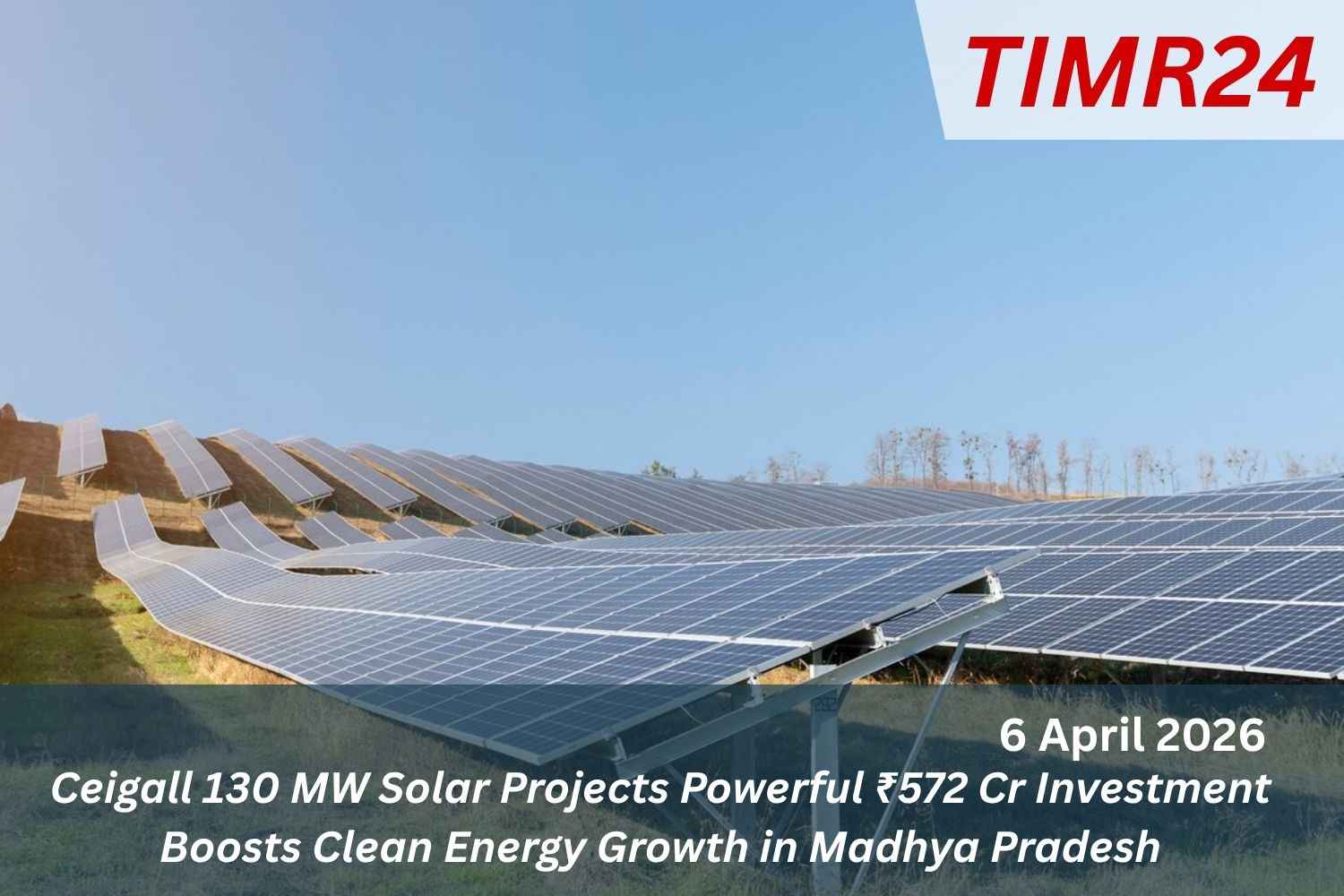
On fossil fuels but also supporting the country’s ambition (Solar) to reach 500 GW of renewable capacity by 2030 The Khavda solar facility uses cutting-edge photovoltaic technology, advanced module tracking systems, and AI-enabled monitoring tools. These systems optimize sunlight capture and energy conversion, increasing efficiency even under fluctuating weather conditions. The project’s digital infrastructure allows real-time tracking, predictive maintenance, and drone-based inspections to ensure uninterrupted power generation Adani Green’s approach to smart project management is not just about scale but also about integrating data analytics.
Economic and Environmental Impact
Automation, and sustainability metrics into every operational process. This technological infusion helps minimize losses, reduce costs, and maintain long-term performance stability, setting new industry benchmarks. The Khavda project is contributing immensely to local and national economies. The construction and operation phases have generated thousands of employment opportunities for nearby villages in Gujarat, helping uplift local communities and strengthen rural development. Alongside jobs, Adani’s renewable facilities also enhance local infrastructure, providing roads, electricity, and water access to remote desert areas From an environmental perspective.
Every megawatt of clean power generated helps displace carbon-intensive energy sources. The 113 MW addition alone is expected to offset millions of tons of carbon dioxide emissions annually, aligning with India’s pledge to reach Net Zero by 2070. By replacing coal-based generation with solar and wind energy, Adani Green is helping to lower India’s carbon intensity while maintaining economic growth Adani Green Energy has been consistently recognized for its commitment to Environmental, Social, and Governance (ESG) principles. The company’s sustainability strategy revolves around transparent reporting, community engagement, and responsible resource use.
Its long-term partnerships with global investors and institutions demonstrate confidence in Adani’s governance model and project execution capabilities In recent years, AGEL has received global acknowledgment for aligning its operations with the UN Sustainable Development Goals (SDGs). Through sustainable sourcing, biodiversity protection, and renewable innovation, Adani Green continues to solidify its position as a leader in responsible energy transition.
India’s Renewable Transformation and Khavda’s Role
The success of the Khavda project underscores India’s transformation from a fossil fuel dependent economy to a clean energy-driven powerhouse. Gujarat, known for its industrial and renewable innovation, is rapidly becoming a focal point of this transformation. Projects like Khavda serve as catalysts for other renewable developments across India, inspiring public and private investments in green infrastructure Adani Green’s rapid execution and operational excellence are pushing India closer to energy self-sufficiency. Moreover, by integrating hybrid renewable systems and energy storage solutions, the company is addressing the long-standing issue of grid reliability ensuring.
That renewable power is available even during non-sunny or low-wind periods Automation, and sustainability metrics into every operational process. This technological infusion helps minimize losses, reduce costs, and maintain long-term performance stability, setting new industry benchmarks Looking ahead, Adani Green’s focus will remain on scaling operations, strengthening energy storage systems, and investing in green hydrogen and battery technologies. The company’s future roadmap emphasizes sustainability through diversification moving from pure solar and wind to integrated renewable ecosystems.
With each new capacity addition, such as the recent 113 MW at Khavda, Adani Green reinforces its goal of contributing meaningfully to the global renewable transition. The upcoming phases of Khavda, along with other major renewable corridors in Rajasthan and Tamil Nadu, will likely help India surpass its 2030 renewable targets earlier than expected The commissioning of 113 MW at the Khavda Renewable Energy Park marks a breakthrough moment in India’s renewable journey. Adani Green’s achievement is not merely an expansion in numbers but a powerful symbol of India’s determination to lead the global shift toward sustainability.
By combining advanced technology, large-scale execution, and community impact, the company has created a replicable model for future clean energy growth As Adani Green progresses toward its 45 GW target, Khavda will continue to stand as a beacon of innovation, resilience, and transformation proving that sustainable energy is not just the future but the present driving force of India’s development.
Q1. What is Adani Green’s total renewable capacity after the new addition?
After adding 113 MW at Khavda, Adani Green’s total operational capacity has reached 16.6 GW.
Q2. Where is the Khavda Renewable Energy Park located?
It’s situated in the Rann of Kutch, Gujarat, a prime zone for solar and wind power development.
Q3. What is Adani Green’s renewable target by 2030?
The company aims to reach 45 GW of clean energy capacity by 2030.
Q4. How does this project support India’s renewable energy goals?
It contributes directly to India’s National Solar Mission and the target of achieving 500 GW of non-fossil fuel energy by 2030.
Q5. How does the Khavda project benefit local communities?
It generates jobs, enhances local infrastructure, and supports sustainable regional development.