













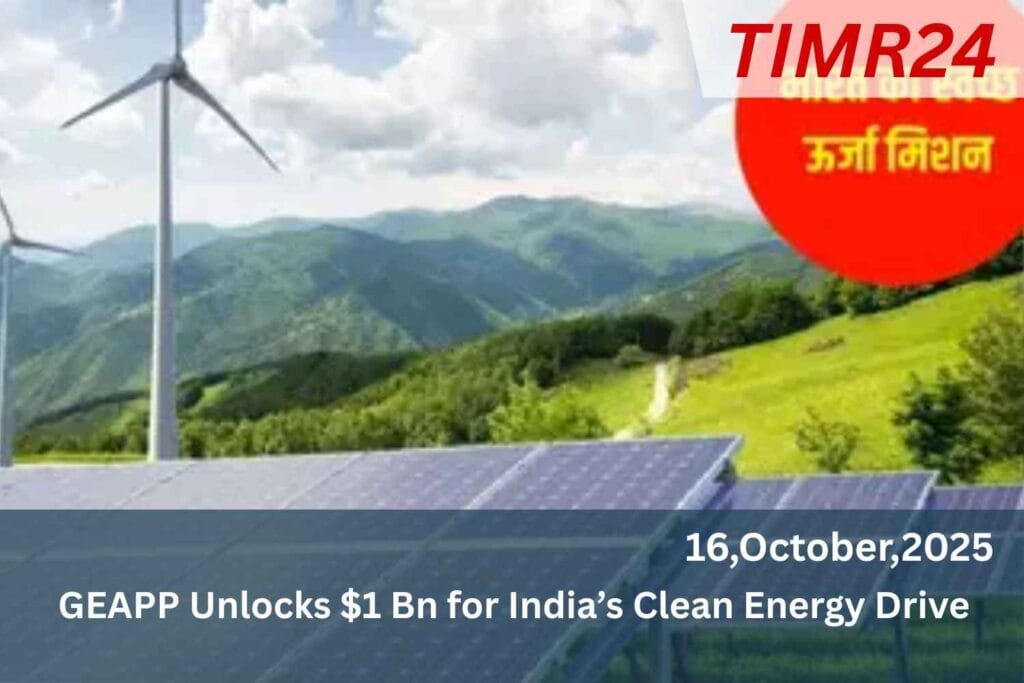
GEAPP has secured $1 billion in financing for India’s clean energy transition, aiming to improve access, create jobs, and reduce CO2 emissions. The funding supports 26 projects and demonstrates the potential of public-private-philanthropy collaborations. India is rapidly moving toward a sustainable energy future, and the recent announcement by the Global Energy Alliance for People and Planet (GEAPP) to unlock $1 billion for India’s clean energy drive represents a transformative moment in the nation’s renewable energy landscape. This significant investment is designed to accelerate the adoption of renewable energy projects, improve energy access in underserved.
Communities, and foster innovation across multiple clean energy sectors. By providing both financial resources and technical guidance, GEAPP aims to bridge the gap between policy ambition and practical implementation, ensuring that India not only meets its national renewable targets but also strengthens its position as a global leader in clean energy development. This initiative directly complements India’s broader renewable energy mission, including the National Solar Mission and initiatives under the Ministry of New and Renewable Energy (MNRE), supporting the country’s goal of achieving 500 GW of renewable energy capacity by 2030.
The $1 billion allocation is structured to support a wide array of clean energy solutions, from large-scale solar and wind farms to decentralized off-grid and mini-grid systems. Rural and semi-urban areas, which often face energy shortages or unreliable electricity, stand to benefit significantly from these investments. Off-grid solar solutions, powered by GEAPP funding, will provide reliable electricity for households, schools, healthcare facilities, and small businesses, ultimately improving quality of life and enabling socioeconomic development. By targeting energy access inclusively, the program ensures that the benefits of renewable energy reach communities historically underserved.
By conventional infrastructure. This approach aligns with India’s efforts to promote energy equity and universal access, reinforcing the country’s commitment to sustainable development goals. Internal links to other initiatives, such as (Solar Rooftop Projects) and provide context for readers and highlight the interconnected nature of clean energy development in India A central component of GEAPP’s strategy involves partnerships with private developers, local governments, and community-based organizations. These collaborations are crucial for scaling renewable energy solutions and ensuring that projects are both technically feasible and socially inclusive.
By providing financial support and capacity-building resources, GEAPP empowers local stakeholders to implement projects that are tailored to the unique energy needs of their regions. In addition to funding, technical assistance in areas such as project design, financing structures, and operational efficiency ensures that renewable energy projects are sustainable in the long term. Internal references to illustrate how these partnerships create a synergistic ecosystem for clean energy growth Innovation is another key pillar of this $1 billion initiative. GEAPP emphasizes the importance of technological advancement in renewable energy systems, including energy storage solutions.
Smart grids, and demand-side management technologies. Energy storage, for example, is critical for addressing intermittency issues in solar and wind power generation, allowing excess energy to be stored and utilized when demand is high. Smart grid technologies enable real-time monitoring and efficient distribution of electricity, reducing losses and optimizing energy use. Demand-side management tools help consumers and businesses adjust their energy consumption based on availability, reducing strain on the grid and enhancing overall system efficiency. These technological advancements not only improve operational efficiency but also contribute to reducing.
India’s carbon footprint, supporting the country’s climate goals under the Paris Agreement. External references to organizations like (NITI) provide additional insights into global best practices for energy innovation The environmental impact of this funding is substantial. By channeling resources toward renewable energy projects, India can significantly reduce greenhouse gas emissions, lower air pollution levels, and decrease reliance on fossil fuels. Solar and wind projects, funded under the GEAPP initiative, will directly replace coal- and gas-based power generation, leading to measurable reductions in carbon emissions. In addition, investments in green hydrogen.
Production, bioenergy, and energy efficiency technologies will further accelerate India’s transition toward a low-carbon economy. Internal links to highlight the synergy between GEAPP’s funding and national policy objectives, ensuring that each project contributes to the broader sustainability framework Socioeconomic benefits are equally significant. The renewable energy sector has the potential to generate substantial employment opportunities, particularly in construction, operations, maintenance, and technology development. GEAPP’s funding is expected to create thousands of green jobs, particularly in rural and semi-urban regions where energy access projects are implemented. Moreover.
Community-based renewable energy initiatives empower local populations, fostering skill development, entrepreneurship, and economic self-reliance. By integrating social objectives with environmental and technological goals, GEAPP ensures that clean energy projects contribute to holistic development, rather than focusing solely on energy output. External references such as highlight financing models and project outcomes that demonstrate how green investments can generate sustainable economic growth Policy alignment and regulatory support are also central to the initiative’s success. GEAPP collaborates with government agencies to ensure.
That funding aligns with national energy policies and regulatory frameworks. This includes adherence to environmental standards, grid integration requirements, and compliance with renewable energy incentives and subsidies. By coordinating with policymakers, GEAPP minimizes regulatory bottlenecks and accelerates project implementation. Furthermore, international collaboration with development agencies and global investors ensures transparency, accountability, and scalability of funded projects. Internal links to provide additional resources for developers and stakeholders seeking to understand funding eligibility, technical requirements, and application processes.
In conclusion, the $1 billion funding unlocked by GEAPP for India’s clean energy drive represents more than just a financial commitment; it embodies a strategic push for sustainable, inclusive, and technologically advanced energy systems. By supporting solar, wind, green hydrogen, and decentralized energy solutions, the initiative addresses both energy security and environmental sustainability. Simultaneously, the program promotes economic development, green job creation, and community empowerment, ensuring that the benefits of renewable energy reach all sections of society. Through collaborative partnerships, technological innovation, and policy alignment.
GEAPP’s investment accelerates India’s clean energy transition while setting an example for global sustainable development. For stakeholders, developers, and communities eager to engage with these initiatives, exploring resources such as offers detailed guidance on opportunities and impact. Ultimately, this initiative reinforces India’s commitment to a low-carbon future while fostering economic growth, energy equity, and environmental stewardship across the nation.
Q1. What is GEAPP?
GEAPP is the Global Energy Alliance for People and Planet, supporting clean energy access globally.
Q2. How much funding is allocated for India?
$1 billion has been unlocked to boost India’s renewable energy and sustainability projects.
Q3. Which clean energy sectors benefit?
Solar, wind, green hydrogen, energy efficiency, and off-grid renewable solutions.
Q4. Who can access this funding?
Private developers, local governments, and community energy projects can apply.
Q5. What is the expected impact?
Accelerated renewable adoption, reduced carbon footprint, green job creation, and energy access expansion.