
















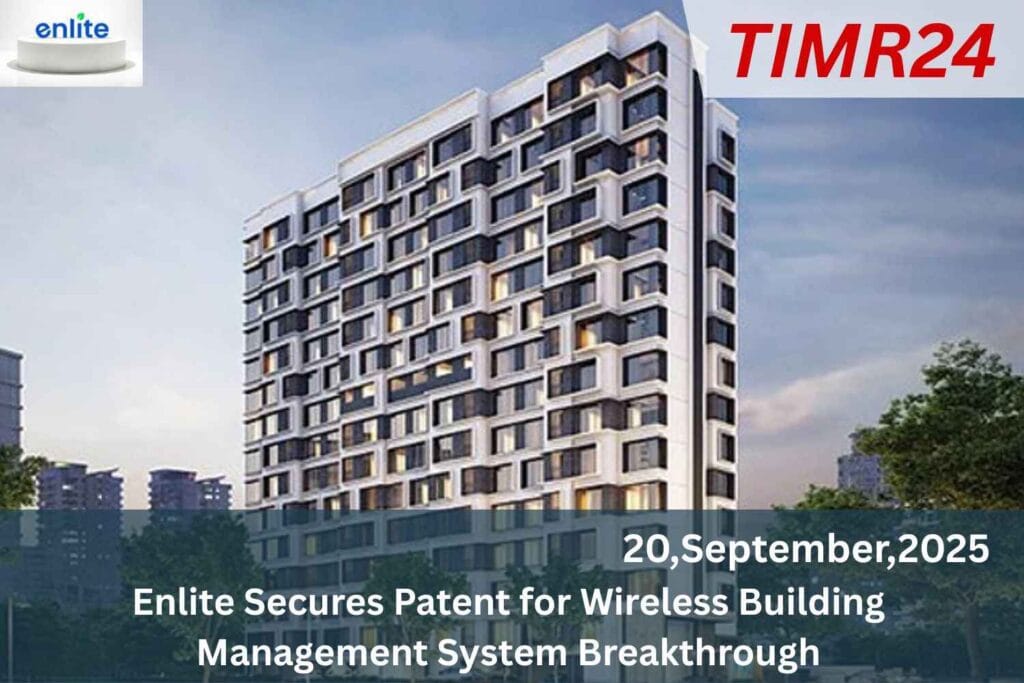
Enlite has secured its first patent for a wireless, self-commissioning, cloud-connected Building Management System (BMS), aiming to make buildings intelligent by default. The system integrates advanced features such as a self-commissioning controller, secure cloud connectivity, mirrored control algorithms for uninterrupted offline operations, and feedback and discovery modules for optimized performance. Elite’s patent validates its approach as a tested and protected technology, delivering measurable impact, such as eliminating thousands of kilometres of wiring and reducing carbon emissions at scale. Enlite’s recent patent approval for its wireless building management system.
(BMS) marks a major milestone in the evolution of smart building technology, setting new standards for efficiency, automation, and sustainability in modern infrastructure. This innovative system integrates advanced IoT (Internet of Things) devices, sensors, and AI-driven analytics to enable real-time monitoring and control of critical building functions such as lighting, HVAC, security, and energy management. Unlike conventional building management systems that rely heavily on extensive wiring and complex infrastructure, Enlite’s solution leverages wireless communication protocols, reducing installation complexity, cost, and time. This approach allows building managers to.
Deploy smart systems with minimal disruption to existing structures, making it particularly advantageous for retrofitting older commercial and residential complexes. By eliminating the need for cumbersome cabling and manual intervention, Enlite ensures that facilities of all sizes from office towers and hotels to industrial plants and apartment complexes can adopt intelligent automation efficiently The core advantage of Enlite’s patented system lies in its ability to Optimize Energy Consumption through predictive algorithms and adaptive controls. Sensors placed throughout a building collect real-time data on occupancy, temperature, humidity, light levels, and other.
Environmental variables. The AI-driven platform analyses this information to make automatic adjustments, ensuring optimal comfort for occupants while minimizing energy wastage. For instance, lighting can be dimmed or switched off in unoccupied zones, while HVAC systems adjust dynamically based on usage patterns and external weather conditions. This level of automation translates directly into reduced utility costs and a smaller carbon footprint, aligning with global sustainability goals and regulatory mandates for energy efficiency. Businesses and residential complexes that adopt such smart solutions not only benefit from lower operational costs but also enhance their.
Environmental credentials, an increasingly important factor in corporate responsibility and urban planning From a commercial perspective, the implications of wireless BMS adoption are profound. Office spaces, hotels, and educational institutions can leverage Enlite’s system to create personalized, responsive environments. In hotels, guest rooms can automatically adjust temperature and lighting based on occupancy and preferences, while conference rooms and public areas receive energy-optimized lighting and climate control. Offices can implement automated work zones where energy consumption aligns with actual presence, improving both sustainability and employee comfort.
Industrial facilities benefit as well, since real-time monitoring of machinery and environmental conditions can prevent equipment failure, reduce downtime, and improve operational efficiency. Residential complexes, including gated communities and high-rise apartments, can deploy these systems to manage common areas, lighting, and HVAC, ensuring comfort, safety, and cost-effective utility usage for residents A significant feature of Enlite’s innovation is enhanced security and data integrity. Wireless BMS solutions are often exposed to cybersecurity risks, as the proliferation of connected devices increases vulnerability. Enlite’s patented technology addresses this challenge.
Through robust encryption standards, secure communication channels, and layered access controls, ensuring that sensitive building data remains protected. This emphasis on cybersecurity is critical as smart buildings become increasingly interconnected, with multiple devices and systems communicating over shared networks. The company’s approach demonstrates foresight in mitigating potential vulnerabilities while maintaining the convenience and scalability that wireless solutions offer. For property owners, facility managers, and tenants, this creates confidence that automation and energy efficiency do not come at the expense of privacy or security.
In terms of market potential, the demand for smart and energy-efficient building solutions is experiencing rapid growth. According to industry forecasts, the global smart building market is projected to expand significantly over the next decade, driven by rising energy costs, environmental regulations, and the desire for automated, intelligent infrastructure. Enlite’s patented wireless system positions the company at the forefront of this trend, offering a solution that is both scalable and future-proof. Its adaptability allows deployment in single buildings, campuses, or multi-building complexes, enabling organizations to standardize building management practices while retaining.
Flexibility. The integration of wireless IoT devices also ensures that upgrades and expansions can be implemented seamlessly without the need for extensive physical modifications Beyond efficiency and sustainability, Enlite’s technology contributes to occupant comfort and experience, which is becoming a central consideration in modern building design. Adaptive lighting, temperature control, air quality monitoring, and predictive maintenance create environments that are not only functional but also responsive to human needs. For workplaces, this can enhance productivity and employee satisfaction; for hotels and residential buildings, it elevates the user experience by.
Providing personalized comfort at minimal operational expense. The system’s AI capabilities also allow predictive maintenance alerts, identifying potential equipment failures before they occur and ensuring uninterrupted services. This proactive approach reduces maintenance costs and prevents unexpected downtime, further enhancing the financial and operational value of the building The wireless nature of Enlite’s BMS also supports sustainable urban development and green building practices. Cities worldwide are increasingly focusing on reducing energy consumption, optimizing resource management, and achieving net-zero carbon goals. Buildings.
Equipped with wireless smart management systems contribute significantly to these objectives by reducing unnecessary energy usage, enabling integration with renewable energy sources, and providing data-driven insights for long-term sustainability planning. Enlite’s solution, by combining wireless technology with advanced analytics, creates a roadmap for smarter, greener, and more resilient urban infrastructure For those seeking additional information, readers can visit (Enlite’s) to explore product specifications, case studies, and technology insights. Industry perspectives on wireless building management systems are available through resources like.
Which discuss broader trends in smart infrastructure, IoT deployment, and energy-efficient innovations. Internal links can include topics like (Energy Technologies) and providing readers with a holistic understanding of connected building management Overall, Enlite’s patented wireless building management system represents a transformative advancement in how modern buildings operate, offering efficiency, sustainability, security, and comfort in a single solution. By addressing the challenges of conventional wired systems and introducing a scalable, AI-driven, and secure platform, Enlite is setting a benchmark for the future of smart buildings. As urbanization intensifies and energy.
Management becomes more critical, solutions like this will play a central role in shaping sustainable, efficient, and intelligent built environments across commercial, residential, and industrial sectors. The technology not only provides immediate operational and cost benefits but also positions organizations for long-term adaptability and compliance with evolving environmental and regulatory standards. Enlite’s innovation underscores the importance of technological foresight, sustainable planning, and user-centric design in modern architecture, paving the way for a future where buildings are not just structures but intelligent, responsive ecosystems.
Q1. What is Enlite’s wireless building management system?
Enlite’s system allows remote control and monitoring of building utilities like lighting, HVAC, and security without extensive wiring.
Q2. How does the patented technology work?
It uses wireless sensors, IoT connectivity, and AI-driven analytics to optimize energy consumption and automate building functions.
Q3. Which buildings can implement this system?
The system is adaptable for commercial, residential, and industrial buildings, providing scalable solutions for all sizes.
Q4. What are the key benefits of using this system?
Benefits include reduced energy costs, enhanced operational efficiency, improved occupant comfort, and streamlined facility management.
Q5. Where can I learn more about Enlite’s innovation?
Explore details on Enlite’s official site, industry reports, and smart building technology publications.