













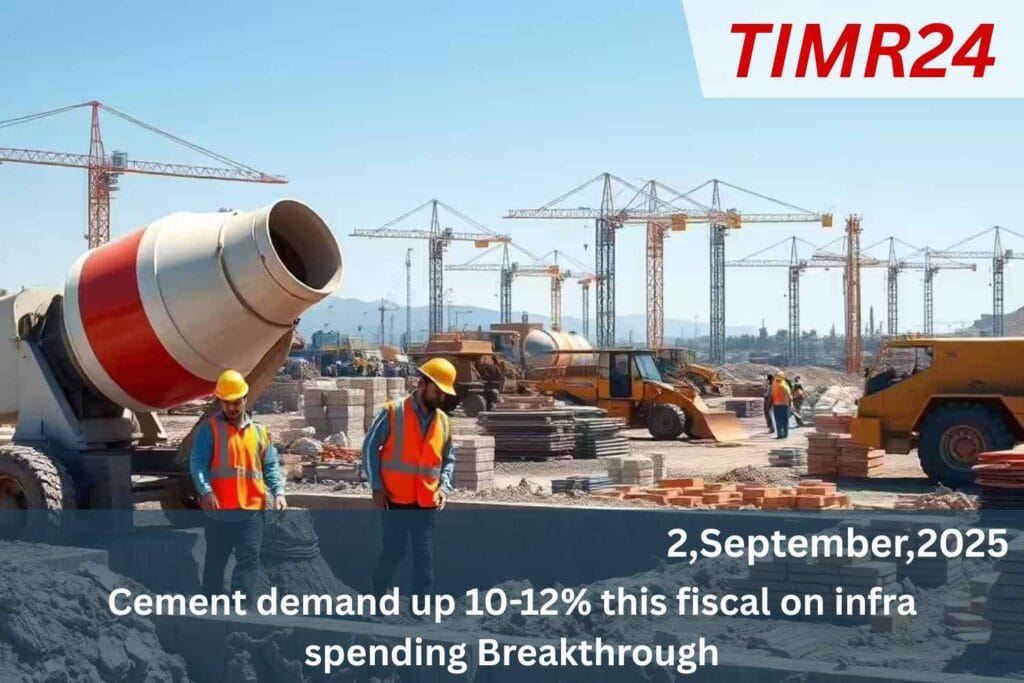
India’s cement demand is expected to grow 10-12% YoY to around 440 million tonnes in fiscal 2024, driven by strong offtake from the infrastructure segment. The operating profit of cement manufacturers is expected to recover by around Rs 200 per tonne from a multi-year low of Rs 770 per tonne last fiscal. The government’s spending on infrastructure development, which accounts for 30% of annual cement sales, is expected to drive demand. The housing segment, which accounts for 55% of cement demand, is expected to see steady growth due to healthy traction in rural housing and urban real estate execution. The demand growth may moderate to 7-9% in the second half of the fiscal year.
Due to the high base and potential slowdown in central government capital expenditure the rebound in profitability and cash accrual will keep the sector’s leverage and interest coverage stable, ensuring timely release of funds for project execution and catch-up in the monsoon. India’s cement industry is entering one of its strongest growth phases in recent years, with demand projected to rise by nearly 10-12% in FY25, driven by a combination of government-backed infrastructure spending, a surge in housing projects, and increased industrial development. This demand growth signals not only the strength of the construction sector but also the critical role of cement in shaping India’s economic expansion. As the government continues to push forward with large-scale initiatives under.
The National Infrastructure Pipeline (NIP) and housing schemes like Pradhan Mantri Awes Yojana (PMAY), the cement sector is set to remain at the center of the country’s growth narrative. Infrastructure remains the backbone of cement consumption in India, accounting for nearly 35-40% of total demand. The Union Government’s fiscal allocations to roads, railways, and urban infrastructure have been significantly increased, with the Ministry of Road Transport and Highways recording record highway construction over the past two years. Cement consumption in road building, bridges, metro rail projects, and freight corridors has surged, especially with flagship programs like Bharatmala Pariyojana and Smart Cities Mission.
Housing and Real Estate Expansion
The progress of these projects can be tracked in detail on the National Infrastructure, which provides sectoral data and timelines for execution. This accelerated infrastructure rollout ensures consistent and large-volume demand for cement producers across India. Parallel to infrastructure spending, India’s real estate sector has emerged as another major driver of cement demand. Affordable housing, particularly through the PMAY-Urban and PMAY-Gramin schemes, continues to boost consumption across Tier-II and Tier-III towns, while metro cities are witnessing renewed growth in premium and mid-segment housing projects. The RERA-driven transparency in real estate has also encouraged more investments in residential and commercial construction.
Creating a ripple effect on cement consumption. A closer look at the highlights the scale of government support, with millions of housing units already sanctioned and under development. The private sector is complementing this with township projects, luxury residences, and commercial hubs, all of which significantly contribute to cement demand. Beyond infrastructure and housing, industrial expansion is reinforcing cement demand growth. The establishment of industrial corridors, manufacturing zones, and warehousing hubs has spurred widespread construction activity. For example, projects under the Delhi-Mumbai Industrial Corridor (DMIC) and logistics investments driven by the e-commerce boom are heavily cement-intensive.
Regional Growth Patterns in Cement Consumption
Similarly, commercial complexes, IT parks, shopping malls, and special economic zones (SEZs) are adding to the demand base. As India strengthens its position as a global manufacturing and services hub, cement demand from industrial and commercial construction is expected to sustain strong momentum well into the next decade Cement demand is not evenly distributed across India but is influenced by regional development dynamics. Northern states such as Uttar Pradesh, Haryana, and Punjab are witnessing high demand due to highways and housing projects, while southern states like Tamil Nadim Telangana, and Karnataka are seeing robust real estate and infrastructure activity. The eastern region, historically under-penetrated, is emerging as.
A growth hotspot with new plants being commissioned to meet rising demand in states like Odisha, Bihar, and West Bengal This regional expansion ensures that growth is balanced and provides cement companies with opportunities to diversify their market reach An emerging trend in the cement sector is the growing emphasis on sustainability and eco-friendly practices. Cement production is traditionally carbon-intensive, but Indian manufacturers are increasingly adopting blended cements, alternative fuels, and low-clinker technologies to reduce their carbon footprint. Companies like UltraTech Cement, Shree Cement, and ACC are investing in renewable energy, carbon capture, and green construction solutions.
This aligns with India’s net-zero target for 2070, ensuring that the industry contributes responsibly to long-term growth. Additionally, green building certifications and consumer awareness are boosting the use of eco-friendly construction materials, adding a new dimension to cement demand growth. The growth of the cement industry is also supported by favourable government policies. Increased budgetary allocations to infrastructure, reforms in the real estate sector, and a stable regulatory framework have created a conducive environment for cement producers. Initiatives like single-window clearances for real estate projects and foreign direct investment (FDI) support in construction are enhancing project execution speed.
Furthermore, the push for smart cities and urban renewal missions ensures a steady pipeline of projects where cement plays a critical role. Looking ahead, the outlook for the cement industry remains highly optimistic. Analysts from agencies such as and (Real Estate) forecast sustained demand growth, supported by both government spending and private sector investments. The sector is expected to benefit from the ongoing urbanization wave, rising middle-class incomes, and India’s journey towards becoming a $5 trillion economy. Cement demand is projected to remain resilient not only in FY25 but also in subsequent years, as infrastructure and housing continue to dominate the economic agenda.
Internal Industry Strategies
Cement companies are responding to this demand surge by expanding capacities, improving supply chain efficiency, and exploring digital technologies for plant operations. Automation, AI-driven demand forecasting, and logistics optimization are being adopted to ensure efficiency and timely supply. Companies are also focusing on mergers and acquisitions to consolidate their market presence, particularly in high-growth regions like eastern and southern India.
The cement industry is often referred to as the barometer of a nation’s growth, and India is no exception. The rising consumption reflects the scale of physical assets being created—roads, railways, housing, and commercial spaces—all of which contribute to long-term productivity. As India continues to modernize, cement will remain a cornerstone of development, bridging the gap between vision and execution.
Q1. What is the expected growth rate of cement demand in FY25?
Cement demand is projected to rise by 10-12% this fiscal year due to strong infrastructure spending.
Q2. What factors are driving cement demand growth?
Government infrastructure projects, housing expansion, and industrial development are key growth drivers.
Q3. Which sectors consume the most cement?
Infrastructure (roads, bridges, railways), housing, and commercial real estate are the biggest consumers.
Q4. How does government spending affect cement demand?
Higher allocations for roads, urban housing, and smart cities significantly increase cement consumption.
Q5. What is the future outlook for India’s cement industry?
With sustained infra push, cement demand is expected to remain strong beyond FY25, supporting industry expansion.