




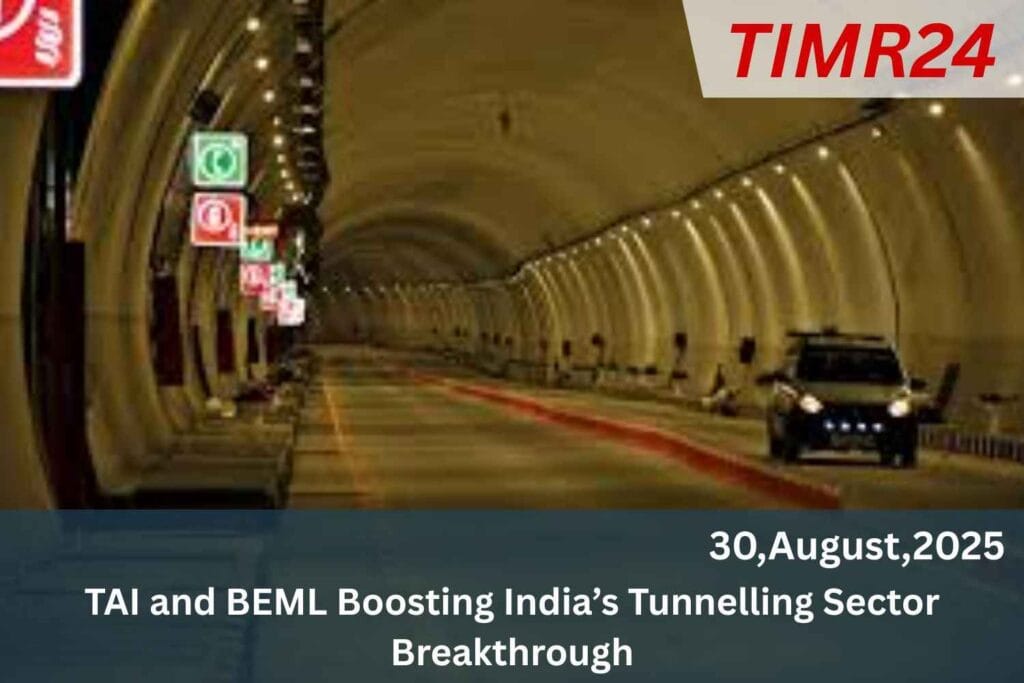
India’s BEML underground construction sector is undergoing a transformation, with the Tunnelling Association of India (TAI) advocating for the establishment of a National Tunnelling Centre to accelerate the country’s tunnelling capabilities. This centre would provide expertise for faster project execution and capacity building, as well as contribute to capacity building and self-reliance in critical tunnelling technologies. India currently has one of the largest numbers of underground projects under planning across metro rail, water supply, hydropower, and road sectors. BEML, a state-run company, plans to set up an indigenous TBM manufacturing unit to reduce import dependence and provide localized support, spares, and services.
This move aligns with the government’s Aatmanirbhar Bharat initiative and can strengthen India’s tunnelling infrastructure. However, industry experts believe that for the tunnelling sector to scale, more efforts must come from domestic OEMs, material suppliers, and service providers. India’s tunnelling sector is witnessing a transformative era, driven by the concerted efforts of the Tunnel Association of India (TAI) and Bharat Earth Movers Limited (BEML). These organizations are redefining the landscape of underground infrastructure by introducing advanced technologies, modern equipment, and global best practices into Indian projects. The significance of tunnelling in India has grown tremendously as urbanization accelerates, requiring efficient metro networks.
Highway expansions, and hydroelectric projects that traverse challenging terrains. TAI has been at the forefront, providing thought leadership, knowledge dissemination, and skill development initiatives that equip engineers and technical teams with the latest expertise. Through seminars, training programs, and collaborations with international tunnelling experts, TAI ensures that Indian infrastructure projects adhere to global standards and optimize both safety and efficiency BEML complements these efforts through indigenous manufacturing of high-precision Tunnel Boring Machines (TBMs) and construction equipment, tailored to meet the diverse geological challenges found across India.
By reducing dependence on imports and promoting self-reliance under the Make in India initiative, BEML not only offers cost-effective solutions but also strengthens the country’s technological capabilities in heavy machinery production. Their machines are being deployed in metro expansions in cities such as Delhi, Mumbai, and Bengaluru, as well as major highway projects like the Zojila Tunnel in Jammu and Kashmir, significantly improving travel time and boosting regional economic activity The integration of cutting-edge technology is central to this revolution. Automation, AI-powered monitoring, and eco-friendly tunnelling practices are becoming integral components of projects, enabling faster completion times, greater precision, and reduced environmental impact.
These innovations allow engineers to assess real-time progress, anticipate geological challenges, and make informed decisions, resulting in higher efficiency and safety on-site. As a result, infrastructure projects are increasingly meeting global benchmarks, reflecting India’s growing capabilities in underground construction. Internal resources like our (National Highways) provide detailed accounts of how these projects are reshaping the country’s transportation network. Beyond technological progress, the tunnelling sector is fuelling economic growth and creating employment opportunities. Large-scale projects require skilled operators, engineers, and project managers, while indirect benefits extend to supply chains, manufacturing, and local businesses.
The improved connectivity facilitated by tunnels in previously inaccessible regions is opening new avenues for trade, tourism, and regional development, demonstrating how infrastructure investment can act as a catalyst for broader economic impact. BEML’s role in manufacturing and supply chain integration ensures that these benefits are maximized, reinforcing India’s industrial base Global collaborations also play a significant role in enhancing India’s tunnelling expertise. Partnerships with European and Japanese tunnelling firms introduce international safety standards, innovative designs, and project management methodologies. These collaborations help blend indigenous knowledge with global best practices, ensuring that.
India’s projects are both cost-efficient and technologically advanced. For further insights into international tunnelling practices partnership between TAI and BEML is shaping a robust future for India’s tunnelling sector. By combining knowledge dissemination, indigenous manufacturing, technological innovation, and international collaboration, these organizations are not only enhancing connectivity across (NORD) urban and rural landscapes but also setting the stage for sustainable, efficient, and globally competitive infrastructure. The synergy of advanced equipment, skilled manpower, and strategic planning ensures that India’s tunnelling initiatives will continue to play a critical role in urban mobility, highway development, and hydroelectric projects, driving growth, sustainability, and regional integration.
Q1. What role are TAI and BEML playing in India’s tunnelling sector?
They are introducing advanced equipment, technologies, and project collaborations to improve efficiency in underground infrastructure.
Q2. Why is tunnelling important for India’s infrastructure growth?
Tunnelling supports metro rail, highways, and hydro projects, reducing travel time and boosting connectivity.
Q3. What technologies are being adopted by TAI and BEML?
They are leveraging tunnel boring machines (TBMs), automation, and advanced drilling systems for faster project completion.
Q4. How will these advancements benefit India’s economy?
They will enhance transportation networks, promote trade, and create new employment opportunities.
Q5. Are there global collaborations in this sector?
Yes, partnerships with international tunnelling leaders are being pursued to bring world-class expertise to India.