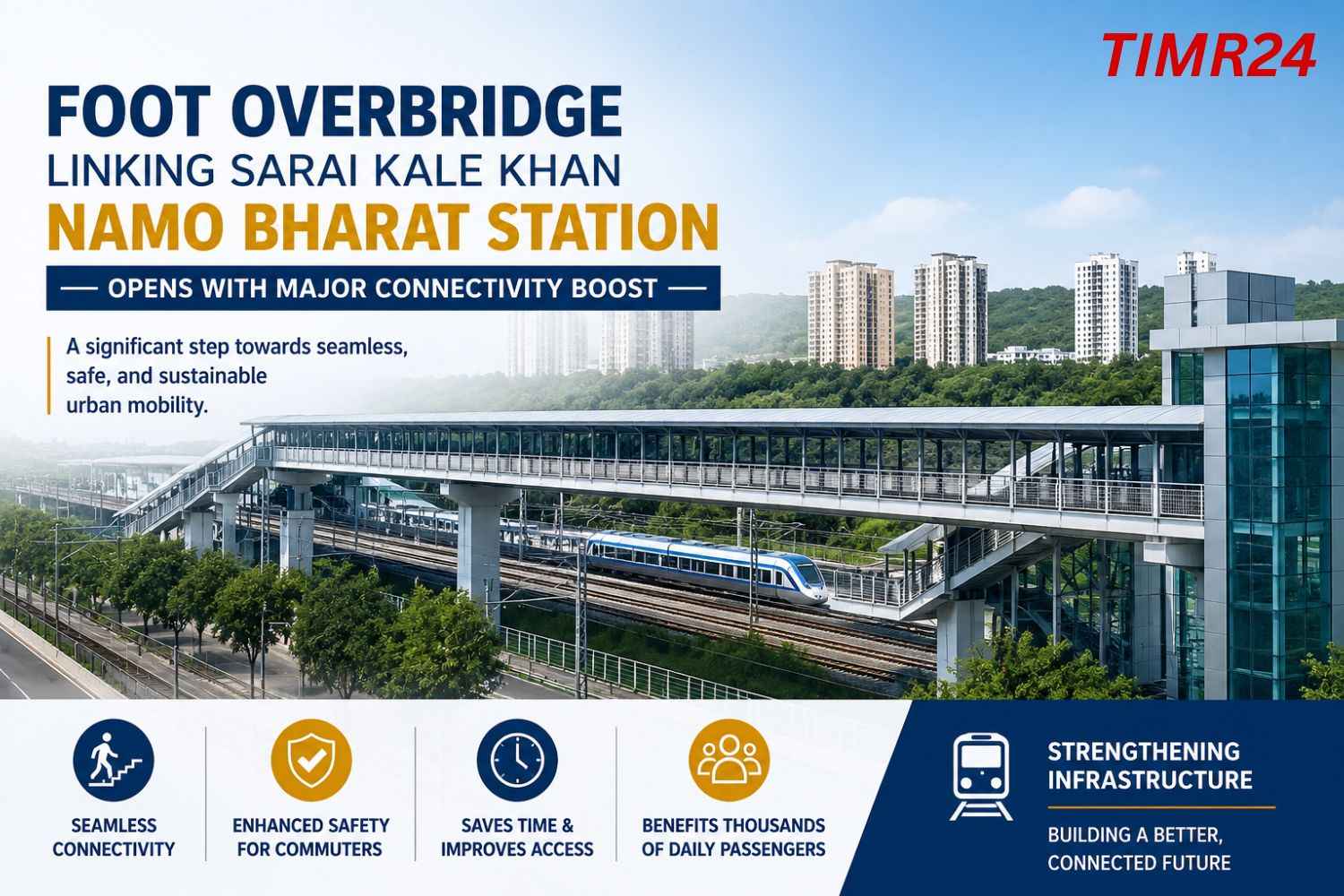





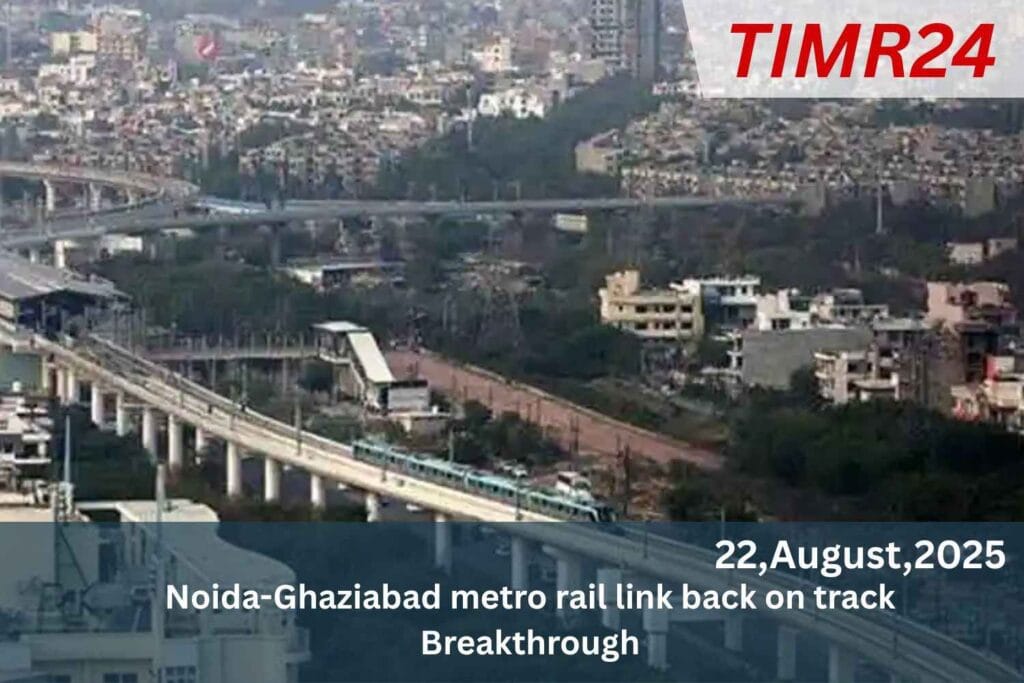
The Ghaziabad Development Authority (GDA) plans to revive the Noida Electronic City-Sahibabad metro line, a proposal that has been stalled due to construction costs. The GDA plans to secure a loan from the NCR Planning Board and commission a DPR to DMRC. The long-awaited Noida-Ghaziabad metro rail link is finally back on track, signaling a major breakthrough in regional connectivity and urban mobility. After years of delay due to administrative and financial hurdles, the project has gained momentum once again, promising faster and more convenient travel for.
Lakhs of daily commuters. The revival of this metro link not only reflects the government’s commitment to strengthening public transportation but also showcases how urban infrastructure is evolving in the National Capital Region (NCR). With both Noida and Ghaziabad emerging (Delhi-Meerut) as major economic and residential hubs, the metro project is expected to bring a transformative change in daily life, business activities, and real estate growth across the corridor. When we look at the larger picture, Noida and Ghaziabad have always shared a close connection in terms of population movement, employment opportunities, and trade. However, the absence of a direct metro link between.
These two rapidly growing cities has often forced people to rely heavily on road transport, leading to severe traffic congestion on arterial routes like NH-24 and elevated expressways. The restart of the Noida-Ghaziabad metro rail project is, therefore, not just about providing another transport option; it is about restructuring the mobility pattern of the entire region. With smoother travel across city borders, the project will also complement other ongoing infrastructure works such as the and ensuring an interconnected transport ecosystem for NCR residents. The significance of this project becomes clearer when one considers the economic and social dynamics of.
The region. Noida is already known as a major IT, education, and industrial hub, while Ghaziabad has grown into a densely populated residential and manufacturing city. Thousands of employees travel daily between these two cities, often spending hours stuck in traffic. With the metro link operational, travel time will be drastically reduced, providing not only convenience but also improving overall productivity. In addition, the metro will offer an affordable, eco-friendly alternative to private vehicles, thereby contributing to reduced carbon emissions and aligning with sustainable urban development goals. This is similar to how revolutionized urban travel by.
Another dimension worth noting is the boost to real estate and commercial development. In the past, areas like Indirapuram, Vasundhara, Mohan Nagar, and Sector 62 Noida have seen significant appreciation in property values whenever new metro lines were introduced nearby. With the resumption of the Noida-Ghaziabad metro rail project, similar trends are expected, particularly along the new alignment. Developers are likely to invest in both residential and commercial projects, banking on the growing demand from people who prefer well-connected localities. This trend has been evident in other projects too, such as the expansion.
Connectivity triggered real estate growth. Thus, the metro link is not just a transport solution but also a catalyst for urban development and investment. The revival of the project also highlights strong collaboration between local authorities, the Uttar Pradesh government, and metro agencies. In recent years, there were concerns about the financial viability of the project, but renewed planning and revised cost-sharing models have brought it back to life. Moreover, the inclusion of modern technology and sustainable practices in metro construction ensures that the project will be future-ready. This is particularly important as urban populations continue to rise and public.
Infrastructure needs to adapt accordingly. By prioritizing projects like this, authorities are reinforcing the importance of long-term urban planning that benefits both present and future generations From the perspective of daily commuters, the resumption of work on this corridor is nothing short of a relief. With the completion of this project, people will no longer need to depend solely on overcrowded buses, cabs, or personal vehicles for intercity travel. The introduction of metro connectivity will not only make travel safer and more reliable but also contribute to a healthier lifestyle by cutting down stress caused by traffic jams. Just as the (DMRC) has eased.
Pressure on suburban railways, the Noida-Ghaziabad link will ease road congestion while offering a more structured and predictable mode of travel. The Noida-Ghaziabad metro rail link being back on track is a defining moment for urban infrastructure in NCR. It represents more than just a transport project it is a symbol of progress, sustainability, and improved quality of life. As construction progresses, residents, business owners, and policymakers alike will benefit from the integration of this corridor into the wider metro network. The project is expected to set new benchmarks for connectivity and urban development, reaffirming the importance of metro systems in shaping modern Indian cities.
Q1. What is the Noida-Ghaziabad Metro rail project?
It is a metro link connecting Noida and Ghaziabad to improve regional connectivity.
Q2. Why was the project delayed?
The project faced financial and approval-related delays before resuming.
Q3. How will commuters benefit from this metro link?
It will reduce travel time, ease road traffic, and provide eco-friendly transport.
Q4. When is the project expected to be completed?
The authorities have resumed work and aim for early completion in coming years.
Q5. Which areas will the metro link cover?
It will connect key residential and commercial hubs across Noida and Ghaziabad.