









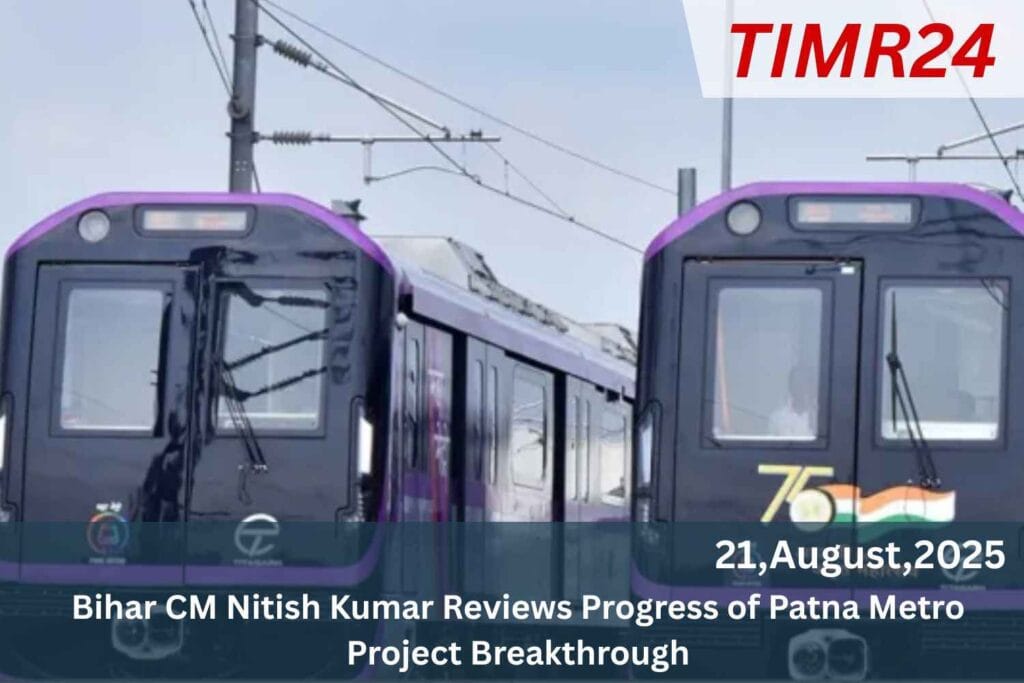
Bihar Chief Minister Nitish Kumar inspected the Patna Metro Rail Project and directed officials to expedite its execution. He reviewed facilities at the upcoming Bariyarpur Metro Terminal, ensuring timely completion for smooth operations. Regular inspections monitor progress. The Patna Metro Project stands as a monumental stride in Bihar’s urban development, poised to redefine the city’s transportation (Byppanahalli metro ) landscape. Spearheaded by the Patna Metro Rail Corporation (PMRC), this ambitious initiative aims to alleviate traffic congestion, reduce pollution, and provide a modern, efficient mode of public transport for the residents of Patna.
Encompassing two primary corridors the Blue Line and the Red Line the Patna Metro will span approximately 31.5 kilometres upon completion. The Blue Line, covering 14.45 km, will connect Junction to the New ISBT, while the Red Line will link Khemnichak to Danapur Cantonment. The project’s estimated cost is ₹13,925 crore, with funding sourced from the state and central governments (20% each) and a 60% loan from the Japan International Cooperation Agency (JICA) A significant milestone was achieved with the breakthrough of Tunnel Boring Machine (TBM)-02 at the PMCH Station, marking the sixth tunnel breakthrough for the project. This development underscores the project’s technical prowess and the commitment of the executing agencies to meet construction timelines .
Bihar Chief Minister Nitish Kumar has been actively involved in overseeing the project’s progress. During a recent inspection, he visited the Bairiya Metro Terminal and Zero Mile Metro Station, emphasizing the importance of maintaining high construction standards and ensuring the project’s smooth progress His proactive approach ensures that the project adheres to its scheduled timelines and quality benchmarks The first phase of the Blue Line, covering a 6.49 km stretch from Malahi Pakri to New ISBT, is expected to commence trial runs around September 20, 2025, with the public launch anticipated in October 2025 . This phase will feature five elevated stations, including Malahi.
Pakri, Khemnichak, Bhoothnath, Zero Mile, and New ISBT, equipped with modern amenities such as escalators, lifts, ticket counters, food courts, and retail outlets Upon completion, the Metro will not only enhance the city’s public transport infrastructure but also integrate seamlessly with existing modes of transportation, including the suburban railway network. The development of additional infrastructure, such as the suburban terminal project extension, further complements the metro’s objectives by improving overall connectivity and passenger convenience. The Patna Metro Project represents a transformative leap for Bihar’s urban mobility, promising to deliver a modern.
Efficient, and sustainable transportation system that will significantly improve the quality of life for Patna’s residents. Patna, the capital city of Bihar, is on the cusp of a significant transformation in its urban mobility landscape with the impending launch of the Metro. Spearheaded by the Bihar government and the Metro Rail Corporation (PMRC), this ambitious project aims to alleviate the city’s chronic traffic congestion, reduce pollution, and provide a modern, efficient mode of public transport for its residents. the (Delhi Metro) which complement metro infrastructure in urban hubs. This review meeting underscores the state government’s commitment to providing modern infrastructure and improving urban mobility, reflecting Bihar’s focus on inclusive development and smart city initiatives.
Q1. What is the current status of the Patna Metro project?
The project is progressing steadily with major construction milestones completed on key routes.
Q2. Who reviewed the Patna Metro project progress?
Bihar Chief Minister Nitish Kumar personally reviewed the ongoing work and updates.
Q3. When is the Patna Metro expected to be operational?
The metro is planned to be operational in phases, with the first phase targeted within the next few years.
Q4. How will Patna Metro benefit commuters?
It will reduce travel time, ease traffic congestion, and provide a safe and eco-friendly transportation option.
Q5. Which areas will the Patna Metro cover?
The metro will connect major hubs across Patna, linking residential, commercial, and business zones.