






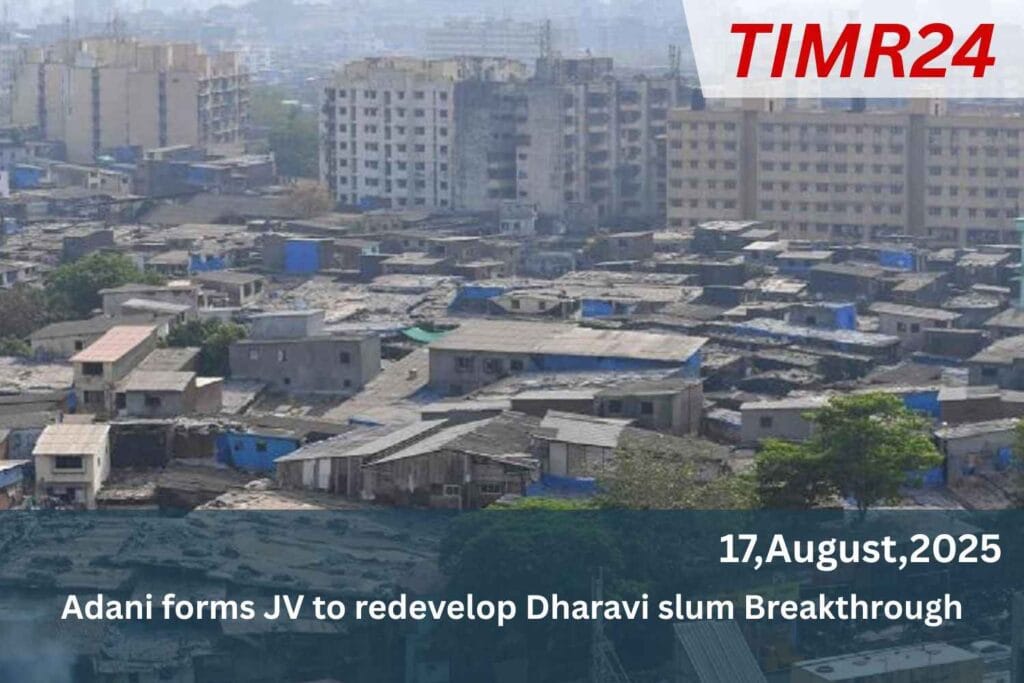
Gautam Adani’s real estate wing has formed a joint venture with Mumbai’s slum rehabilitation authority to redevelop Dharavi, Asia’s largest slum. The project, which has been delayed for decades, will be chaired by Adani Properties and CEO will be from Adani’s camp. In a transformative move for urban renewal, the Adani Group has partnered with the Maharashtra government to redevelop Dharavi, one of Asia’s largest and most densely populated slums. This collaboration, formalized through the establishment of Navbharat Mega Developers Pvt. Ltd. (NMDPL), marks a significant step in addressing the complex challenges of slum rehabilitation and urban development in Mumbai.
The Dharavi Redevelopment Project (DRP) encompasses approximately 600 acres in the heart of Mumbai, housing over a million residents. Historically, Dharavi has been a hub of small-scale industries, including pottery, textiles, and recycling, contributing significantly to Mumbai’s economy. However, the area has also faced challenges such as inadequate infrastructure, overcrowding, and environmental concerns. The DRP aims to transform Dharavi into a modern urban township while preserving its economic vitality and cultural heritage Under the terms of the joint venture, the Adani Group holds an 80% stake in NMDPL, with the Maharashtra government owning the remaining
20%. This public-private partnership model is designed to leverage the strengths of both entities Adani’s expertise in large-scale infrastructure development and the government’s mandate to ensure equitable rehabilitation and sustainable urban planning (Mega Developers) The redevelopment plan includes the construction of residential units, commercial spaces, and public amenities. A significant aspect of the project is the commitment to rehabilitate existing residents. The Maharashtra government has directed that 50% of the land in Dharavi be allocated for rehabilitation units, with the remaining 50% designated for sale in the open market. Additionally, the size of rental tenements for
Residents ineligible for free housing has been increased to 350 sq. ft, with those in planned buildings seeing an upgrade from 405 to 500 sq. ft. To ensure the project’s success, NMDPL has engaged a global team of experts. Notably, architect Hafeez Contractor, known for his work on social housing projects, and international design firm Sasaki, along with UK-based consultancy Burro Happold, have been brought on board. This collaboration aims to integrate innovative design and sustainable practices into the redevelopment process. Despite the ambitious plans, the project has faced challenges. Land acquisition has been a critical factor, with delays impacting the timeline. The Adani Group has acknowledged these issues, emphasizing the importance of securing land to proceed with the redevelopment.
Furthermore, the project has encountered legal and environmental hurdles. Concerns have been raised regarding the redevelopment of ecologically sensitive salt-pan land, with legal challenges pending in India’s National Green Tribunal. These environmental considerations are crucial to ensure that the redevelopment does not adversely affect the local ecosystem the Adani Group’s involvement in the Dharavi Redevelopment Project represents a significant effort to address urban challenges through a collaborative approach. While the project aims to transform Dharavi into a modern urban area, it must navigate complex issues related to (Adani Group) land acquisition, environmental.
Q1. What is the Dharavi Redevelopment Project?
A joint venture between Adani Group and the Maharashtra government to transform Dharavi, Asia’s largest slum, into a modern urban area.
Q2. Who are the stakeholders in the project?
The project is led by Navbharat Mega Developers Pvt Ltd, with Adani Group holding 80% equity and the Maharashtra government 20%.
Q3. What is the project’s timeline?
The redevelopment is expected to be completed in seven years, with construction work slated to commence in 6–8 months.
Q4. How many residents will benefit?
Approximately 7 lakh residents will receive flats up to 350 sq ft free of cost, while ineligible residents will be rehabilitated in other areas.
Q5. What challenges does the project face?
The project has encountered difficulties in securing necessary land for rehabilitation, posing potential setbacks to its progress.