


















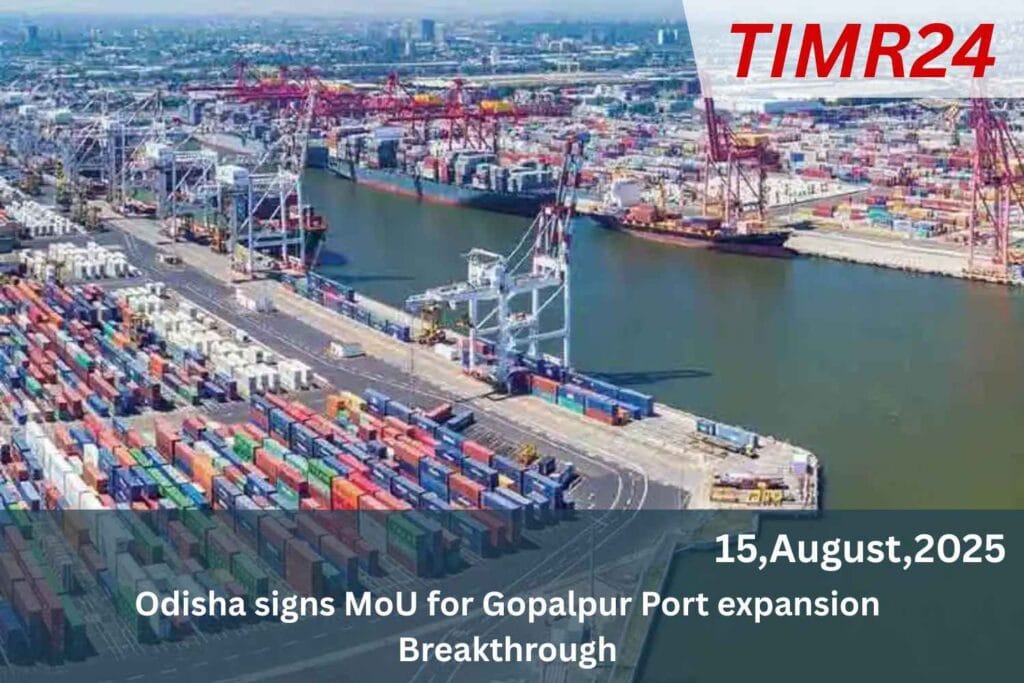
Odisha has partnered with Gopalpur Port to develop and expand its facility in Ganjam district. The state government has given over 119 acres of land to Gopalpur Ports Private Limited, aiming to transform it into an all-weather direct berthing port through a Public-Private Partnership model. The Government of Odisha has taken a significant step towards enhancing its maritime infrastructure by signing a Memorandum of Understanding (MoU) with Gopalpur Port Limited for the large-scale expansion of Gopalpur Port. This strategic move aims to position the state as a major player in India’s eastern maritime corridor, offering improved connectivity and higher cargo handling capacity.
The port, located in Ganjam district, has already established itself as an important hub for mineral exports and coastal shipping, and the upcoming expansion is set to further strengthen its role in facilitating trade and industrial growth By modernising its facilities and increasing capacity, the project will also complement Odisha’s ambitious industrial development plans, aligning with initiatives like (Odisha Industrial) The expansion project is not just an infrastructure upgrade it represents a broader vision for regional economic transformation. With rising demand for efficient logistics solutions, especially from sectors like mining, steel, and energy, the state needs ports capable of handling larger volumes and diverse cargo types. The enhanced port will have the ability to manage bulk cargo.
Container shipments, and even specialised cargo, enabling industries in southern Odisha and neighbouring states to access global markets more efficiently. By strengthening the Gopalpur Port, Odisha is also aiming to reduce dependence on ports outside the state, such as those in Andhra Pradesh, thereby retaining more economic benefits within its borders. This aligns with other infrastructure developments like From an economic standpoint, the port expansion is projected to attract significant private investment, generate thousands of direct and indirect jobs, and stimulate allied sectors like transport, warehousing, and ship repair. The Gopalpur Port is strategically located near key industrial hubs, including the Tata Steel plant in Kalinga Nagar and the aluminium refineries in the region.
Infrastructure Upgrades and Technological Integration
Improved port capacity will reduce transportation costs for these industries and open up new opportunities for export-led growth. This is expected to accelerate Odisha’s GDP growth rate and strengthen its position as an investment-friendly state. The synergy between the port and upcoming projects under will be crucial in ensuring that both manufacturing and export sectors flourish in tandem. The MoU outlines plans for deepening and widening the port channel, upgrading berth facilities, installing advanced cargo handling equipment, and creating modern storage and logistics zones. With the integration of smart port technologies such as automated tracking, real-time cargo monitoring, and digital documentation systems,
the Gopalpur Port will be able to deliver faster turnaround times and improved operational efficiency. These advancements are in line with India’s broader push towards which aim to make ports more transparent, efficient, and sustainable. Additionally, the expansion will include measures for environmental protection, including dust suppression systems, waste management protocols, and coastal biodiversity conservation initiatives. One of the most transformative aspects of the Gopalpur Port expansion will be its role in enhancing coastal shipping and multimodal connectivity. The port will be linked more effectively with the national highway network, rail corridors, and potentially inland waterways.
This will not only serve the industrial zones in Odisha but also cater to businesses in Chhattisgarh, Jharkhand, and Telangana, offering them a shorter and cost-effective route to global markets. Improved connectivity also aligns with India’s (Sagarmala Programme) which seeks to leverage the country’s coastline for economic development by reducing logistics costs and time. The Odisha government’s decision to sign this MoU reflects its proactive approach to infrastructure-led growth and its determination to build a globally competitive maritime economy. By strengthening Gopalpur Port, the state is laying the groundwork for long-term economic resilience, diversified trade opportunities, and greater integration with international supply chains.
As work on the expansion progresses, it is expected that the project will not only transform the port into a high-capacity, technologically advanced maritime hub but also serve as a catalyst for regional development. In conclusion, the Gopalpur Port expansion is more than a construction project it is a strategic enabler for Odisha’s economic future. With integrated infrastructure upgrades, stronger industrial linkages, and improved global connectivity, the state is poised to emerge as a key maritime gateway for eastern India. This development, along with ongoing initiatives in and underscores the government’s commitment to creating a business ecosystem that is efficient, competitive, and globally connected.
Q1. What is the Gopalpur Port expansion project?
It’s an initiative to increase port capacity and improve infrastructure for higher cargo handling.
Q2. Who signed the MoU for the expansion?
The Odisha government and Gopalpur Port Limited signed the agreement.
Q3. What benefits will the expansion bring?
It will enhance trade, create jobs, and boost the regional economy.
Q4. When will the expansion work begin?
Work is expected to commence soon after the necessary approvals.
Q5. Which sectors will gain the most from this project?
Shipping, logistics, mining, and industrial sectors will benefit significantly.