













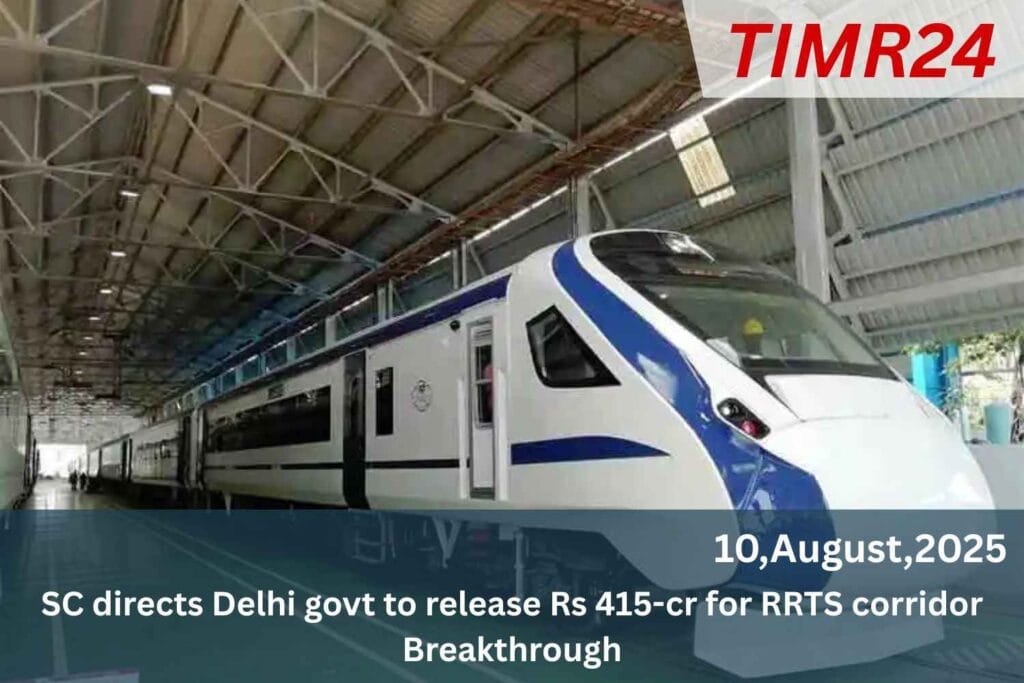
The Supreme Court has ordered Delhi to allocate Rs 415 crore for the Regional Rapid Transit System (RRTS) project within two months, following the Aam Aadmi Party’s inability to contribute funds. The decision was prompted by the AAP government’s Rs 1,100 crore expenditure on advertisements. The Supreme Court’s order came after delays in fund allocation threatened to slow down construction activities. The court emphasized that infrastructure projects of this scale are essential for easing traffic congestion, reducing air pollution, and boosting economic growth in NCR towns. The order also sends a clear message that timely financial commitments are vital for keeping such mega projects on schedule (Infrastructure Development).
Funding Challenges and Delays
Despite the project’s high priority status, the Delhi government had been slow in releasing its share of the funds. This caused concern among project authorities and contractors, potentially delaying the commissioning of key sections of the corridor. The ₹415 crore release is expected to immediately address pending contractor payments and accelerate construction activities in the Delhi section.
Economic and Social Benefits
The completion of the RRTS corridor will bring substantial benefits:
- Time Savings – Reduced travel time will make daily commutes easier for workers and students.
- Economic Growth – Faster connectivity will encourage businesses to set up in NCR towns, creating new jobs.
- Environmental Gains – Reduced dependency on personal vehicles will lower emissions and improve air quality.
- Regional Development – Smaller towns along the corridor will benefit from better access to Delhi’s markets and services.
Technological and Design Features
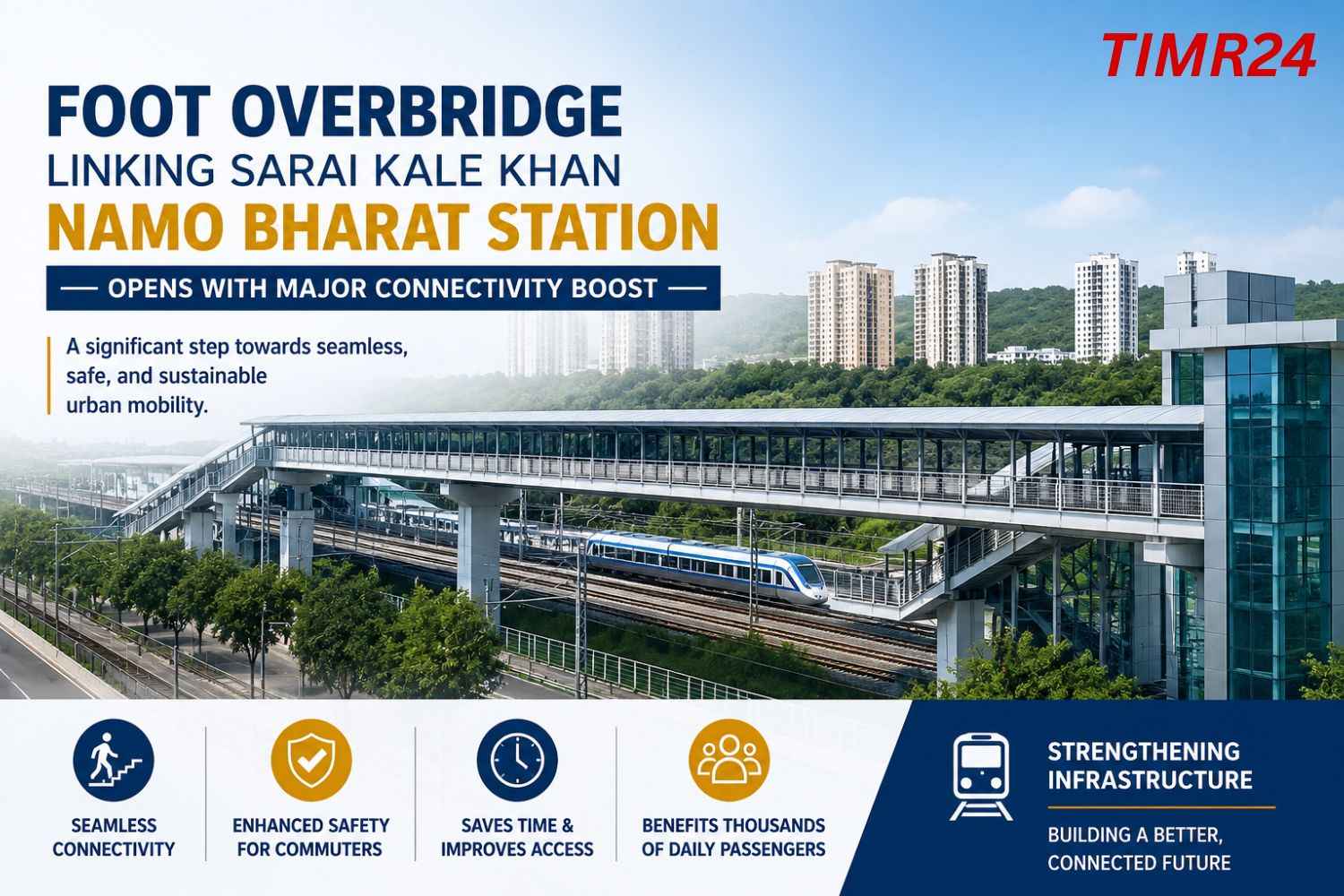
The Delhi-Meerut RRTS line is designed for speeds up to 180 km/h, with modern stations equipped with automated ticketing, advanced signaling systems, and seamless integration with metro lines and bus services. The trains will feature comfortable seating, luggage space, and Wi-Fi connectivity, making them competitive with road and air travel for medium-distance commutes. Beyond transport, the RRTS corridor will reshape urban growth patterns in the NCR. Faster, reliable travel will encourage residential and commercial expansion in peripheral towns, reducing pressure on Delhi’s core areas. This could lead to a more balanced distribution of population and resources.
The RRTS project is co-funded by the Central Government, participating states, and international financial institutions like the (Asian Development Bank). The Delhi government’s share of ₹415 crore had been pending, causing delays in payments to contractors and suppliers. With the court’s order, funds are now expected to flow, preventing further slowdown.
Future of RRTS in India
The Delhi-Meerut stretch is part of a larger vision that includes multiple RRTS corridors linking Delhi to Panipat, Alwar, and other regional hubs. Once operational, these corridors will form a high-speed transit ring around the capital, transforming commuting patterns and making the NCR more interconnected. The Supreme Court’s directive to release ₹415 crore underscores the importance of timely funding in completing large-scale infrastructure projects. With the RRTS corridor promising faster travel, reduced pollution, and economic development, this decision is likely to accelerate its completion and deliver long-awaited benefits to millions of commuters. The coming months will be critical in maintaining construction momentum and ensuring the project meets its targets.
Q1. What is the Delhi–Meerut RRTS corridor?
It is a semi-high-speed rail project connecting Delhi and Meerut, reducing travel time to under an hour.
Q2. Why did the Supreme Court direct the Delhi government to release ₹415 crore?
The court intervened to ensure timely funding for the RRTS project after delays from the Delhi government.
Q3. Who is implementing the RRTS corridor?
The project is being implemented by the National Capital Region Transport Corporation (NCRTC).
Q4. How will the RRTS benefit commuters?
It will provide faster travel, reduce road congestion, and lower pollution in the NCR.
Q5. When is the RRTS Delhi–Meerut corridor expected to be completed?
The full corridor is targeted for completion by 2025, with some sections opening earlier.