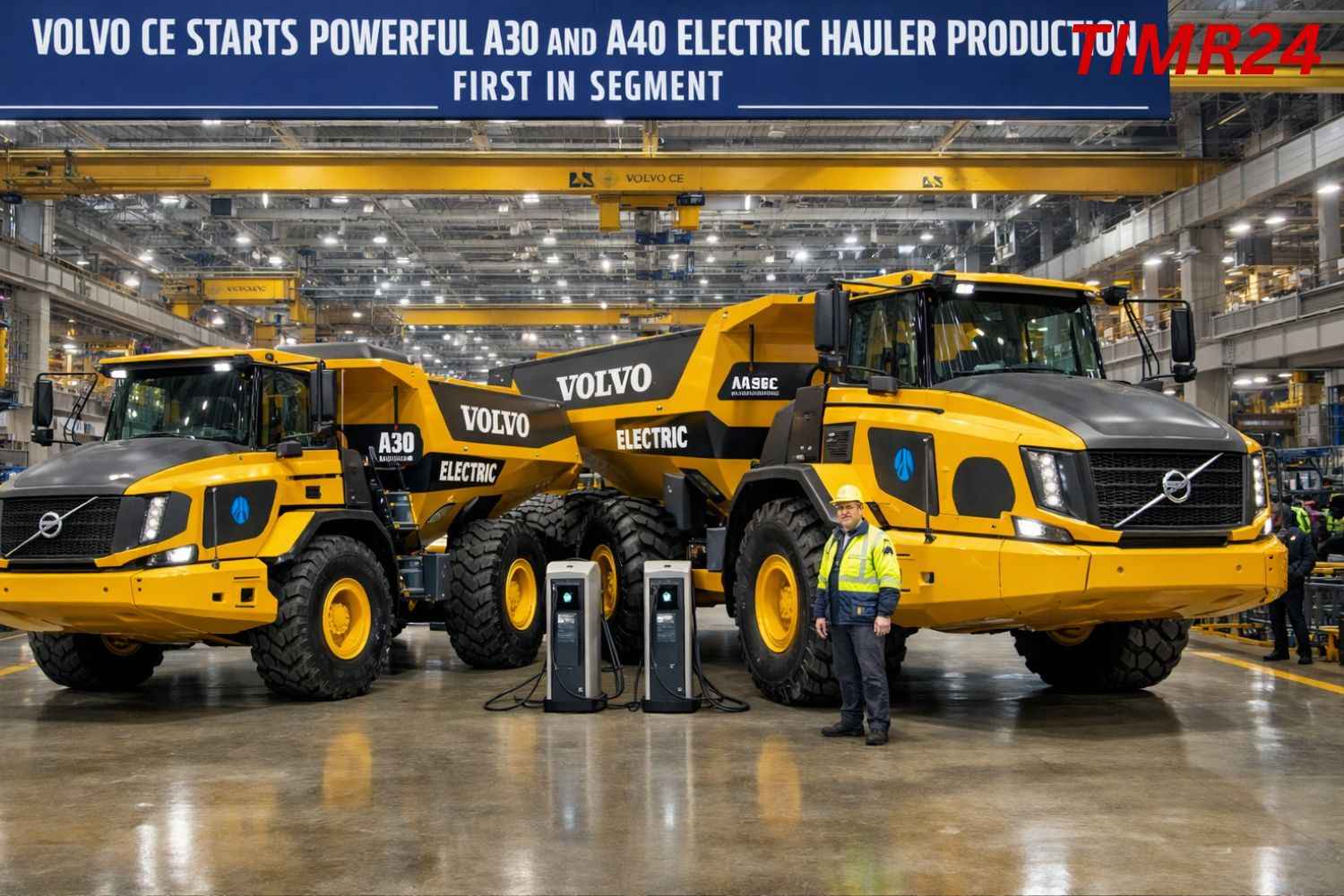
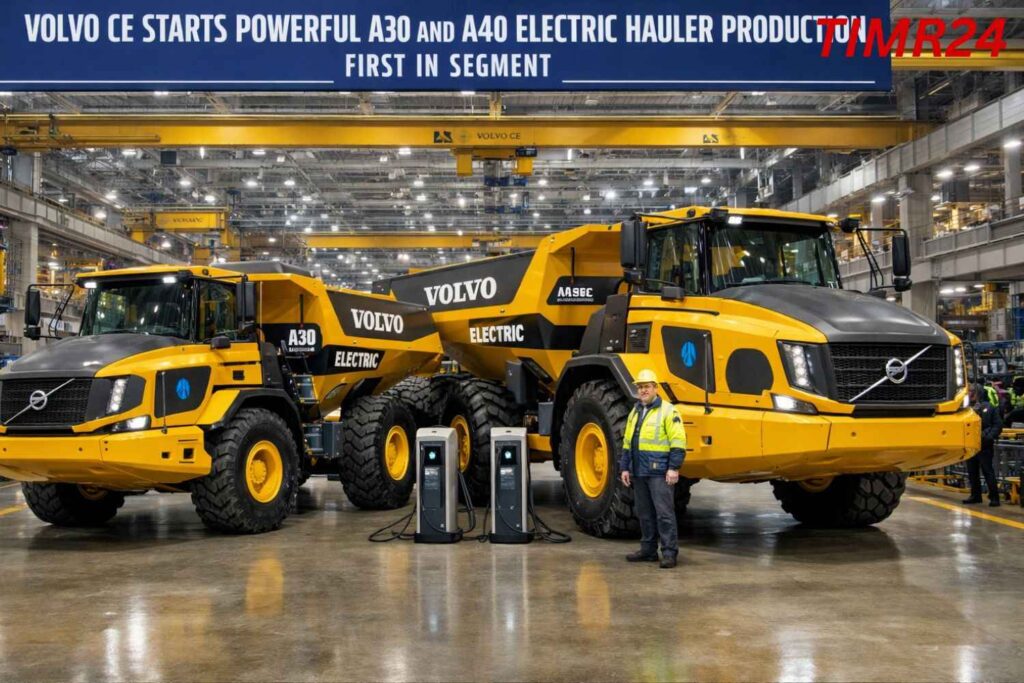
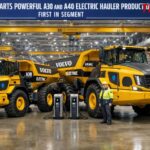
Manufacturing of the new electric haulers has commenced at Volvo CE’s historic Braås production facility in Sweden, the birthplace of the world’s first articulated hauler introduced by Volvo back in 1966. The fact that the same facility is now producing the world’s first serial electric articulated haulers highlights how Volvo continues to lead innovation in this specialized segment. The production start is not merely another product launch but a transformational moment for the future of heavy construction transportation The Volvo A30 Electric features an impressive payload capacity of 29 tonnes, while the larger A40 Electric can haul up to 39 tonnes, making.
Them among the most capable electric articulated haulers ever introduced in the global market. These machines are engineered specifically for energy-intensive environments such as quarry operations, mining projects, and large-scale earthmoving contracts where traditional diesel dumpers have dominated for decades. Their ability to combine high payload performance with battery-electric power could significantly disrupt the segment over the coming years One of the most notable advantages of these electric haulers is their potential to reduce operational emissions dramatically. Since articulated haulers are among the highest fuel-consuming machines on major.
Maintenance Requirements, And Improved
Construction and mining sites, electrifying them offers outsized environmental benefits. Companies deploying these machines can reduce direct carbon emissions while also benefiting from lower noise levels, reduced maintenance requirements, and improved operator comfort due to less vibration and quieter drivetrain performance Volvo CE has indicated that the electric haulers can operate for several hours on a single charge depending on duty cycle and site conditions, making them suitable for real-world industrial applications rather than just limited demonstration projects. This demonstrates how battery technology has evolved enough to.
Support increasingly heavy-duty equipment categories that were once considered difficult to electrify. The company believes the machines are ready for high-productivity commercial environments, not just pilot deployments The start of production also reflects growing demand from customers for sustainable construction solutions. Infrastructure developers, mining operators, and government-backed contractors are increasingly prioritizing low-emission equipment as ESG standards and green procurement policies become central to project approvals. Volvo’s electric articulated haulers arrive at a time when the global construction equipment market is rapidly transitioning toward cleaner technologies.
Expenses, Eeduced Servicing Needs, And Fewer
Another important strategic factor behind the launch is total cost of ownership. While electric heavy equipment may carry higher upfront acquisition costs, fleet operators can potentially achieve long-term savings through lower fuel expenses, reduced servicing needs, and fewer moving powertrain components. For large-scale mining and quarrying businesses operating machines for extended daily hours, these cost advantages can become substantial over time The Volvo A30 Electric and A40 Electric are also expected to accelerate electrification across adjacent heavy machinery categories. As the first mover in this segment, Volvo CE is creating pressure on competitors to.
Fast-track their own electric articulated hauler programs. This could lead to a broader industry shift toward battery-electric dump trucks, loaders, excavators, and haulage fleets over the next decade, fundamentally reshaping equipment procurement strategies worldwide For the mining and quarrying sectors specifically, the availability of production-ready electric articulated haulers opens the door to cleaner site operations. Many mining firms have publicly committed to net-zero roadmaps, and electrifying haulage operations is considered one of the most impactful pathways toward meeting those sustainability goals. Volvo’s new machines could therefore become an.
Important tool in helping operators reduce site-wide emissions without sacrificing hauling productivity The launch further strengthens Volvo CE’s reputation as a pioneer in construction equipment electrification. Over recent years, the company has aggressively expanded its (India) electric machinery lineup across compact excavators, wheel loaders, and urban construction equipment. By now entering the articulated hauler segment one of the most technically challenging classes to electrify Volvo is proving that battery-electric solutions are increasingly viable even for the heaviest applications Industry analysts expect early adoption to be strongest in European markets.
Green Construction Mandates Are Accelerating
Where emissions regulations and sustainability incentives are most advanced. Initial deliveries of the A30 Electric and A40 Electric are expected to begin with select customers in Europe, particularly in countries such as the UK and Norway where green construction mandates are accelerating equipment electrification. Over time, broader international rollout is likely as charging infrastructure and battery economics improve further For construction professionals, fleet operators, and infrastructure developers, Volvo’s production launch is more than just a product announcement it represents the commercialization of a new era in heavy-duty transport technology.
The successful deployment of electric articulated haulers at scale may influence future tender requirements, procurement standards, and fleet investment decisions across public and private sector projects alike As governments worldwide continue investing in green infrastructure and carbon-neutral industrial strategies, the demand for sustainable construction equipment is expected to rise sharply. Volvo CE’s decision to bring the world’s first serial electric articulated haulers into production places it in a commanding leadership position at a time when the heavy machinery industry is preparing for one of its biggest transitions in decades.
With the A30 Electric and A40 Electric now rolling off production lines, Volvo has moved beyond concept-stage electrification and into full industrial (India) deployment. This milestone demonstrates that electric heavy equipment is no longer experimental it is becoming commercially viable, scalable, and ready for mainstream adoption across demanding industrial environments.