



















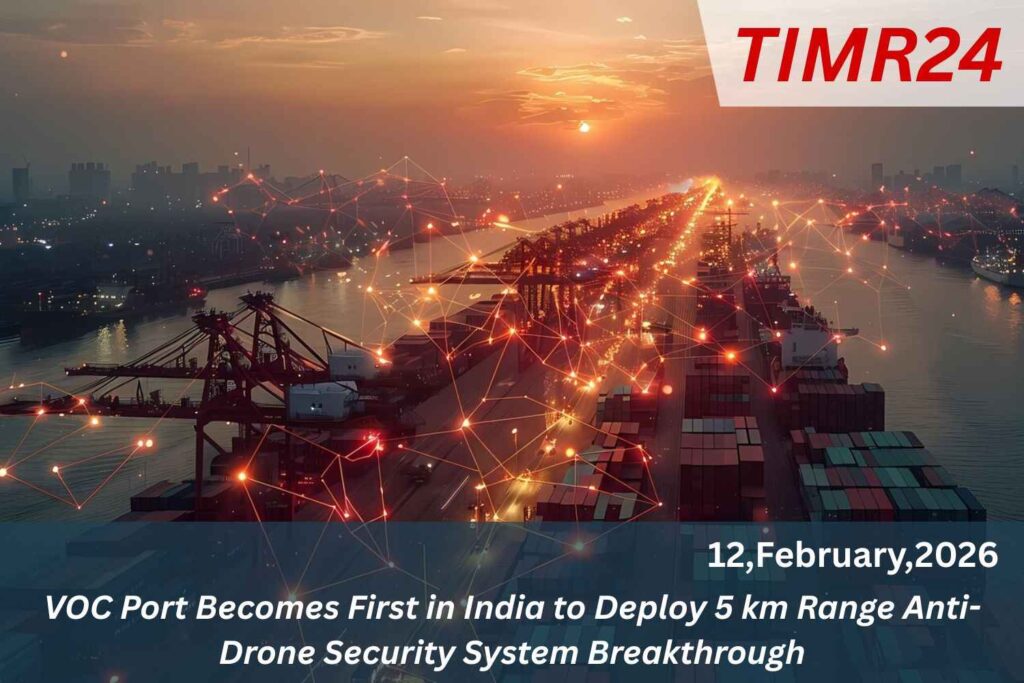
VOC Chidambaranar Port Authority is the first in India to implement an advanced Anti-Drone System aimed at enhancing maritime and coastal security and protecting critical infrastructure. The project features a comprehensive detection and jamming system with 360-degree coverage, capable of real-time drone detection, tracking, classification, and neutralization over a range of 5 km. The agreement for this initiative was signed by key officials from the port authority and Central Electronics Limited, with an expected completion within three months. This initiative aligns with the Maritime India Vision 2030 and will improve airspace surveillance and compliance with coastal defense standards.
Adoption Of Advanced Security Technologies
Ultimately setting a new security benchmark for Indian ports India’s maritime infrastructure is witnessing rapid modernization with the adoption of advanced security technologies, and the recent deployment of a 5 km range anti-drone security system at V.O. Chidambaranar (VOC) Port marks a significant milestone in this transformation. Located in Thoothukudi, Tamil Nadu, VOC Port has become the first port in India to implement such an advanced anti-drone surveillance and defense system, setting new benchmarks in port security and operational safety. The initiative reflects the government’s broader vision to strengthen critical infrastructure and ensure robust protection.
Against emerging aerial threats, particularly in high-value logistics and maritime environments The adoption of anti-drone technology comes at a time when unmanned aerial vehicles are increasingly being used across industries for surveillance, delivery services, and mapping activities. While drones offer several economic and operational benefits, they also pose serious security challenges when operated without authorization in sensitive zones such as ports, airports, and defense establishments. VOC Port’s proactive approach aims to mitigate risks related to espionage, smuggling, and potential sabotage by implementing cutting-edge defense mechanisms.
Enables Port Authorities To Respond
The system utilizes a combination of radar-based detection, radio frequency sensors, and electronic jamming technology to identify and disable suspicious aerial objects. This layered security framework enhances situational awareness and enables port authorities to respond quickly to potential threats on developing smart ports equipped with digital infrastructure and automated monitoring systems. Modern ports are no longer limited to cargo handling operations; they function as complex logistics hubs where security, efficiency, and technological innovation play critical roles. By integrating anti-drone capabilities into its operational ecosystem.
VOC Port demonstrates how technology-driven solutions can enhance both safety and productivity in maritime trade From an operational perspective, the anti-drone system provides multiple benefits that extend beyond security. The presence of unauthorized drones can disrupt navigation systems, interfere with cargo handling equipment, and compromise data privacy. With the implementation of the new system, VOC Port can ensure uninterrupted operations, minimize risks to personnel, and protect sensitive information related to shipping and logistics activities The strategic importance of VOC Port further highlights the need for such advanced security infrastructure.
Requires Continuous Protection Against
As one of the major ports in southern India, it plays a crucial role in facilitating international trade, handling bulk cargo, containers, and industrial shipments. The port’s contribution to regional economic growth and supply chain efficiency makes it a critical asset that requires continuous protection against evolving threats. The deployment of the anti-drone system strengthens the port’s resilience and supports India’s efforts to secure vital economic infrastructure The introduction of anti-drone technology also reflects the growing emphasis on national security and defense preparedness. With increasing geopolitical complexities and technological advancements.
Safeguarding strategic locations has become a top priority for governments worldwide Another significant aspect of this deployment is its role in promoting smart port development. Smart ports leverage digital technologies such as artificial intelligence, Internet of Things (IoT), and automated monitoring systems to optimize operations and improve decision-making processes. The anti-drone system at VOC Port integrates advanced detection technologies that provide real-time data and actionable insights to security personnel. This digital transformation not only enhances surveillance capabilities but also improves overall operational efficiency by enabling data-driven management of port activities.
VOC Port’s Successful Implementation
The move is expected to influence other major ports across India to adopt similar technologies. As maritime trade continues to expand and security threats become more sophisticated, the need for comprehensive protection mechanisms will increase. VOC Port’s successful implementation of the anti-drone system serves as a model for other ports and logistics hubs seeking to enhance their security infrastructure. The initiative demonstrates how proactive investment in technology can address emerging challenges and ensure long-term sustainability In addition to strengthening security, the deployment supports India’s vision of becoming a global leader in maritime.
Trade and logistics Efficient and secure ports play a vital role in attracting international investments, improving supply chain reliability, and boosting economic growth. By implementing world-class security measures, VOC Port enhances its competitiveness and reinforces India’s position in global trade networks. The initiative also aligns with the government’s focus on infrastructure development and technological innovation as key drivers of economic progress For businesses and stakeholders involved in shipping, logistics, and supply chain management, the enhanced security framework offers increased confidence in port operations. The protection of cargo, vessels, and infrastructure ensures.
Operational Environment Benefits
Smooth trade activities and reduces the risk of disruptions caused by unauthorized drone activities. This improved operational environment benefits exporters, importers, and logistics service providers by ensuring reliable and secure handling of goods From a technological (India) standpoint, the anti-drone system represents a significant advancement in surveillance capabilities. The integration of multiple detection methods allows for accurate identification of aerial threats and minimizes false alarms. The system’s ability to neutralize drones through electronic countermeasures provides an effective response mechanism without causing damage to surrounding infrastructure.
Such advanced capabilities highlight the importance of adopting innovative technologies to address modern security challenges The deployment also emphasizes the importance of regulatory compliance and responsible drone usage. As drone technology becomes more accessible, ensuring adherence to safety guidelines and operational restrictions is essential to prevent misuse. The presence of anti-drone systems in sensitive areas serves as a deterrent against unauthorized activities and promotes responsible use of unmanned aerial vehicles The successful implementation of the anti-drone security system at VOC Port is expected to pave the way for further.
Need For Collaboration Between
Technological advancements in maritime infrastructure. Continuous innovation and investment in security technologies will be crucial to addressing emerging threats and maintaining operational efficiency. The initiative underscores the need for collaboration between (India) government agencies, technology providers, and industry stakeholders to develop comprehensive solutions that enhance security and support sustainable growth VOC Port’s deployment of a 5 km range anti-drone security system marks a significant step forward in India’s maritime security and infrastructure development journey. By becoming the first port in the country to implement.
Such advanced technology, VOC Port sets a new standard for safety, innovation, and operational excellence. The initiative not only enhances security but also supports economic growth, technological advancement, and national defense objectives. As India continues to modernize its infrastructure and strengthen its strategic capabilities, the adoption of advanced security solutions like anti-drone systems will play a crucial role in ensuring the safety and resilience of critical assets across the nation.
Q1. What is the anti-drone security system deployed at VOC Port?
It is an advanced surveillance and defense system that can detect, track, and neutralize unauthorized drones within a 5 km range.
Q2. Why is VOC Port’s anti-drone deployment significant?
VOC Port becomes India’s first port to deploy such long-range drone defense technology, strengthening maritime security.
Q3. Where is VOC Port located?
VOC Port (V.O. Chidambaranar Port) is located in Thoothukudi, Tamil Nadu.
Q4. How does the anti-drone system work?
The system uses radar detection, radio frequency sensors, and jamming technology to monitor and disable suspicious drones.
Q5. How will this system benefit port operations?
It improves cargo safety, prevents unauthorized surveillance, protects infrastructure, and strengthens national security.