



















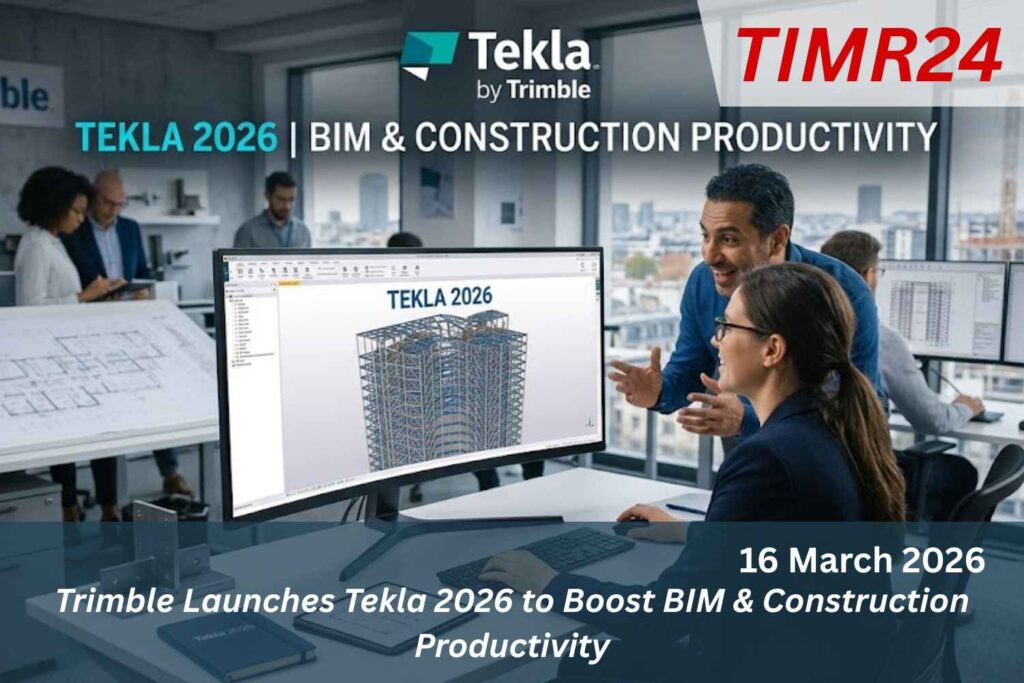
Trimble has launched the 2026 version of its Tekla® software, enhancing Building Information Modeling (BIM) for structural engineering and steel fabrication. This release streamlines the design-to-detailing process, minimizing manual tasks and data loss through data-driven workflows. The portfolio, including Tekla Structures and Tekla PowerFab®, promotes seamless data flow among stakeholders, ensuring project-wide consistency and real-time updates. New features such as the AI Model and Drawing Assistant boost productivity by allowing users to model using natural language. Innovations like the Project Settings Management Console and Layout Manager workflows improve.
Enhanced Interoperability With Revit
Collaboration and reduce discrepancies between design and actual data. Tekla’s advanced calculations for seismic design, enhanced interoperability with Revit, and automated wind pressure assessments support more accurate engineering practices. Overall, the Tekla 2026 suite leverages AI and cloud tools to significantly improve productivity while ensuring high accuracy in construction projects The global construction and engineering sector is rapidly embracing digital transformation, and Building Information Modeling (BIM) software has become the backbone of modern project delivery. In this evolving landscape, Trimble has officially launched.
The Tekla 2026 software suite, introducing powerful AI capabilities, cloud-based workflows, and improved interoperability designed to accelerate productivity across the BIM, engineering, and construction ecosystem. The latest update builds upon the legacy of the widely used Tekla Structures platform while integrating smarter automation and collaborative tools that help teams work faster and with greater accuracy throughout the design-to-construction lifecycle The release of Tekla 2026 reflects the growing importance of digital collaboration in construction projects where multiple stakeholders from architects and structural engineers to contractors and fabricators need real-time.
Tekla 2026 Is The Introduction Of AI-Enabled Tools
Access to project data The software suite aims to eliminate inefficiencies caused by fragmented workflows by creating a connected data environment that integrates models, drawings, and site information. According to the company, the 2026 version focuses on enabling a seamless flow of information across offices, fabrication shops, and construction sites so that project teams can rely on a single source of truth One of the major highlights of Tekla 2026 is the introduction of AI-enabled tools designed to automate routine tasks and reduce manual work. For example, the AI Cloud Fabrication Drawings service can automatically generate fabrication drawings by.
Analyzing libraries from previous projects and suggesting templates that best match the current model. Engineers can review the AI suggestions and refine them, significantly reducing the time needed to prepare detailed drawings. The system combines machine intelligence with human oversight to ensure accuracy while improving productivity for structural designers and detailers Another major innovation is the integration of the Trimble Assistant, an AI-powered productivity tool embedded within the software interface. This assistant provides contextual guidance to users, helping them understand features, troubleshoot issues, and perform modeling tasks using natural language commands.
Allowing Engineers To Work More Intuitively
In early preview stages, the new Model Assistant allows users to interact with a BIM model by simply describing the action they want to perform, such as creating structural components, modifying beam profiles, or exporting drawings. By allowing engineers to work more intuitively, the assistant reduces the learning curve and speeds up project execution Tekla 2026 also introduces advanced cloud-based project management features. One of the most notable additions is the Project Settings Management Console, which allows administrators to manage project environments and configurations directly through the cloud. Instead of manually distributing project files and settings to each team member.
The console ensures that everyone automatically works with the same standardized environment. This not only simplifies setup but also prevents errors caused by inconsistent project settings across different users Another important capability is the improved integration with the collaborative platform Trimble Connect. Through this integration, project data such as fabrication status, quality control information, delivery progress, and installation updates can be linked directly to model objects. This allows project stakeholders to monitor progress in real time while working within the BIM environment. The system also supports uploading PDF drawings and metadata directly into.
The shared platform, ensuring that field teams always access the most recent project information from tablets or mobile devices on site Tekla 2026 significantly enhances drawing and detailing workflows as well. Engineers can now edit models and general arrangement drawings simultaneously, allowing design changes to appear instantly in both views. This real-time synchronization eliminates the need to manually update drawings after modifying the model, thereby reducing errors and improving project efficiency. The update also includes improved 2D detailing tools that make it easier to create annotations, sketches, and notes directly within drawings.
General Arrangement Drawings Simultaneously-P=000
These enhancements help design teams finalize construction documentation faster while maintaining accuracy across the project The release further expands the capabilities of infrastructure modeling with a re-engineered Bridge Creator tool. This feature simplifies the creation of complex bridge models by storing configuration data directly within the model instead of relying on external files. Engineers can define bridge stations more easily, place components along curved alignments, and automate repetitive tasks that previously required manual adjustments. By reducing modeling complexity, the new tool helps infrastructure designers deliver projects faster while maintaining high levels of precision.
Another major productivity enhancement comes from improved interoperability with other design software used in the architecture, engineering, and construction industry. Tekla 2026 supports enhanced integration with platforms such as Autodesk Revit and SketchUp, enabling architects and structural engineers to collaborate more effectively. Models created in Tekla can also be shared through cloud-based environments and imported into structural analysis tools for verification, ensuring a consistent digital workflow from concept design to fabrication and construction The Tekla software portfolio includes several interconnected applications that address different aspects of construction engineering.
In addition to Tekla Structures, the 2026 release also updates solutions such as Tekla Structural Designer, Tekla Tedds, and Tekla PowerFab. These tools collectively cover structural analysis, engineering calculations, and fabrication management. For instance, Tekla Tedds introduces new automated calculations for structural design tasks, while Tekla PowerFab improves quality control in steel fabrication by validating manufacturing processes before shipment In the context of BIM adoption, Tekla 2026 aligns with the broader industry trend toward digital construction platforms that integrate design, analysis, fabrication, and site execution into a unified ecosystem.
Tools ollectively Cover Structural Analysis
As construction projects become more complex and involve larger datasets, the need for intelligent tools that automate repetitive tasks and maintain data (India) consistency becomes increasingly important. By embedding AI capabilities and cloud-based workflows directly into the BIM environment, Trimble aims to empower engineering teams to focus more on innovation and problem-solving rather than manual data management.
The launch of Tekla 2026 also highlights the growing role of AI in the architecture, engineering, and construction (AEC) industry. From automated drawing generation to intelligent assistants that interpret natural language commands, AI is transforming how engineers interact with digital models. These technologies not only improve productivity but also enable professionals to explore design alternatives more quickly and respond to project challenges with greater agility The adoption of tools like Tekla 2026 is expected to accelerate the shift toward data-driven construction workflows. By connecting design models, fabrication data, and site information in real time.
Organizations can reduce costly errors, improve coordination between teams, and deliver projects more efficiently. For companies operating in competitive infrastructure and building markets, such digital capabilities are becoming essential for maintaining project quality and meeting tight deadlines Ultimately, the Tekla 2026 release represents another step forward in the evolution of (India) BIM technology. With its combination of AI automation, cloud connectivity, and enhanced interoperability, the platform aims to redefine how engineers, designers, and contractors collaborate throughout the lifecycle of a construction project. As digital transformation continues to reshape the construction sector.
Q1. What is Tekla 2026?
Tekla 2026 is the latest BIM software suite from Trimble designed to improve engineering, detailing, and construction productivity through AI and cloud-based workflows.
Q2. What are the key features of Tekla 2026?
Major features include AI-assisted fabrication drawings, cloud project management, integrated Trimble Assistant, improved drawing tools, and better BIM interoperability.
Q3. How does Tekla 2026 improve construction productivity?
It automates repetitive tasks, connects project data across teams, and enables real-time collaboration between designers, engineers, and construction professionals.
Q4. Which software is included in the Tekla 2026 portfolio?
The portfolio includes Tekla Structures, Tekla Structural Designer, Tekla Tedds, and Tekla PowerFab.
Q5. Who uses Tekla software?
Structural engineers, steel fabricators, contractors, and BIM professionals use Tekla for design, detailing, and construction project coordination.