












India’s construction industry is experiencing a new wave of disruption driven by tech-enabled startups. These companies aim to transform building design, construction, and management using cutting-edge technologies. Despite the global infrastructure market’s shift towards automation, India’s infrastructure industry has not fully embraced it, leading to sluggish growth. NBM&CW interviewed startups like Buildo.Market, Equip9, Elixia Inc, Pace Robotics, PowerPlay, TappetBox, Tracecost, and Onsite to identify pioneers in this digital transformation. The Indian construction industry, long considered traditional and labor-intensive, is undergoing a transformative shift driven.
By tech-enabled startups that integrate digital technologies, automation, and data-driven solutions into everyday construction practices. For decades, the sector relied on conventional project management techniques, manual labor, and fragmented supply chains, leading to delays, cost overruns, and inefficiencies. However, the rise of startups leveraging artificial intelligence (AI), Internet of Things (IoT), drones, robotics, and Building Information Modeling (BIM) is redefining how projects are designed, executed, and maintained. These companies are not only enhancing efficiency and accuracy but also introducing sustainable practices, ensuring that India’s infrastructure.
Growth aligns with modern technological standards and environmental considerations One of the most significant transformations is occurring in project management and workflow optimization. Startups such as BuildOps India and Procore India have developed cloud-based platforms that centralize project data, allowing architects, contractors, and suppliers to collaborate seamlessly. These platforms provide real-time updates, task tracking, and resource allocation, which dramatically reduce communication gaps that often plague construction projects. By digitizing workflows, companies can monitor project milestones, evaluate progress, and predict potential delays.
Before they escalate into costly problems. Internal links to our sections on (Construction) provide deeper insights into these modern solutions Another area of innovation is smart construction machinery. Traditionally, heavy equipment like excavators, motor graders, and compactors depended entirely on human operators, which often resulted in operational errors and inefficiencies. Startups such as Trimetric Technologies and Auro Robotics are integrating IoT sensors and GPS-enabled systems into construction machinery, enabling real-time monitoring and precision control. These advancements not only reduce errors but also improve safety on construction sites.
Sensors can detect equipment fatigue, overloading, or environmental risks, alerting operators to take preventive action. This integration of hardware and software ensures projects are completed faster and more reliably, a critical factor in India’s rapidly expanding urban infrastructure BIM (Building Information Modeling) has emerged as another game-changer. Startups specializing in BIM, such as Cements and Square Yards, enable architects and engineers to create detailed 3D digital models of buildings and infrastructure projects. These models allow all stakeholders to visualize project components, simulate construction sequences, and identify design conflicts.
Before any physical work begins. BIM also facilitates the integration of cost estimation, resource management, and environmental impact analysis, providing a holistic approach to construction planning. Internal references to (Technologies) explain how these tools are shaping modern construction practices and supporting smarter decision-making across project lifecycles The adoption of drones and robotics is revolutionizing survey, inspection, and material handling operations. Drones equipped with high-resolution cameras and LiDAR sensors conduct aerial surveys, capturing precise measurements and mapping project sites efficiently This reduces the need for manual.
Labor and increases accuracy in terrain analysis, structural assessment, and progress tracking. Robotics, meanwhile, is being applied in brick-laying, concrete pouring, and transporting construction materials, significantly improving speed and reducing human dependency. Startups like Construction Robotics are introducing autonomous systems capable of performing repetitive tasks with high precision, which not only increases efficiency but also ensures worker safety by minimizing exposure to hazardous conditions Sustainability is another crucial area where tech-enabled startups are making a mark. With growing awareness of environmental impact, many startups.
Are introducing green construction practices, energy-efficient designs, and eco-friendly building materials. Innovations in waterproofing, modular construction, and smart waste management are helping companies comply with environmental regulations while reducing operational costs. For example, modular construction allows prefabricated components to be manufactured off-site and assembled on-site, reducing waste, speeding up timelines, and minimizing the carbon footprint. For more insights on sustainable practices, external references such as provide valuable guidance for integrating environmental considerations into construction projects.
The supply chain and procurement process in construction are also being optimized through technology. Traditionally, delays in material delivery and mismanagement of inventory could disrupt project timelines. Startups are now leveraging AI and predictive analytics to forecast material needs, track shipments in real-time, and manage inventory more efficiently. By digitizing the supply (Construction) chain, contractors can minimize downtime, reduce costs, and maintain uninterrupted project execution. Internal links detail how these technological integrations are addressing longstanding operational challenges in India’s construction sector Furthermore, the collaboration between traditional.
Construction firms and tech startups is creating a synergy that enhances innovation. Established firms benefit from startups’ agility and technology expertise, while startups gain access to large-scale projects and market credibility. This collaborative model allows for the seamless integration of new technologies into existing construction practices, fostering an ecosystem where innovation and experience co-exist. Companies are increasingly engaging in joint ventures, technology rentals, and pilot projects to test and implement AI-driven systems, robotic machinery, and data-driven project management solutions Another notable trend is the use of data analytics for predictive.
Maintenance and risk management. By collecting data from sensors on machinery, building structures, and environmental conditions, construction managers can analyze patterns and predict potential failures before they occur. This approach minimizes downtime, prevents accidents, and ensures that structures meet safety and durability standards. Startups offering predictive analytics platforms are helping construction firms transition from reactive problem-solving to proactive management, which is essential for large-scale infrastructure projects in India.
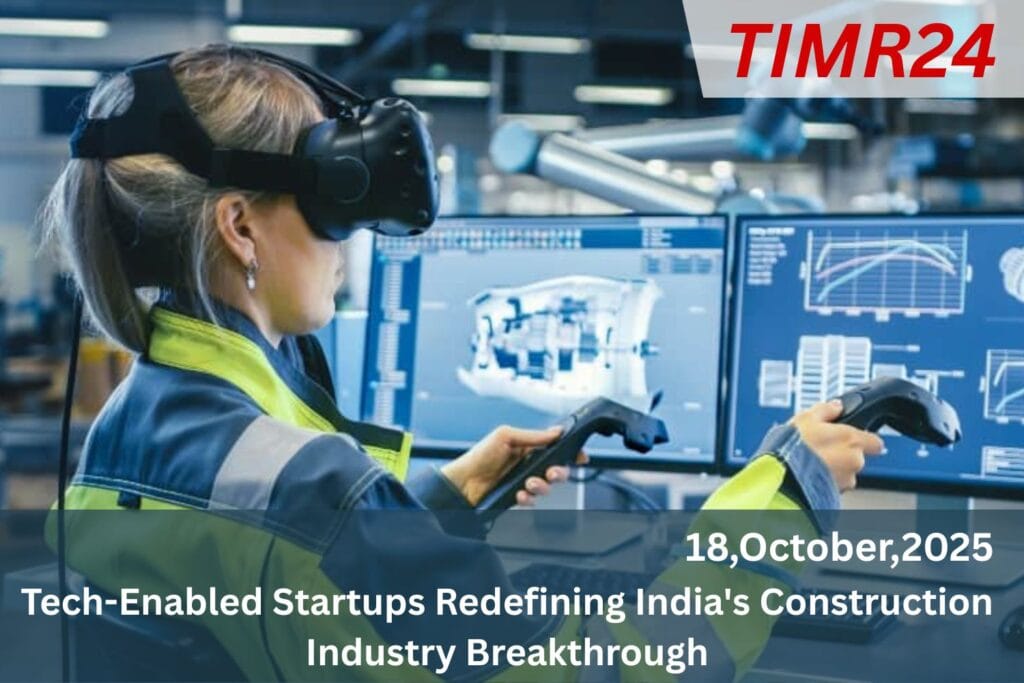
The integration of digital learning and workforce training is also transforming the construction landscape. Startups are providing online training modules, VR-based simulations, and AI-powered skill assessments to upskill workers and improve site productivity. By combining technology with human resources development, these startups ensure that the workforce is better equipped to handle modern construction equipment, digital tools, and safety protocols. This investment in human capital is critical for sustaining technological adoption and enhancing overall efficiency.
In conclusion, tech-enabled startups are driving a revolution in India’s construction industry, redefining traditional practices with digital solutions, smart machinery, sustainable innovations, and data-driven decision-making. From project management platforms and BIM integration to robotics, drones, and AI-powered analytics, these companies are transforming how construction projects are planned, executed, and maintained. By fostering collaboration between startups and established firms, embracing sustainable practices, and leveraging predictive technologies, India’s construction sector is poised to become faster, safer, and more cost-effective.
Q1. What are tech-enabled startups in the construction sector?
Tech-enabled startups integrate digital technologies like AI, IoT, and BIM to improve construction efficiency, safety, and cost-effectiveness.
Q2. How are these startups transforming traditional construction?
They streamline project management, reduce manual errors, optimize supply chains, and introduce smart construction equipment.
Q3. Which technologies are most commonly used?
Artificial Intelligence, Internet of Things (IoT), drones, robotics, Building Information Modeling (BIM), and predictive analytics are widely adopted.
Q4. Are tech-enabled startups suitable for small-scale projects?
Yes, many startups offer scalable solutions that can benefit both small contractors and large construction firms.
Q5. How can construction companies collaborate with these startups?
Companies can partner for software integration, equipment rentals, or joint innovation projects to enhance productivity and sustainability.