




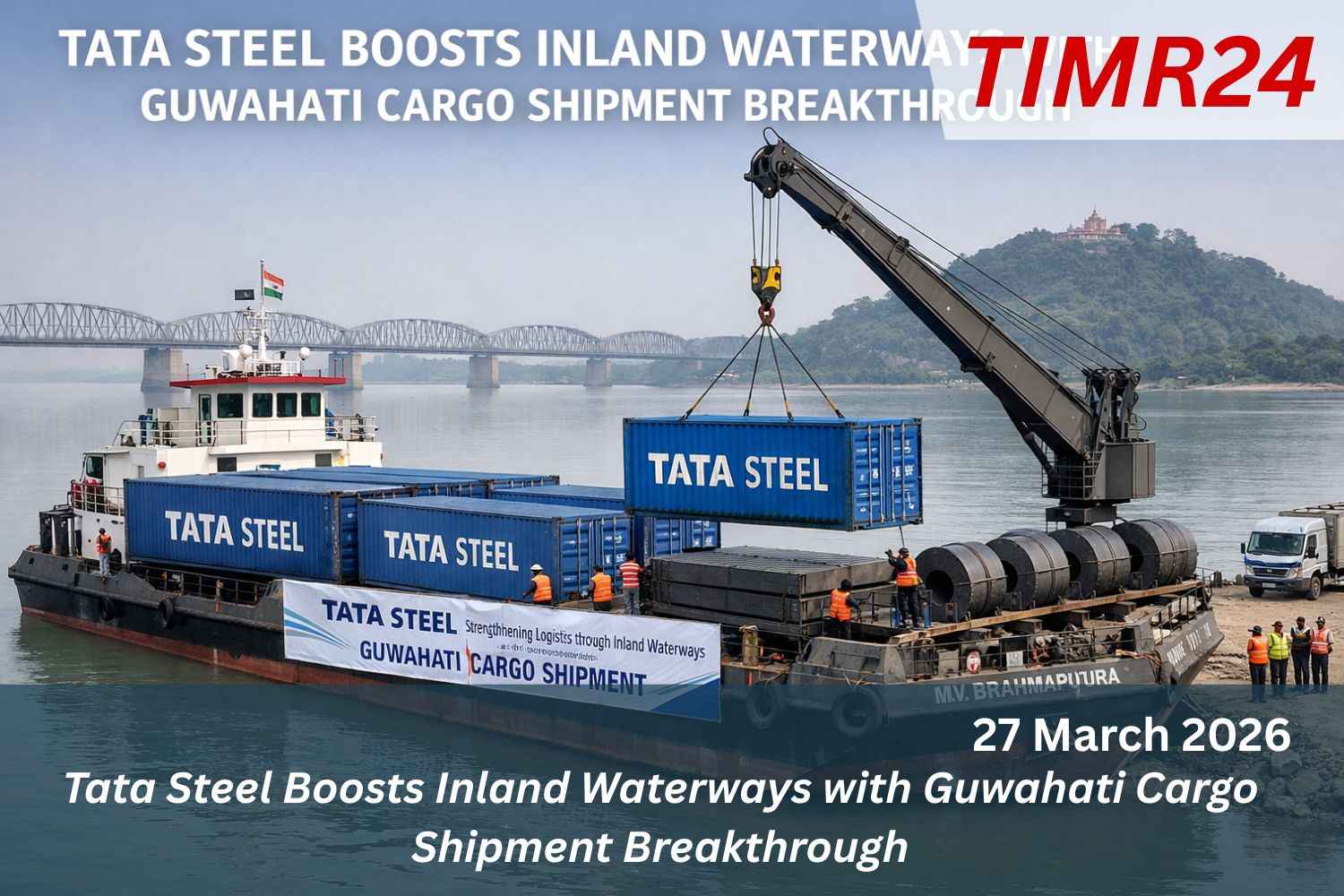











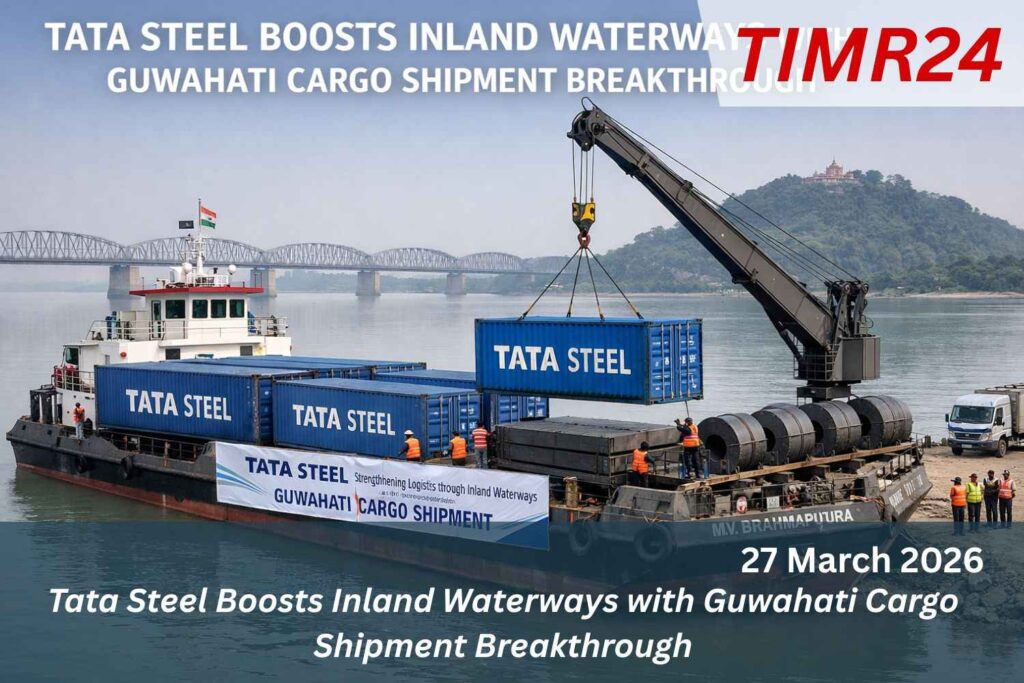
A cargo consignment of granulated blast furnace slag and TMT bars has reached Pandu via the Indo-Bangladesh Protocol Route, signifying progress in bulk cargo transport using inland waterways. Shipped by Tata Steel Limited for Larsen & Toubro Limited, the consignment comprised 23,980 bags of slag (approximately 1,199 MT) and 300 MT of TMT bars, transported by Tug MV Trishul with barges D.B. Dikhu and D.B. Ajay. This movement underscores the growing efficiency of multimodal logistics and the increasing reliance on water transport for heavy cargo, facilitated by the Inland Waterways Authority of India to enhance logistics efficiency and regional connectivity.
Routine Shipment But A Strategic Move
Tata Steel has taken a significant step toward transforming India’s logistics landscape by successfully transporting 1,499 metric tonnes of cargo to Guwahati via inland waterways using the Indo-Bangladesh Protocol Route. This development is not just a routine shipment but a strategic move that highlights the growing importance of waterways as a sustainable and efficient logistics solution in India. As the country continues to expand its infrastructure and industrial capabilities, the need for cost-effective and environmentally friendly transport systems has become increasingly important. Inland waterways, once underutilized, are now gaining momentum due to.
Policy support and private sector participation, and Tata Steel’s initiative serves as a strong example of how large corporations can contribute to this shift The shipment to Guwahati represents a well-planned logistics strategy that integrates multiple modes of transport while reducing reliance on traditional road and rail networks. Inland waterways offer several advantages, including lower fuel consumption, reduced carbon emissions, and the ability to handle large volumes of cargo efficiently. For a company like Tata Steel, which deals with bulk materials, these benefits translate into significant cost savings and improved operational efficiency. By choosing this route, the company has demonstrated.
Environmental Footprint Indo-Bangladesh Protocol
Its commitment to optimizing its supply chain while also aligning with India’s sustainability goals. This move is particularly relevant at a time when industries are under increasing pressure to adopt greener practices and reduce their environmental footprint The Indo-Bangladesh Protocol Route plays a crucial role in enabling such shipments by providing a navigable waterway that connects India’s eastern ports with the northeastern region. This route not only shortens transit time but also opens up new opportunities for trade and commerce between the two countries. For the Northeast, which has traditionally faced logistical challenges due to its geographical location, inland.
Waterways offer a reliable and efficient alternative. The successful execution of this shipment is expected to boost confidence among other industries and encourage them to explore similar logistics solutions. It also highlights the potential of waterways to become a key component of India’s multimodal transport network From a broader perspective, Tata Steel’s initiative aligns with the Government of India’s vision to promote inland waterways as part of its infrastructure development strategy. Programs aimed at enhancing National Waterways and improving river navigation are already underway, and private sector participation is essential to ensure their success.
Economy And Environment Another Important
By actively using these waterways, companies can help create demand, which in turn justifies further investment in infrastructure such as terminals, dredging, and navigation systems. This creates a positive cycle of growth that benefits both the economy and the environment Another important aspect of this development is its impact on regional economic growth. The Northeast region of India has immense potential for industrial and commercial expansion, but logistical constraints have often limited its progress. Improved connectivity through inland waterways can significantly enhance the movement of goods, reduce transportation costs, and attract investment.
Tata Steel’s shipment to Guwahati is a step in this direction, demonstrating how efficient logistics can support regional development. It also sets a precedent for other companies to follow, thereby accelerating the adoption of waterways as a mainstream transport option In addition to economic benefits, the environmental impact of this initiative cannot be overlooked. Inland water transport is widely regarded as one of the most eco-friendly modes of transportation. It produces fewer greenhouse gas emissions compared to road and rail transport and has a lower impact on infrastructure. By shifting a portion of its logistics operations to waterways.
Shipment Also Underscores Importance
Tata Steel is contributing to the reduction of carbon emissions and supporting India’s climate goals. This is particularly important as industries worldwide are moving toward sustainable practices and looking for ways to minimize their environmental impact. The success of this shipment also underscores the importance of collaboration between various stakeholders, including government agencies, logistics providers, and private companies. Efficient coordination is essential to ensure smooth operations, especially when dealing with cross-border routes like the Indo-Bangladesh Protocol Route.
The seamless execution of this project reflects the growing maturity of India’s logistics ecosystem and its ability to handle complex transportation requirements. It also highlights the role of policy frameworks in facilitating such initiatives, as supportive regulations and incentives (India) can significantly boost the adoption of inland waterways the use of inland waterways is expected to grow as more companies recognize their benefits and invest in suitable logistics solutions. Technological advancements, improved infrastructure, and increased awareness are likely to drive this growth further. Tata Steel’s initiative serves as a model for other industries, demonstrating how innovative.
Ensuring Sustainable And Efficient Growth
Logistics strategies can deliver both economic and environmental benefits. As India continues to develop its infrastructure and expand its industrial base, the integration of waterways into the logistics network will play a crucial role in ensuring sustainable and efficient growth The shipment of 1,499 metric tonnes of cargo to Guwahati via inland waterways marks a significant milestone in India’s logistics journey. It reflects a strategic shift toward sustainable transportation and highlights the potential of waterways to transform the way goods are moved across the country.
Tata Steel’s leadership in this area not only strengthens its own supply chain but also contributes to the broader goal of building a more efficient and environmentally (India) friendly logistics system. As more companies follow suit, inland waterways are set to become a key pillar of India’s infrastructure development, driving economic growth and sustainability in the years to come.
Q1. What is the significance of this shipment?
It marks a major step in promoting inland waterways for bulk cargo transportation in India.
Q2. Which route was used for the cargo shipment?
The Indo-Bangladesh Protocol Route was used to reach Guwahati.
Q3. How much cargo was transported?
A total of 1,499 metric tonnes of cargo was shipped.
Q4. Why are inland waterways important?
They reduce logistics costs, carbon emissions, and road congestion.
Q5. How does this benefit Northeast India?
It improves connectivity and supports regional industrial growth.