
















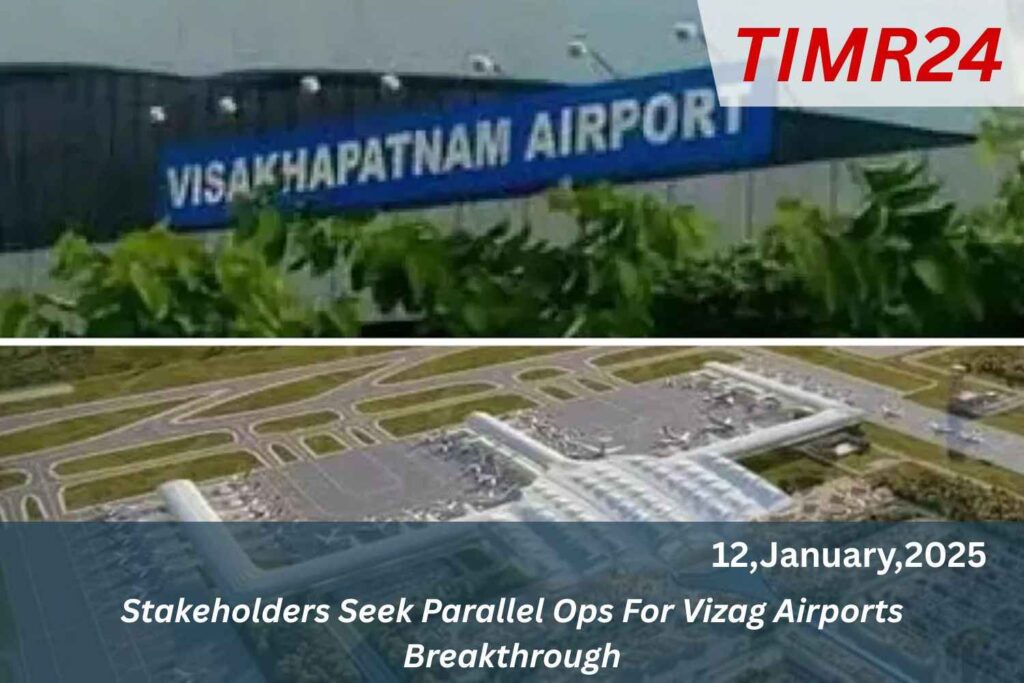
Stakeholders in north Seek Andhra Pradesh are advocating for the continued civil operations of INS Dega airport alongside the upcoming Bhogapuram International Airport, which is set to commence commercial operations in June. With significant airport infrastructure almost complete, proponents argue that ongoing operations are necessary due to anticipated delays in vital transport links, such as the six-lane beach corridor and Metro Rail connections, both projected to take around three years. The increase in traffic congestion in Visakhapatnam, attributed to 5,000 new vehicles monthly, highlights the urgency of addressing infrastructure needs.
Goa’s Dabolim Airport Suggest Seek
Major industrial areas like Atchutapuram SEZ and Pharma City, which account for considerable air traffic, are distant from Bhogapuram, reinforcing the call for dual airport operations to facilitate regional economic growth. Comparisons with Goa’s Dabolim airport suggest that operating both facilities could support balanced regional development, crucial for Andhra Pradesh’s target of achieving a $125–135 billion economy by 2032–35. In 2025, Visakhapatnam’s airport handled over 2.75 million passengers and 19,000 flights, demonstrating its operational significance The aviation landscape in North Andhra is currently at a historic crossroads With the successful.
Landing of the first validation flight at the Alluri Sitharama Raju (Bhogapuram) International Airport on January 4, 2026, the region is technically ready to enter a new era of global connectivity. However, the excitement is tempered by a growing movement from the local business community and travel associations who fear that closing the existing Visakhapatnam International Airport will create a logistical nightmare for the city’s southern and western industrial corridors The primary argument for parallel operations stems from the geographical distribution of Vizag’s economy. The city’s major growth engines, including the Visakhapatnam Steel.
Executives And Technicians Working
Plant, the Atchutapuram SEZ, and the Jawaharlal Nehru Pharma City, are located on the opposite side of the city from Bhogapuram. For executives and technicians working in these hubs, a trip to the new airport could involve traversing the entire length of the city, (India) potentially taking longer than the flight itself. Stakeholders argue that while Bhogapuram is essential for wide-body aircraft and massive international expansion, the existing airport at INS Dega provides vital, central access for domestic business travelers Furthermore, the infrastructure lag is a significant “pain point.” While the GMR Group has been commended for nearing 96% completion of the airport.
terminal ahead of schedule, the supporting road network is trailing. The proposed metro rail extension to Bhogapuram and the 12-flyover project are still in various stages of tendering and initial construction. Without these, the National Highway-16 is expected to face unprecedented congestion. By allowing parallel operations, the government could distribute the traffic load, ensuring that the transition to the greenfield site does not stifle the very economic growth it was designed to promote The Airports Authority of India (AAI) has previously noted the high level of investment already made in the current airport, including a recently commissioned parallel taxi track.
Vizag Allowing
That increased flight handling capacity Scrapping this utility just as the city aims for a $130 billion economy seems counter-intuitive to many. As the debate continues, the (India) focus remains on whether the Ministry of Civil Aviation will provide a “Goa-style” exception for Vizag, allowing the city to leverage two functional gateways to boost its status as the “Economic Capital of the East.”
Q1. Why are stakeholders demanding parallel airport operations in Vizag?
Because Vizag has two functional airports, and using both can reduce congestion and improve flight availability.
Q2. Which airports are involved?
Visakhapatnam International Airport (GMR) and INS Dega (Naval Airport).
Q3. How will this benefit passengers?
It will lead to more flight slots, reduced delays, and better connectivity.
Q4. Who is supporting this proposal?
Local businesses, tourism bodies, industry chambers, and airline operators.
Q5. Does this require government approval?
Yes, it needs coordination between the Ministry of Defence, Civil Aviation, and airport operators.