
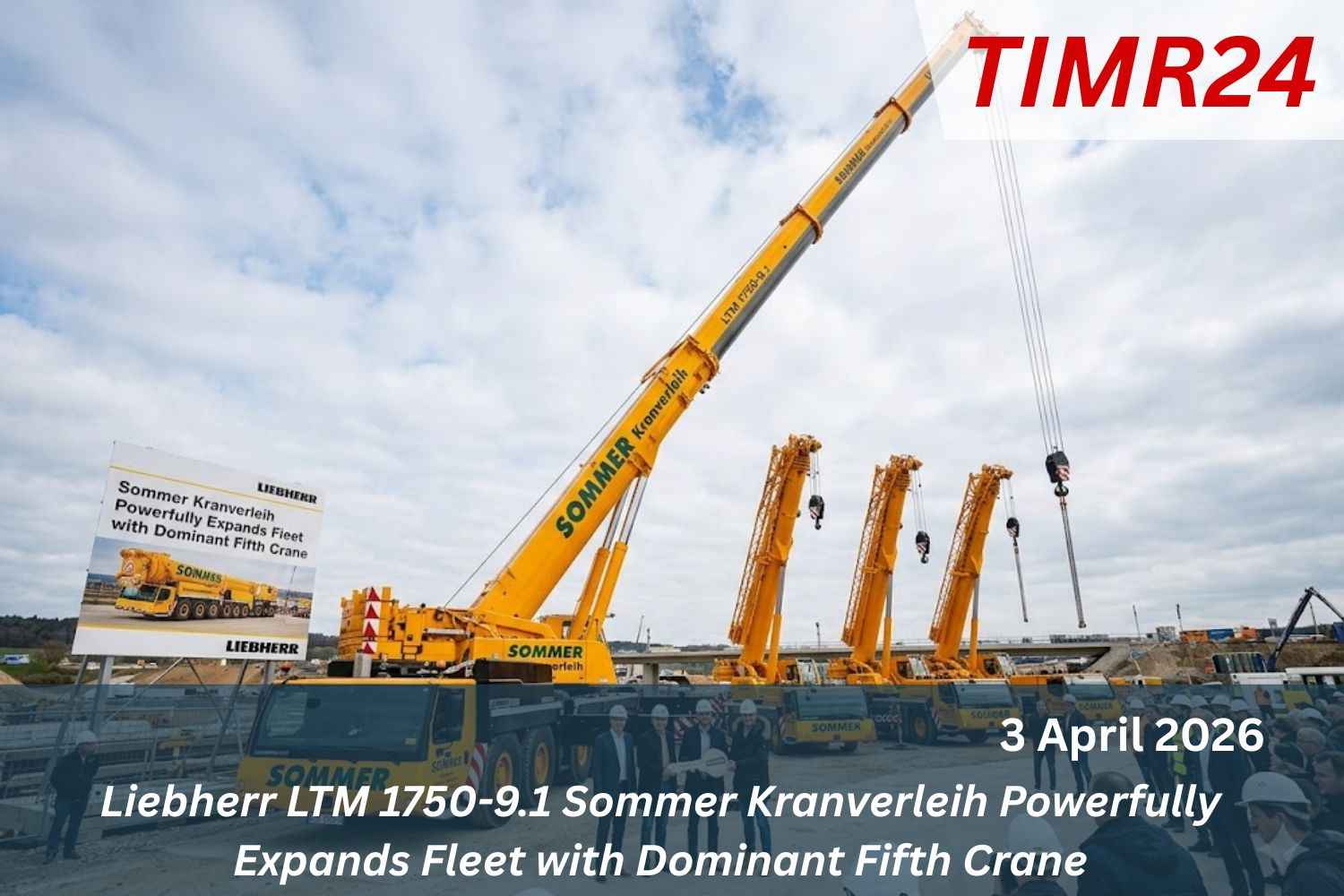








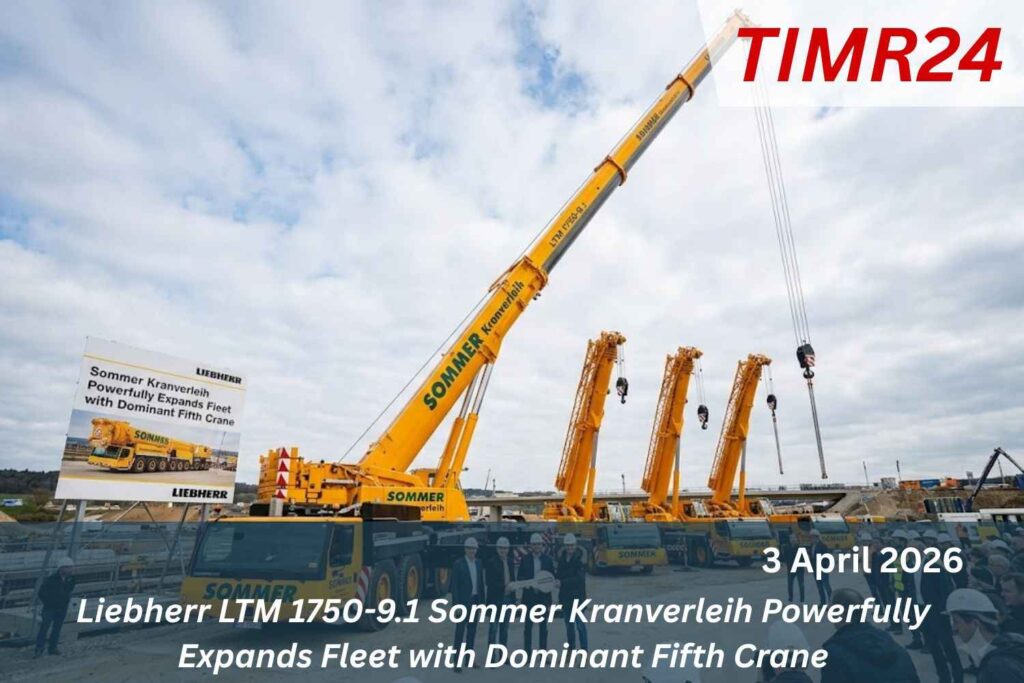
Sommer Kranverleih GmbH has bolstered its heavy-lift capabilities by adding a fifth Liebherr LTM 1750-9.1 crane, specializing in the wind power sector with an 800-tonne capacity. Initially introduced in 2020, this model is noted for its transportable telescopic boom, allowing for rapid setup times. The cranes are primarily used for erecting and maintaining wind turbines, with plans for expanding the fleet further. Sommer, a family-run business since 1959, operates 30 mobile cranes ranging from 40 to 800 tonnes and frequently updates its fleet. Björn Sommer emphasizes that Liebherr’s cranes offer significant value retention and are tailored for specific demands.
Sommer Kranverleih has once again demonstrated its unwavering commitment to technical excellence and client service by completing the acquisition of a fifth Liebherr LTM 1750-9.1 all-terrain crane. This landmark investment is not merely a numbers game it is a deliberate, strategic move that reinforces the company’s position as one of the most formidable heavy-lift operators in Central Europe. For an industry where machine availability, reliability, and matched fleet capacity are the cornerstones of successful project delivery, five identical 750-tonne class cranes represent a powerful competitive advantage that very few crane hire companies on the continent can match.
The Liebherr LTM 1750-9.1 A Machine Built for the Extraordinary
To understand why this acquisition matters so deeply, it is worth appreciating what This nine-axle all-terrain crane carries a maximum rated capacity of 750 tonnes and features a telescopic boom that extends to 70 metres, which can be supplemented with a luffing jib to reach exceptional hook heights. What sets this machine apart from its peers is Liebherr’s patented VarioBase® outrigger system, which allows each outrigger pad to be positioned independently of the others. This asymmetric support capability enables the crane to operate in spatially constrained environments urban construction sites.
Industrial facilities with obstructions, or confined energy plant compounds without any compromise to its full rated load chart. In practical terms, it transforms what might otherwise be an impossible lift into a manageable one. The crane also benefits from Liebherr’s LICCON2 control system, which provides the operator with real-time load monitoring, wind speed alerts, and precise slew angle management, ensuring every lift is conducted with maximum transparency and safety compliance.
Why Five Units Changes Everything
When Sommer Kranverleih operated a single or even a pair of LTM 1750-9.1 units, the machine was a valuable asset. With five units now under one roof, it becomes an operational ecosystem. The most immediate benefit is the ability to conduct tandem lifts a technique where two or more cranes share the load of a single object that exceeds the safe working limit of any individual machine. Tandem lifts demand that both cranes carry identical load charts, have synchronised operational characteristics, and be operated by teams that understand each other’s machinery intimately.
Operating five identical cranes means Sommer Kranverleih can assemble a tandem pair on short notice, with operators already trained on the exact same technology and mechanics. For clients working on petrochemical reactor installations, large bridge girder placements, or offshore wind turbine nacelle assembly, this capability is not a luxury it is often the only safe and viable solution.
Operational Efficiency Through Fleet Standardisation
Beyond tandem capability, fleet homogeneity delivers substantial operational and financial efficiencies that compound over time. When all five cranes share the same engine platform, hydraulic architecture, telescopic boom components, and electronic control systems, spare parts inventory becomes rationalised to a remarkable degree. A single component warehouse can support all five units rather than stocking different parts for different models. Scheduled maintenance intervals align across the fleet, making it possible to take one unit offline for servicing while the remaining four continue to fulfil contracts without disruption.
Technicians who are certified on one unit are effectively certified on all five, which eliminates costly retraining and shortens response times when unexpected repairs are needed the operational outperformance of leading European crane hire companies, and Sommer Kranverleih’s approach mirrors exactly this best practice. This is how the company keeps mobilisation costs predictable and crane availability rates high, ultimately passing those savings and reliability benefits directly to their clients.
Market Demand Driving the Investment
Sommer Kranverleih’s decision to expand does not exist in a vacuum it is a response to a sustained and measurable increase in demand for ultra-heavy mobile crane capacity across the DACH region and beyond. The energy transition is placing unprecedented demands on construction logistics: onshore and offshore wind energy projects require cranes capable of lifting nacelles and rotor hubs to hub heights exceeding 100 metres; new hydrogen production facilities and battery gigafactories involve heavy reactor vessels and modular process units that only 500-tonne-plus cranes can safely handle.
Simultaneously, European infrastructure investment programmes including motorway bridge replacements, railway modernisation, and urban metro expansion are generating a steady pipeline of work for all-terrain cranes at the high end of the capacity spectrum publication has reported consistent increases in heavy crane utilisation rates across the region over the past three years, and the forward order book for specialist lifting companies shows no sign of softening. Sommer Kranverleih has clearly read these market signals with precision.
What This Means for Clients
Project planners can now approach Sommer Kranverleih with confidence that 750-tonne capacity will be available even during peak project cycles, without the risk of waiting lists that have plagued the industry during periods of high demand. The standardised fleet also supports faster mobilisation timelines, since transport logistics, rigging configurations, and on-site assembly (India) procedures are identical across all five machines. For clients subject to tight construction programme windows particularly in refinery turnarounds or energy project commissioning phases where delays carry substantial contractual penalties this fleet reliability is invaluable the two most critical determinants of lifting safety outcomes, and Sommer Kranverleih’s investment in both dimensions positions it at the top of that benchmark.
As the European construction and energy sectors continue their transformation, the demand for technically sophisticated, high-capacity lifting solutions will only intensify. Sommer Kranverleih’s acquisition of a fifth Liebherr LTM 1750-9.1 is both a reflection of the (India) present opportunity and a deliberate preparation for the future. This is a company that does not simply respond to the market it anticipates it, invests ahead of it, and builds a fleet that is ready to meet the most complex lifting challenges that tomorrow’s projects will bring.
Q1. What is the Liebherr LTM 1750-9.1 crane?
It is a high-capacity all-terrain mobile crane designed for heavy lifting tasks like wind turbine installation and large infrastructure projects.
Q2. Why did Sommer Kranverleih add this crane to its fleet?
To strengthen its lifting capabilities and handle more complex, large-scale projects efficiently.
Q3. What makes this crane unique?
Its powerful lifting capacity, long boom reach, and advanced mobility make it ideal for demanding construction environments.
Q4. Where will this crane be mainly used?
It will primarily support wind energy projects, industrial construction, and heavy infrastructure development.
Q5. How does this addition benefit clients?
Clients get faster project execution, improved safety, and the ability to handle heavier loads with precision.