






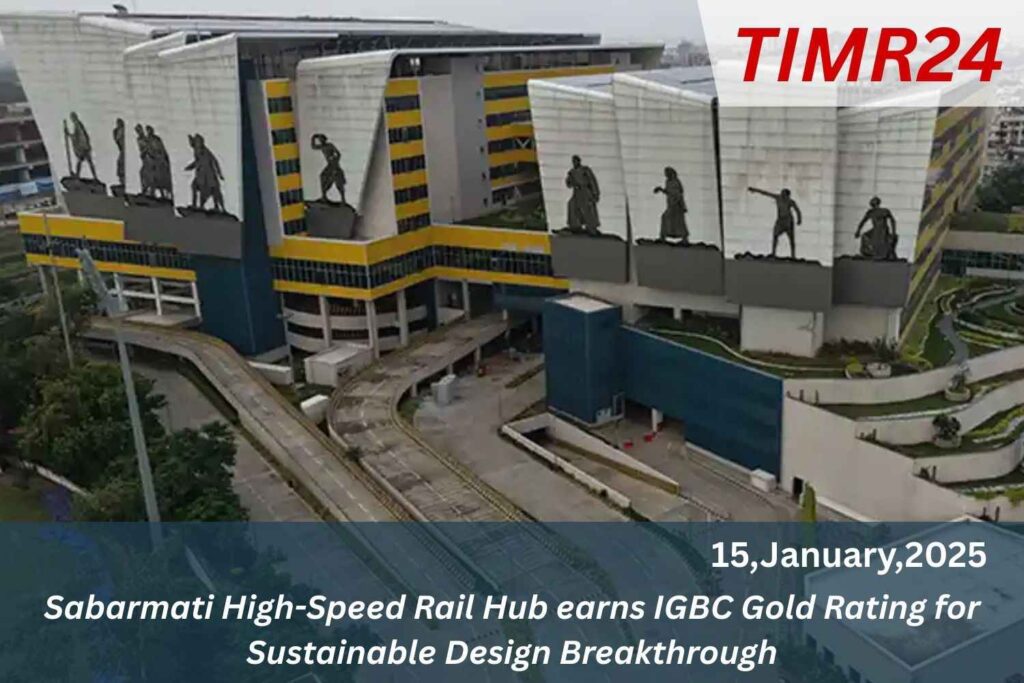
The High-Speed Rail Multi-modal Hub at Sabarmati, Gujarat, has received the Indian Green Building Council (IGBC) Gold Rating, marking it as the first building associated with India’s Bullet Train project to obtain this certification. This achievement signifies progress in sustainable infrastructure for the country’s high-speed rail network. The IGBC evaluated the hub based on sustainability and energy efficiency criteria Designed as a modern hub, it enables seamless connectivity with various transport systems, including the Sabarmati railway stations and metro. The building incorporates numerous green features, such as solar panels, efficient water fixtures, energy-efficient systems, and sustainable materials.
Minimizing Environmental Impact
It also includes effective waste management and optimized natural lighting. With amenities for passenger comfort, including waiting lounges and retail options, the hub sets a new standard for sustainable transport infrastructure while minimizing environmental impact The Sabarmati High-Speed Rail Hub achieving the IGBC Gold Rating marks a significant milestone in India’s journey toward sustainable infrastructure and climate-conscious transportation. As the country accelerates the development of high-speed rail corridors, this recognition highlights how large-scale mobility projects can be designed responsibly without compromising efficiency, passenger experience, or environmental performance.
The Sabarmati hub, a key component of the Mumbai–Ahmedabad High-Speed Rail project, now stands as a benchmark for integrating green building principles into complex transit infrastructure At the heart of this achievement lies a design philosophy that places sustainability alongside functionality. Unlike conventional railway stations that prioritize capacity alone, the Sabarmati High-Speed Rail Hub was conceptualized to reduce environmental impact throughout its lifecycle. From planning to construction and long-term operations, the project aligns with standards laid down by the Indian Green Building Council, an authority that promotes environmentally responsible construction practices across India.
Glazing, Optimized Orientation
One of the defining aspects of the Sabarmati hub is its energy-efficient architectural layout. The station design maximizes natural daylight penetration, reducing dependency on artificial lighting during daytime operations. High-performance glazing, optimized orientation, and reflective roofing materials help manage heat gain, leading to lower cooling loads. Energy-efficient HVAC systems further enhance operational efficiency, ensuring passenger comfort while minimizing power consumption. Such measures collectively contribute to reduced greenhouse gas emissions, aligning with India’s broader sustainability targets outlined by national urban development authorities.
Water conservation plays an equally critical role in the station’s sustainable framework. The hub incorporates advanced rainwater harvesting systems that capture and reuse precipitation for non-potable applications such as landscaping and sanitation. Low-flow fixtures and smart water management technologies ensure minimal wastage, a crucial consideration in urban regions facing increasing water stress. These initiatives resonate strongly with the principles promoted under India’s sustainable transportation policies, discussed further in this overview of sustainable transportation Material selection for the Sabarmati High-Speed Rail Hub also reflects a commitment to environmental responsibility.
Significant Volumes Of Waste
The project prioritizes locally sourced, recycled, and low-embodied-energy materials, reducing carbon emissions associated with transportation and manufacturing. Construction waste management strategies were implemented to divert significant volumes of waste away from landfills, reinforcing circular economy principles. Such responsible material practices are increasingly becoming a standard for modern infrastructure projects across India Beyond environmental performance, the station’s design enhances passenger experience and urban integration. Spacious concourses, intuitive wayfinding, and barrier-free accessibility ensure inclusivity for all users, including elderly.
Passengers and persons with disabilities. Green landscaping within and around the station improves air quality while creating a calming environment in what is typically a high-footfall transport hub. These elements collectively demonstrate how sustainability can coexist with high-capacity public infrastructure The IGBC Gold Rating further strengthens the Sabarmati hub’s position within India’s rapidly expanding high-speed rail ecosystem. As the Mumbai–Ahmedabad corridor progresses, this station serves as a model for future terminals planned across the country Institutional collaboration played a crucial role in achieving this milestone. The National High-Speed Rail Corporation Limited (NHSRCL).
Smart City Objectives By Promoting
Responsible for implementing the project, worked closely with sustainability consultants, architects, and engineers to ensure compliance with IGBC standards From a broader urban perspective, the Sabarmati High-Speed Rail Hub contributes to smart city objectives by promoting (India) low-carbon mobility and efficient land use. High-speed rail stations often act as economic catalysts, encouraging transit-oriented development and reducing dependence on private vehicles. This shift supports cleaner air, reduced congestion, and improved quality of life in surrounding areas The IGBC Gold certification also sends a strong signal to investors, policymakers, and developers.
That sustainability is no longer optional in large infrastructure ventures. Green-certified assets often demonstrate improved operational efficiency, lower long-term costs, and enhanced resilience to climate risks. As India scales up infrastructure investments, such certifications add measurable value while reinforcing environmental accountability Internationally, the Sabarmati hub positions India alongside global leaders in sustainable rail infrastructure. Countries investing in high-speed rail increasingly emphasize green station design to balance growth with environmental stewardship. The Indian Green Building Council’s alignment with global green building standards.
Demonstrating That Sustainability
Ensures that certified projects meet internationally recognized benchmarks the success of the Sabarmati High-Speed Rail Hub is expected to influence future railway stations, metro hubs, and intermodal terminals across India. By demonstrating that sustainability can be embedded within complex, high-traffic infrastructure, the project sets a precedent for responsible development. It also reinforces the narrative that India’s infrastructure growth can be both ambitious and environmentally conscious the IGBC Gold Rating awarded to the Sabarmati High-Speed Rail Hub is more than a certification; it is a statement of intent. It reflects a future where transportation infrastructure.
Supports economic growth while respecting (India) environmental limits. As India continues its transition toward greener mobility solutions, projects like Sabarmati will remain central to shaping a sustainable, resilient, and inclusive urban future.
Q1. What does the IGBC Gold Rating signify for the Sabarmati High-Speed Rail Hub?
The IGBC Gold Rating indicates that the station meets high standards for energy efficiency, water conservation, sustainable materials, and environmental performance.
Q2. Which organization awarded the IGBC Gold certification?
The certification was awarded by the Indian Green Building Council, a leading authority on green building standards in India.
Q3. How does the Sabarmati hub support sustainable transportation?
By promoting high-speed rail, energy-efficient operations, and reduced reliance on private vehicles, the hub supports low-carbon urban mobility.
Q4. Is the Sabarmati High-Speed Rail Hub part of a larger rail project?
Yes, it is a key station on the Mumbai–Ahmedabad High-Speed Rail corridor.
Q5. Will this certification influence future railway projects in India?
Yes, it sets a benchmark for integrating sustainability into upcoming railway stations and large transit infrastructure projects.