






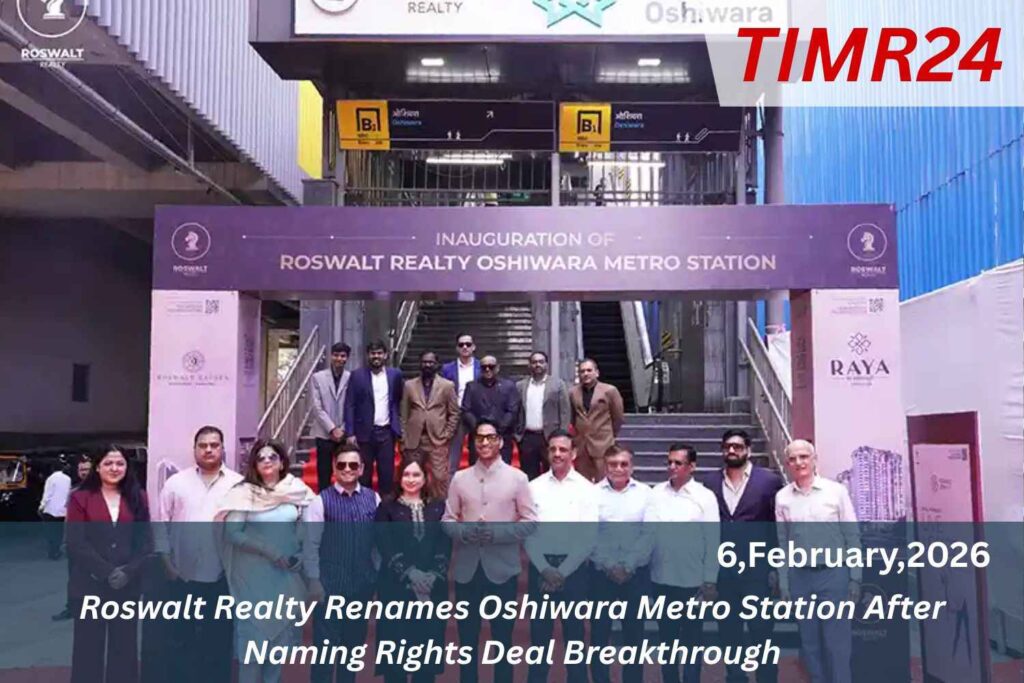
Roswalt Realty has acquired the naming rights to Oshiwara Metro Station for one year, rebranding it as Roswalt Realty Oshiwara. This initiative was celebrated with an event at the station, emphasizing the connection between urban transportation and Mumbai’s growing real estate market. Chairman Ar. Shantanoo Vishwanath Rane highlighted Oshiwara’s importance to the company’s growth and its commitment to Mumbai’s urban development. The station, which serves thousands daily, is situated in a key redevelopment zone, aligning with Roswalt Realty’s focus on integrating real estate with urban infrastructure and accessibility.
Understanding the Naming Rights Agreement
Mumbai’s rapidly evolving urban landscape has witnessed another significant branding milestone as Roswalt Realty secures naming rights for the Oshiwara Metro Station, leading to its official renaming. This move highlights the growing trend of public-private partnerships where infrastructure assets and private brands collaborate for mutual value. Metro stations are no longer just transit points; they are becoming powerful visibility platforms in high-footfall urban zones. The renaming of Oshiwara Metro Station reflects Mumbai Metro’s push toward non-fare revenue generation while offering Roswalt Realty a strong, long-term brand presence in one of the city’s most active real estate corridors.
Naming rights agreements allow private companies to associate their brand with public infrastructure for a fixed tenure in exchange for a fee. In this case, Roswalt Realty entered into a formal agreement with Mumbai Metro authorities to rename the Oshiwara Metro Station. Such arrangements help metro operators reduce dependence on ticket revenue while funding maintenance, upgrades, and future expansions. For Roswalt Realty, the deal provides continuous brand recall among daily commuters, office-goers, and tourists who pass through the station every day, making it a strategic marketing investment rather than conventional advertising.
Why Oshiwara Metro Station Matters
Oshiwara is a prime location in Mumbai’s western suburbs, surrounded by residential complexes, commercial hubs, film studios, and arterial road networks. The metro station serves as a crucial connector for areas like Andheri West, Goregaon, and Jogeshwari, all of which see (India) heavy passenger movement. By associating its name with this station, Roswalt Realty places itself at the heart of daily urban life. This reinforces brand trust, especially among homebuyers and investors familiar with the surrounding micro-market.
Impact on Mumbai Metro’s Revenue Model
The renaming of Oshiwara Metro Station underscores a broader shift in how urban transport systems are financed. Metro networks across India are increasingly adopting alternative revenue streams such as station branding, train wrap advertising, and commercial leasing. Naming rights deals bring predictable income without burdening commuters with fare hikes. Mumbai Metro’s approach aligns with global best practices followed in cities like London, Dubai, and Singapore.
What This Means for Commuters
For daily commuters, the renaming primarily affects signage, announcements, and digital maps, while the station’s location and services remain unchanged. Metro authorities typically implement transition periods where both old and new names are displayed to avoid confusion. (India) Over time, the new name becomes part of everyday navigation. Importantly, such branding exercises do not impact ticket pricing or travel routes. Instead, commuters indirectly benefit as the additional revenue supports better station upkeep, cleanliness, and passenger amenities.
Brand Visibility and Real Estate Synergy
For Roswalt Realty, the renaming is more than a branding exercise; it is a strategic alignment with infrastructure-led growth. Metro connectivity plays a vital role in property value appreciation, and developers increasingly highlight proximity to metro stations as a key selling point. By associating its brand directly with a metro station, Roswalt Realty strengthens its positioning as a developer closely linked to urban mobility and convenience. This mirrors similar branding efforts seen in airports, highways, and smart city projects across India.
A Growing Trend Across Indian Cities
The Oshiwara renaming is part of a nationwide pattern where infrastructure authorities explore innovative monetization models. Delhi Metro, Bengaluru Metro, and Hyderabad Metro have all experimented with station branding and corporate partnerships. These initiatives reduce operational deficits and allow faster network expansion. As Indian cities continue to urbanize, such collaborations are expected to become more common, especially in high-density commercial and residential zones.
Urban Branding and City Identity
Beyond revenue, naming rights influence how citizens emotionally connect with public spaces. When done thoughtfully, they can coexist with local identity and history. Authorities often ensure that branding does not erase geographical relevance, maintaining familiarity for commuters. In the case of Oshiwara, the station’s identity remains rooted in its location while adding a corporate association, balancing tradition and modernization within Mumbai’s complex urban fabric.
External Perspectives and Industry Context
Urban transport experts view naming rights as a practical solution to funding challenges faced by large infrastructure systems. According to global transport studies published by the World Bank and UITP, diversified income streams significantly improve metro system resilience The renaming of Oshiwara Metro Station after Roswalt Realty symbolizes a win-win (India) collaboration between public infrastructure and private enterprise. Mumbai Metro gains much-needed non-fare revenue, while Roswalt Realty secures unmatched brand exposure in a high-impact location. As cities search for smarter ways to fund growth without overburdening citizens, such naming rights deals are likely to play a bigger role in shaping India’s urban future.
Q1. Why was Oshiwara Metro Station renamed?
The station was renamed after Roswalt Realty acquired its naming rights as part of a branding and revenue-generation initiative.
Q2. Does the renaming affect metro fares or routes?
No, the renaming only impacts branding and signage, not fares or services.
Q3. How long do naming rights agreements usually last?
Such agreements are typically signed for multiple years, depending on contract terms.
Q4. Are other Mumbai Metro stations also branded?
Yes, Mumbai Metro has explored branding and advertising partnerships at several stations.
Q5. What benefits do commuters get from naming rights deals?
Indirect benefits include better station maintenance and improved facilities funded through additional revenue.