










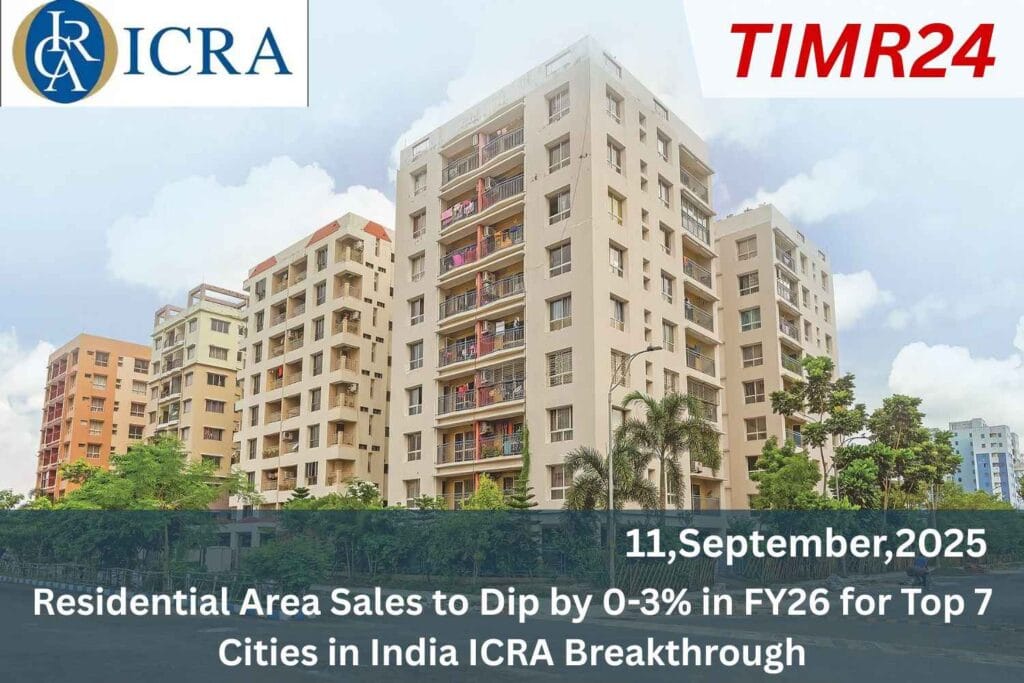
Rating agency ICRA predicts that the residential real estate sector in India will remain in a stabilising phase in FY2026. The rise in average selling prices (ASP) of residential units by over 10% annually from FY2023 to FY2025 is affecting affordability for buyers. ICRA projects the area sold in the top seven cities to decline by 0-3%, reaching 620-640 million square feet (msf) in FY2026. Launches are expected to increase by 4-7% to 630-650 msf across the top seven cities. The sector entered an equilibrium phase in FY2025, with a decline in area sold and moderation in sales velocity, primarily in the affordable and mid segments. The luxury segment continues to gain traction, with its share in total sales.
Increasing to 34% in Q1 FY2026 from 30% in FY2024. Policy reforms such as GST and RERA compliances have accelerated consolidation in the sector, with prominent listed developers likely to outperform broader market trends. The residential real estate sector in India is witnessing a phase of cautious optimism as sales across the top seven cities—Delhi-NCR, Mumbai, Bengaluru, Chennai, Hyderabad, Pune, and Kolkata are projected to decline marginally by 0-3% in FY26, according to insights from (ICRA) After a strong recovery in previous years following the pandemic-induced slowdown, the market is now confronting several challenges that are shaping buyer behaviour and developer strategies.
Rising construction costs, fluctuating demand, and lingering inventory pressure have led to a cautious approach among homebuyers and investors alike. While the overall market sentiment points toward a slowdown, certain micro-markets within these cities are demonstrating resilience due to strategic location advantages, connectivity improvements, and proximity to employment hubs. Developers are recalibrating their project portfolios, increasingly focusing on mid-segment and affordable housing, as these categories continue to witness steady demand despite broader market uncertainties.
In Delhi-NCR, the residential landscape is showing signs of moderate stability. While premium and luxury housing sales are experiencing softer traction, demand for mid-tier apartments and ready-to-move-in units in well-connected localities remains robust. Areas such as Noida, Gurugram, and Dwarka are seeing interest from first-time homebuyers and investors seeking affordable pricing along with easy access to urban infrastructure. Developers are strategically positioning projects near metro stations and employment hubs to capitalize on this trend. Government policies, including initiatives under the continue to support affordable housing Enhancing sales prospects for budget-friendly and mid-segment projects.
The reduction of GST on construction materials also offers partial relief to developers, though it may take time for the benefits to reach end buyers in the form of lower property prices Mumbai, as India’s financial capital, presents a contrasting picture. Premium apartments in South Mumbai and the western suburbs are witnessing slower absorption, as buyers are becoming more selective in their purchases, weighing property valuations against lifestyle needs and investment potential. Conversely, affordable housing and mid-market projects in Navi Mumbai, Thane, and Mira-Bhayandar maintain their appeal among working professionals and nuclear families.
The city’s residential demand is further influenced by the continuous expansion of metro lines and transportation networks, making suburban locations increasingly attractive for end-users. Developers are also leveraging flexible payment plans and ready possession options to entice buyers and mitigate the impact of the market slowdown. Bengaluru’s residential market remains largely buoyant, primarily driven by the city’s flourishing IT sector and startups ecosystem. While high-end luxury apartments are experiencing subdued sales, mid-tier properties and compact apartments in areas such as Whitefield, Electronic City, and Sarjapur Road are showing sustained demand.
Developers in Bengaluru are increasingly offering pre-launch discounts, financing assistance, and modern amenities to attract young professionals and first-time homebuyers. The presence of reputable educational institutions and IT parks continues to influence buyer decisions, making residential projects in these micro-markets a preferred choice. Chennai’s real estate sector is gradually moving toward a stabilized growth pattern. Well-located projects in prime districts such as OMR, Velachery, and ECR are witnessing consistent demand, particularly for gated communities and apartment complexes with modern amenities. Buyers are seeking properties that combine accessibility, safety.
And long-term appreciation potential. In Chennai, developers are emphasizing ready-to-move-in projects with attractive payment plans to address buyer apprehensions, while luxury residential segments face slower absorption rates. Government infrastructure projects, such as the metro rail expansion and road widening initiatives, are expected to further enhance connectivity and support residential demand in the coming years Hyderabad’s residential sector reflects a balanced scenario. The city’s affordable housing and mid-segment apartments continue to attract young professionals, IT employees, and small families. Areas like Gachibowli, Kondapur, and Miyapur.
Remain hotspots for residential development due to their proximity to IT hubs, educational institutions, and commercial centers. The luxury housing segment in Hyderabad, though limited, is also witnessing selective demand from high-net-worth individuals seeking premium amenities and gated communities. Developers are increasingly focused on launching integrated townships and smart housing projects that appeal to the evolving needs of urban buyers Pune’s residential landscape demonstrates resilience driven by strong urbanization and industrial growth. Mid-segment apartments and compact homes in areas like Hinjewadi, Waked, and Kharadi continue to attract buyers.
From IT, manufacturing, and service sectors. Demand for affordable housing in peripheral areas also remains high, as buyers weigh property affordability against long-term investment value. Developers in Pune are leveraging emerging micro-markets to maintain sales momentum, while premium projects face slower traction due to cautious buyer sentiment and high ticket prices. Strategic positioning near educational hubs, hospitals, and shopping centers plays a pivotal role in sustaining residential demand across the city Kolkata, traditionally perceived as a market with slower real estate activity, is gradually witnessing a revival in the mid-market housing segment.
Affordable apartments and compact units in localities such as Salt Lake, Newtown, and Rajarhat are gaining attention from first-time homebuyers. Premium residential properties, however, are experiencing subdued demand due to limited buyer confidence and higher investment thresholds. Developers are responding by offering flexible pricing strategies, bundled amenities, and ready-to-move-in units to sustain interest and absorb existing inventory Rising construction costs remain a common challenge across all seven cities, with fluctuations in steel, cement, and labor expenses impacting overall project pricing. While the government’s recent may offer relief to developers.
Translating this into buyer-friendly pricing will require time. To mitigate financial pressures, many developers are entering joint ventures, strategic partnerships, and adopting cost-efficient construction techniques. These measures ensure project completion while maintaining competitive pricing in a slowing sales environment From an investment perspective, the residential market continues to offer opportunities in mid-segment and affordable housing, which remain attractive to end-users and rental investors. Properties located near employment hubs, metro connectivity, and social infrastructure tend to maintain value and attract sustained interest. Monitoring infrastructure development.
Government policies, and buyer sentiment is essential for making informed investment decisions in FY26. Reports from industry bodies like provide additional insights for developers, investors, and homebuyers seeking a comprehensive understanding of urban housing trends The market is expected to stabilize gradually as developers and buyers adapt to evolving conditions. Micro-markets within (Real Estate) these cities that offer affordability, accessibility, and connectivity will likely continue to outperform, while luxury and premium segments may experience slower absorption. Flexibility in payment options, ready-to-move-in projects, and mid-tier housing remain crucial for.
Q1. Why are residential sales expected to dip in FY26?
Sales are impacted by rising construction costs, cautious buyer sentiment, and inventory absorption challenges.
Q2. Which cities are likely to experience the highest slowdown?
Premium segments in Mumbai, Delhi-NCR, and Kolkata are likely to see the most muted sales.
Q3. Will affordable housing remain in demand?
Yes, affordable and mid-segment housing continues to attract buyers due to government incentives and end-user interest.
Q4. How can developers sustain sales during this slowdown?
Developers are focusing on flexible payment plans, ready-to-move-in units, and mid-tier projects to maintain demand.
Q5. What role do government policies play in residential sales?
Policies like GST reduction on construction materials and Pradhan Mantri Awas Yojana support demand in specific segments.