
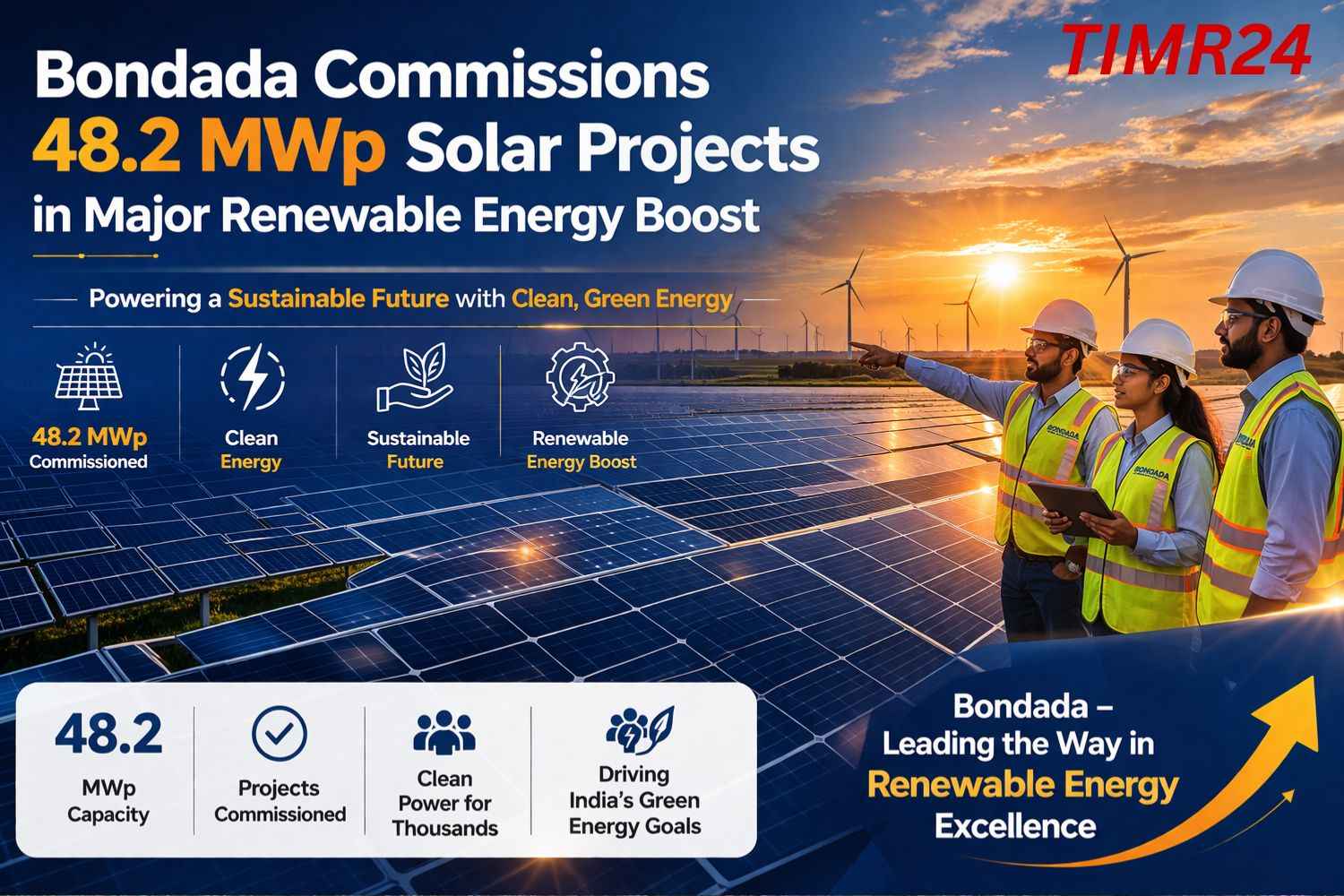












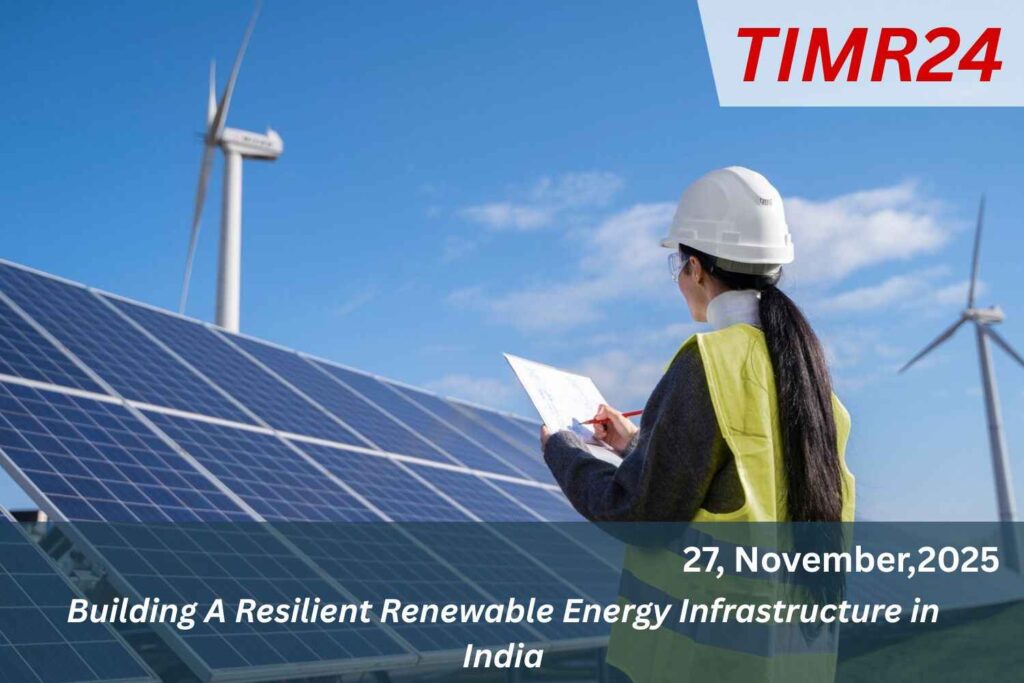
India’s renewable energy sector is poised for a transformative decade, driven by ambitious policies, technological innovations, and market dynamics. The focus is not just on increasing capacity but on developing inclusive and resilient infrastructure in line with national development and climate commitments. India ranks 4th globally in total renewable capacity, including wind and solar power, and has committed to 500 GW of non-fossil fuel energy by 2030 as part of its COP26 pledge. Major projects like the Khavda Renewable Energy Park are set to enhance this momentum, featuring a planned capacity of 30 GW in solar and wind, alongside significant developments in other.
growing economies, India’s energy
Regions, all contributing to India’s energy (MMRC) transition and decarbonization goals. India’s journey toward a cleaner and more secure energy future is no longer an aspirational agenda; it is a national necessity. As one of the world’s fastest-growing economies, India’s energy consumption is rising dramatically, pushing traditional energy systems close to their limits. Against this backdrop, building a resilient renewable energy infrastructure has emerged as a central pillar of the country’s development strategy. Renewable resources such as solar, wind, hydro, and green hydrogen are not only environmentally sustainable but also vital to ensuring long-term energy security.
However, resilience is not merely about expanding capacity it is about creating systems that can withstand climate stress, cyber threats, financial uncertainty, and fluctuating demand while delivering affordable and reliable electricity. According to the International Energy Agency (IEA) expected to see the largest growth in energy demand globally over the next two decades, making infrastructure durability more important than ever. India’s renewable expansion is founded on bold ambition. The central government’s push toward achieving net-zero emissions by 2070 relies heavily on clean power infrastructure. Through policies designed by the Ministry of New.
Gujarat and Andhra Pradesh are replacing
And Renewable Energy, the country has aggressively scaled up solar parks, wind corridors, offshore wind pilots, and grid-connected rooftops. Solar now dominates India’s energy transformation narrative, with vast installations in Rajasthan, Gujarat, and Andhra Pradesh replacing fossil fuel dependency. Wind energy is simultaneously gathering momentum along coastal belts and high-altitude corridors. What makes India stand out globally is its ability to combine scale with innovation. The country is not merely adopting renewable technologies; it is shaping them through indigenous manufacturing, public-private partnerships, and large-scale deployment strategies.
Yet building resilient infrastructure goes beyond installing panels and turbines. One of the greatest challenges in India’s renewable journey is grid stability. Renewable electricity is inherently variable. Sunlight fluctuates, wind strength varies, and hydropower depends on monsoon patterns. These natural limitations (Solar) make grid resilience crucial. India is therefore investing heavily in smart grid technology, automation, predictive analytics, and artificial intelligence to forecast energy flows and reduce transmission losses. Grid modernisation projects across states aim to reinforce weak infrastructure with digital technology that responds dynamically to load demand and generation.
emerging hydrogen-based storage
Changes: As highlighted in India’s grid reform programs under NITI Aayog, plans to make its power network adaptive, intelligent, and self-healing. Storage infrastructure is equally critical. Without advanced storage systems, renewable energy cannot deliver round-the-clock reliability. Battery storage facilities, pumped hydro projects, and emerging hydrogen-based storage solutions are becoming key components in India’s energy resilience strategy. When solar production peaks during the day, excess electricity must be stored for nighttime use. As battery prices decline and efficiency improves, India’s renewable grid is becoming more reliable and predictable.
According to the International Renewable Energy Agency, energy storage is the backbone of any renewable-dominated grid, and India is fast becoming one of the largest investment destinations in this sector. Climate change further strengthens the case for resilient infrastructure. Heat waves, cyclones, flooding, and rising sea levels regularly disrupt conventional energy systems. Coastal power plants, coal transport routes, and centralised grids are particularly vulnerable. Renewable systems, by contrast, allow for decentralised generation. Microgrids, rooftop solar, and community power projects reduce dependence on central supply hubs and offer greater adaptability.
Aligned With Environmental, Social,
Financial sustainability also plays a central role. India’s renewable revolution is supported by a wave of foreign investment, sovereign green bonds, and climate funding partnerships, capital into grid modernisation, storage deployment, and renewable access programs across the country. Meanwhile, domestic financial instruments are being aligned with environmental, social, and governance (ESG) principles. Banks and institutional investors now view renewables as long-term low-risk assets. This expanding financial ecosystem provides resilience by ensuring steady capital inflow even during global economic turbulence. Innovation and domestic.
Manufacturing is reshaping infrastructure economics. By promoting local solar module production under the “Make in India” campaign, the government is reducing dependence on imports and insulating the sector from geopolitical supply disruptions. Similarly, the push for domestic battery manufacturing, green hydrogen electrolyzers, and wind turbine components is laying the foundation for an energy-independent India. Technology resilience ensures that infrastructure remains scalable without vulnerability to foreign shortages. India’s renewable strategy is also driving social transformation. Rural electrification through decentralized solar.
India’s Renewable Infrastructure
Solutions is empowering villages that were once energy-deprived. Farmers now utilize solar pumps instead of diesel motors, reducing costs and emissions simultaneously. In cities, renewable integration supports electric mobility, (Solar) smart infrastructure, and digital connectivity. Energy is no longer just a utility; it has become a growth catalyst. The future of India’s renewable infrastructure will be shaped by integrated planning. The next decade will witness convergence between renewable power, electric vehicles, hydrogen fuels, and digital energy platforms. Urban development programs like Smart Cities Mission are embedding sustainability directly into architecture.
Design, public transit systems, and waste management ecosystems. The goal is not simply to replace fossil fuels but to redesign the energy ecosystem entirely. Ultimately, building a resilient renewable energy infrastructure in India is not only about clean power it is also about national resilience. It ensures stable development, global competitiveness, environmental safety, and equitable growth. By combining innovation, policy reform, and financial intelligence, India is writing one of the most ambitious renewable success stories of the modern world. The country’s energy transition is transforming vulnerability into strength and, in doing so, laying the foundation for a sustainable century.
Q1. What does resilient renewable infrastructure mean for India?
It refers to energy systems that are technologically robust, climate-proof, financially sustainable, and capable of meeting India’s long-term growth needs.
Q2. Why is grid resilience important for renewable integration?
Because solar and wind are intermittent, the grid must be strengthened with smart systems and storage for a stable energy supply.
Q3. How does storage help renewable reliability?
Battery storage absorbs excess energy and releases it when supply falls, ensuring uninterrupted power.
Q4. What are the main challenges India faces?
Land acquisition, financing, grid integration, and technology localization.
Q5. Who supports India’s energy transition globally?
Organizations such as the IEA, World Bank, IRENA, and development banks.