















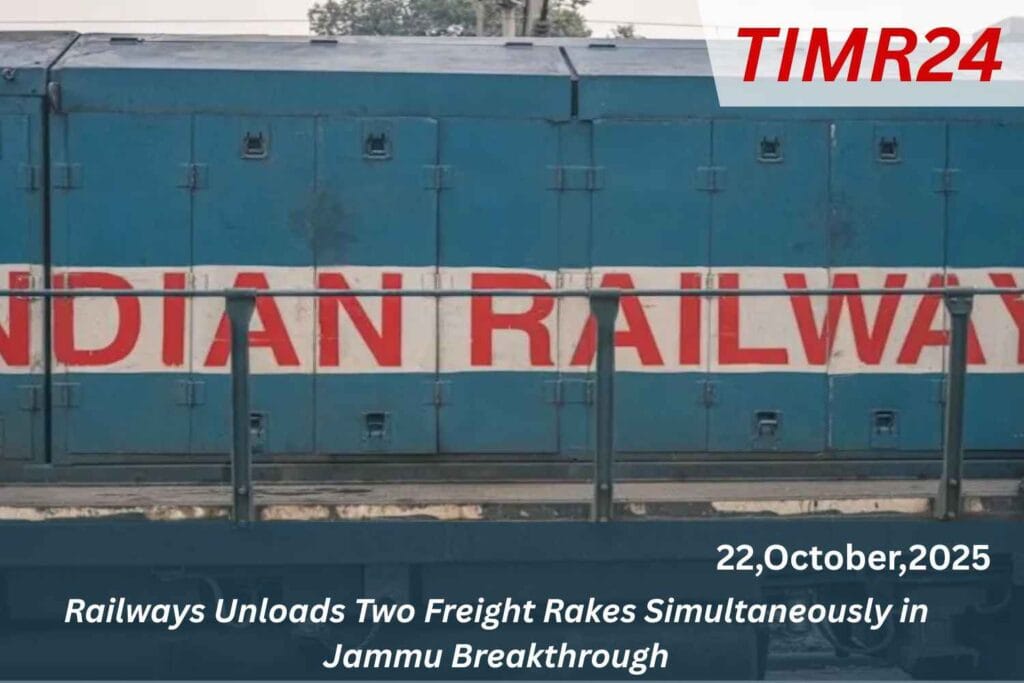
Indian Railways has successfully unloaded two freight rakes at Jammu Yard, marking a significant advancement in freight handling capacity and turnaround efficiency. The operation, which involved cement and coal trains, was made possible through coordinated planning and upgraded track and signalling. The success demonstrates the railways’ growing capability to manage complex logistical operations and improve supply chain reliability. The Indian Railways recently achieved a remarkable milestone in freight logistics with the simultaneous unloading of two freight rakes at.
Jammu, marking a breakthrough in operational efficiency for the northern railway corridors. This development underscores the increasing capabilities of Indian Railways to manage larger volumes of goods while minimizing delays and congestion. Jammu, strategically located as a gateway to northern India, has become a critical hub for both industrial and agricultural trade. The successful handling of multiple freight rakes in a coordinated manner not only reflects advanced planning but also demonstrates the integration of modern technology into railway operations, which is crucial for meeting the growing demands of regional trade The dual unloading operation was executed with.
Meticulous coordination between various railway departments, including yard management, locomotive control, and cargo logistics. Each department played a crucial role in ensuring that the rakes were handled efficiently and without disruption to other scheduled train movements. Freight rakes arriving at Jammu carried a diverse range of goods, including industrial raw materials, consumer products, and agricultural commodities. By managing these goods effectively, Indian Railways ensures that local industries and traders receive timely deliveries, which is essential for maintaining supply chain reliability and supporting economic activity in the region.
This operation is a reflection of the larger modernization efforts underway across the Indian Railways network. Advanced tracking systems, automated signaling, and improved loading-unloading infrastructure have collectively enabled such simultaneous operations. The use of technology ensures precision in scheduling, reduces human error, and enhances safety standards. It also allows railway authorities to monitor the movement of goods in real-time, providing transparency to businesses and facilitating better planning for logistics operators. Jammu’s railway yard, with its upgraded facilities, now has the capacity to handle more freight traffic, making it an attractive node for industrial shipments heading toward northern markets.
Local manufacturers wholesalers
Regional trade in northern India benefits immensely from these enhancements in railway freight handling. The simultaneous unloading of two rakes reduces waiting times for goods trains, preventing bottlenecks and ensuring smooth operations across the supply chain. Local manufacturers, wholesalers, and retailers gain a competitive advantage as timely delivery of raw materials and finished products becomes possible. This, in turn, strengthens the regional economy and encourages investment in Jammu and nearby areas. Moreover, faster handling of freight contributes to sustainability by minimizing idle train time and optimizing energy usage, aligning with Indian Railways’ commitment to greener operations.
The logistics improvements at Jammu also have strategic implications beyond regional trade. Given Jammu’s proximity to border areas and its role as a transit hub, efficient freight operations ensure that critical supplies, including essential commodities and industrial materials, can be transported swiftly across northern India. By reducing delays in cargo handling, the Indian Railways enhances national supply chain resilience, which is particularly important during periods of high demand or unforeseen disruptions. This operational capability reflects careful planning, resource allocation, and the strategic vision of railway authorities who are continuously working to modernize freight infrastructure in key locations.
Indian Railways as a dependable partner
Business stakeholders are increasingly recognizing the advantages of railway freight transport over alternative modes such as roadways. Railways offer higher capacity, lower costs for bulk goods, and improved reliability for long-distance transport. The recent breakthrough in Jammu, with simultaneous rake unloading, highlights these benefits, showcasing Indian Railways as a dependable partner for both domestic and industrial supply chains. Companies that rely on timely shipments can now plan more efficiently, knowing that upgraded facilities in hubs like Jammu can handle larger cargo volumes without delays. Internal resources such as (WATER Railways) provide.
Detailed schedules and operational updates, helping businesses align their logistics planning with railway capabilities From an operational perspective, executing simultaneous unloading requires a deep understanding of yard dynamics, train scheduling, and cargo prioritization. Each freight rake consists of numerous wagons, often carrying different types of goods, and managing their unloading sequence efficiently is critical to prevent congestion and ensure safety. Coordination with locomotive operations is equally important, as the movement of engines must be synchronized with rake handling. Jammu’s railway yard has invested in improved signaling systems, mechanized.
Unloading equipment, and dedicated freight corridors, which collectively enable such advanced logistics operations. The success of this initiative sets a benchmark for other northern and central railway hubs, demonstrating the potential for replication in other regions The economic impact of improved freight operations extends to the local community as well. Faster handling of goods encourages trade, supports local manufacturers, and creates indirect employment opportunities in logistics, warehousing, and transportation services. By facilitating smoother movement of commodities, Indian Railways contributes to regional development and helps integrate local markets into.
The broader national economy. This aligns with government initiatives such and infrastructure development programs, which rely on efficient logistics networks to support industrial growth and market accessibility In addition to regional economic benefits, this operational milestone (Indian Railways) showcases Indian Railways’ commitment to modern logistics solutions. The simultaneous unloading of two freight rakes requires not only technological upgrades but also continuous training of personnel, robust safety protocols, and seamless coordination between multiple departments. This comprehensive approach ensures that operational efficiency does not compromise safety standards.
Which remain a top priority for all railway operations. By investing in human resources and infrastructure, the railways are building a resilient and reliable freight transport system capable of handling future growth in trade and industrial activity For businesses and traders looking to capitalize on these developments, access to updated information is key. Official portals such as provide real-time updates, operational schedules, and booking information. These resources allow stakeholders to track shipments, plan logistics, and make informed decisions regarding inventory management and supply chain planning. The increased transparency and efficiency offered by.
Modern railway operations further strengthen the trust of businesses in rail freight as a dependable mode of transportation The strategic importance of Jammu as a logistics hub will continue to grow as industrial activities expand in northern India. The successful handling of two freight rakes simultaneously demonstrates Indian Railways’ readiness to meet the demands of increased trade volumes. It also reflects a broader vision of integrating technology, modern infrastructure, and efficient operational practices to create a robust freight transport ecosystem. This initiative not only boosts regional trade but also contributes to the country’s national economic growth by.
Enhancing the reliability and efficiency of supply chains Looking ahead, Indian Railways plans to implement similar operational improvements in other key freight hubs across northern India. The lessons learned from Jammu’s dual rake operation will serve as a blueprint for enhancing logistics efficiency in cities like Ludhiana, Amritsar, and Delhi. As these advancements take hold, businesses can expect reduced transportation costs, faster delivery times, and improved supply chain coordination. Ultimately, these developments highlight the evolving capabilities of Indian Railways and reinforce its critical role in supporting trade, industrial growth, and regional development across the country.
Q1. What was the recent railway breakthrough in Jammu?
Two freight rakes were unloaded simultaneously, improving efficiency and reducing congestion at the station.
Q2. Why is Jammu an important freight hub?
Jammu serves as a strategic northern transit point, connecting industrial and agricultural trade routes.
Q3. Which types of goods were handled during this operation?
Industrial raw materials, consumer products, and agricultural commodities were among the freight unloaded.
Q4. How does this operation benefit local businesses?
Faster cargo handling reduces waiting times and improves supply chain reliability for traders and manufacturers.
Q5. Where can I find official updates on Indian Railways freight operations?
The (Indian Railways)