









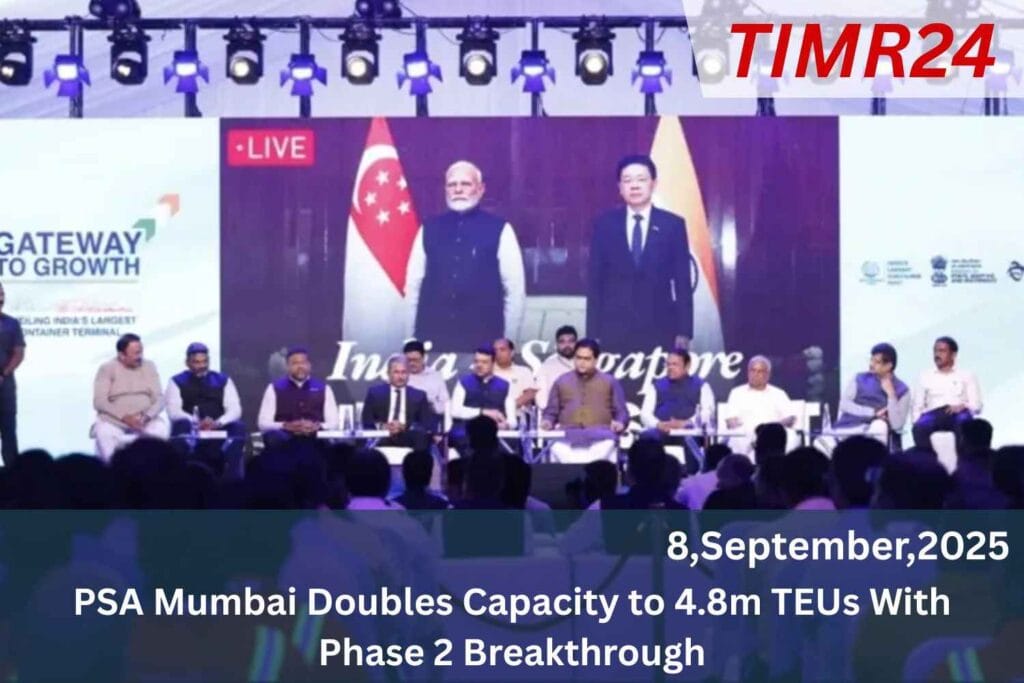
India’s Prime Minister Narendra Modi and Singaporean Prime Minister Lawrence Wong inaugurated Phase 2 of the Bharat Mumbai Container Terminal (PSA Mumbai), doubling its annual handling capacity to 4.8 million TEUs. The terminal, spanning 2,000 meters, supports domestic and global trade flows. The expansion represents Singapore’s largest foreign direct investment in India, with SGD 1.7 billion committed under a public-private partnership model. The terminal is powered by renewable energy and is India’s most advanced container gateway. The expansion of PSA Mumbai’s Bharat Mumbai Container Terminals (BMCT) is a defining moment for India’s maritime.
Trade and logistics sector. With Phase 2 now operational, the terminal has doubled its annual capacity from 2.4 million TEUs to 4.8 million TEUs, reinforcing India’s ambitions of becoming a global shipping and logistics hub. Located at Jawaharlal Nehru Port (JNPT), often called the “Gateway of India’s international trade,” the project’s expansion signals more than just additional container space it represents faster vessel handling, reduced congestion, enhanced efficiency, and greater opportunities for exporters and importers. This development is not isolated; it is part of a larger trend where India is aggressively expanding its infrastructure capacity, evident in initiatives.
India’s Growing Trade and Port Infrastructure
India has steadily emerged as one of the fastest-growing economies, and its export-import ecosystem plays a critical role in sustaining this momentum. Ports like JNPT, which handle nearly half of India’s containerized cargo, are central to this effort. The Sagarmala Programme, launched by the Government of India, highlights the need to modernize ports, improve connectivity, and cut logistics costs. PSA Mumbai’s Phase 2 aligns perfectly with this vision. By doubling its container handling ability, the port can now accommodate growing trade volumes across sectors like textiles, automotive, electronics, and pharmaceuticals. These industries depend on smooth logistics, and bottlenecks often mean higher costs. The expansion reduces pressure on other terminals, ensuring a balanced flow.
PSA Mumbai’s position within JNPT provides unmatched strategic advantage. Located on the western coast near Mumbai, it is directly linked to industrial clusters in Maharashtra, Gujarat, Madhya Pradesh, and even farther states through road and rail corridors. With the development of the Dedicated Freight Corridor (DFC), the speed and efficiency of inland transportation will improve drastically, cutting travel time and reducing costs for manufacturers and exporters. This makes PSA Mumbai a natural gateway not just for India’s domestic trade but also for transshipment, where containers are moved from smaller ships to larger international vessels. Such connectivity mirrors national strategies in other infrastructure areas, like the (NCRTC) which shows how urban and industrial transport is being seamlessly integrated.
Impact on Exporters, Importers, and Shipping Lines
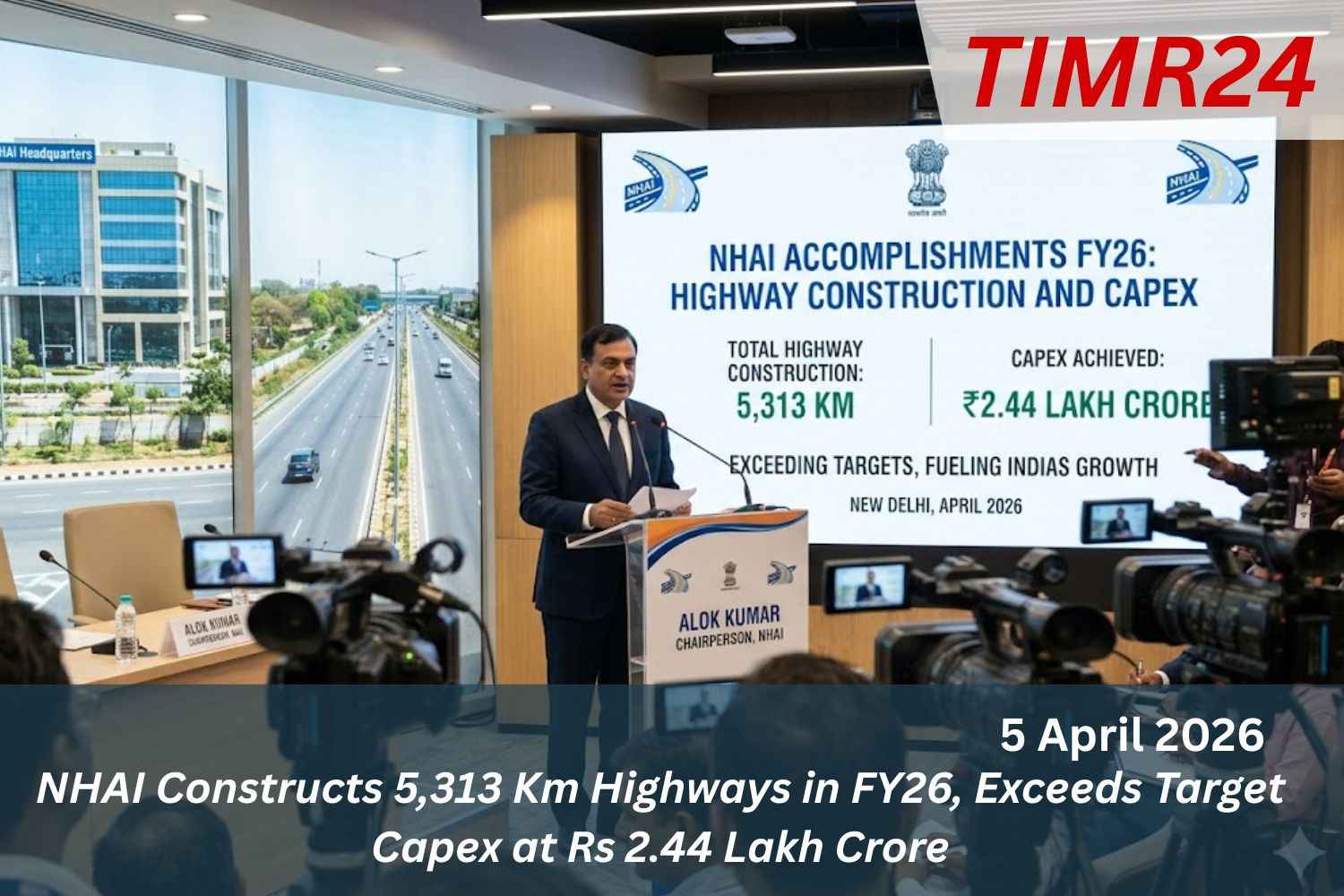
The doubling of capacity means tangible benefits for businesses that rely on exports and imports. Exporters will face fewer delays, enjoy faster turnaround times, and have access to more vessel services. Importers will benefit from streamlined supply chains, which means faster delivery of goods ranging from consumer products to industrial machinery. International shipping lines will also find PSA Mumbai more attractive as a hub, since its modern infrastructure allows them to operate larger vessels with quicker handling. This mirrors the efficiency-focused developments seen in initiatives like the (NHAI) where modern practices are introduced to ensure smoother, safer movement of goods on Indian roads.
One of the standout features of Phase 2 is its integration of world-class technology. The terminal now uses advanced quay cranes capable of handling the largest container ships, automated yard management systems, and digitalized cargo tracking. These upgrades enhance not only speed but also transparency, enabling exporters and importers to plan better. The efficiency improvements also help reduce port congestion, ensuring that India’s ports remain competitive compared to global peers. This technological edge is part of a broader movement across India, as seen with (SEMICON) where technology adoption drives global leadership.
Sustainability and Green Operations
Modern port infrastructure cannot ignore sustainability, and PSA Mumbai has embedded environmental considerations into its operations. Energy-efficient cranes, waste management systems, and a commitment to lowering carbon emissions are part of the terminal’s blueprint. These measures are in line with India’s pledge towards Net Zero 2070, showing how economic growth can coexist with environmental responsibility. Other sectors are making similar moves, like which demonstrates that sustainability is no longer optional but a strategic necessity across industries Global trade depends heavily on logistics performance. According to the infrastructure, customs.
Efficiency, and connectivity are key drivers of competitiveness. PSA Mumbai’s expansion positions India more strongly, helping businesses tap into global markets with fewer barriers. Lower logistics costs mean Indian products can compete better internationally, driving growth in sectors like manufacturing and agriculture. This effort mirrors the government’s recognition of top mines under the where efficient, safe, and future-ready infrastructure forms the backbone of competitiveness.
Aligning with National Growth Strategies
The Phase 2 expansion is not an isolated corporate success it is deeply connected to India’s wider infrastructure and economic policies. Initiatives like the highlight how energy security supports industrial expansion, while projects such as the reflect investments in energy logistics. PSA Mumbai plays a similar role in trade logistics by ensuring that India’s ports can handle the projected surge in global and domestic cargo. Together, these investments create a powerful ecosystem of ports, roads, railways, and energy networks that drive national growth With Phase 2 completed, PSA Mumbai is not stopping here. The long-term plan envisions even greater integration with logistics.
Corridors, digital platforms, and green operations. India’s maritime sector is likely to witness more such expansions as trade volumes grow. The synergy between government policies, private sector investments, and global partnerships ensures that PSA Mumbai will remain central to India’s shipping landscape for decades to come The doubling of PSA Mumbai’s capacity to 4.8 million TEUs through Phase 2 is more than an infrastructure milestone it is a statement of intent. It demonstrates India’s ability to handle global trade flows, its readiness to embrace advanced technology, and its determination to balance growth with sustainability. By easing congestion, reducing costs.
Q1. What is PSA Mumbai’s new container handling capacity after Phase 2?
PSA Mumbai’s capacity has doubled to 4.8 million TEUs annually after Phase 2 expansion.
Q2. Why is the Phase 2 expansion significant for India’s trade?
It strengthens India’s export-import logistics, reduces congestion, and improves global connectivity.
Q3. How will Phase 2 impact shipping lines and exporters?
Exporters gain faster turnaround, more vessel options, and cost-effective logistics.
Q4. Where is PSA Mumbai located and why is it strategic?
It is located in Jawaharlal Nehru Port, a major trade hub on India’s western coast.
Q5. How does PSA Mumbai’s expansion support India’s infrastructure growth?
It aligns with India’s port-led growth under the Sagarmala programme.