














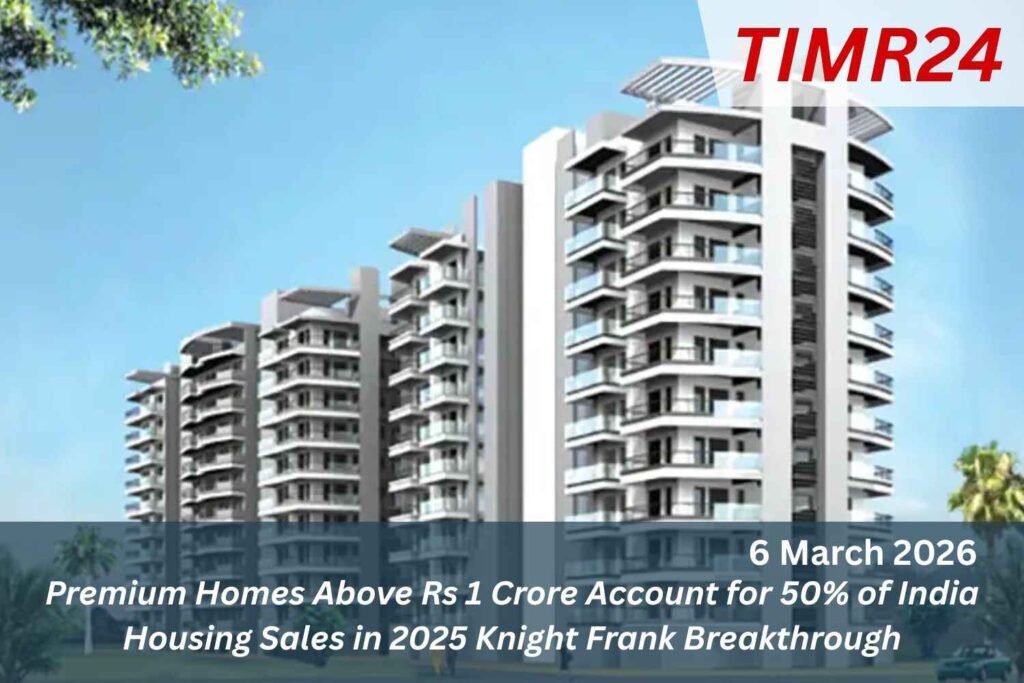
In its latest report, Knight Frank India reveals a significant shift in the housing market, with homes priced above Rs 1 crore now making up 50% of residential sales in 2025. A total of 1,75,091 units sold fall into this category, reflecting a 14% year-on-year increase, while overall annual sales remained stable. Conversely, the sub-Rs 50 lakh segment saw a 17% decline, dropping to 73,694 units and now comprising only 21% of sales. The mid-segment (Rs 50 lakh to Rs 1 crore) also experienced an 8% drop, suggesting a moderate demand below Rs 1 crore. Shishir Baijal of Knight Frank noted that this milestone indicates a shift towards premium housing driven by financially.
Secure buyers seeking better quality homes, supported by rising incomes and urban confidence India’s residential real estate market is undergoing a significant transformation in 2025, with premium homes priced above ₹1 crore capturing nearly half of the total housing sales across the country. According to a recent report by Knight Frank, the growing share of high-value residential properties indicates a shift in buyer preferences toward larger, better-equipped homes in prime urban locations. The report highlights how rising incomes, evolving lifestyle expectations, and improved access to housing finance are pushing buyers toward premium housing segments across major Indian cities.
The growth in the premium housing segment is also being fueled by a strong recovery in the real estate sector following the disruptions caused by the pandemic in earlier years. Buyers are now focusing more on long-term property investments, quality construction, and modern amenities rather than purely affordable options. As a result, developers are increasingly launching luxury and upper-mid segment projects in metropolitan areas such as Mumbai, Delhi, Bengaluru, Hyderabad, and Pune to meet the rising demand.
Rising Demand For Premium Housing
The shift toward premium housing reflects a broader trend in India’s urban economy. With economic growth and rising disposable incomes, many homebuyers now prefer properties that offer superior infrastructure, gated communities, and advanced lifestyle amenities. The report by Knight Frank suggests that properties priced above ₹1 crore accounted for nearly 50 percent of housing transactions in 2025, a sharp increase compared to previous years when mid-income housing dominated the market This change is also driven by the evolving expectations of homebuyers. Today’s buyers are looking for homes that offer more than just basic living space.
Features such as home offices, wellness facilities, smart home technology, and larger floor plans have become essential components of premium housing projects. Developers are responding by designing projects that cater to modern urban lifestyles, including integrated townships and mixed-use developments Another important factor contributing to this trend is the increasing participation of investors in the residential market. Real estate has traditionally been a preferred investment asset in India, but the premium segment has become particularly attractive due to higher appreciation potential and better rental yields in prime locations.
Impact Of Urbanization And Infrastructure Development
Rapid urbanization is another key driver behind the rise of premium housing in India. Major cities continue to attract professionals, entrepreneurs, and high-income households, leading to strong demand for quality residential properties. Infrastructure improvements such as metro rail networks, expressways, and business hubs have further enhanced the attractiveness of premium residential projects large infrastructure initiatives like the expansion of metro networks and regional transit systems have improved connectivity across metropolitan areas. These developments have made previously distant suburban locations more accessible, encouraging developers to.
Launch premium housing projects in emerging micro-markets The growing demand for premium homes is also linked to the development of new business districts and technology hubs. Cities like Bengaluru and Hyderabad have witnessed strong growth in the IT and startup sectors, leading to increased demand for high-end residential properties among professionals working in these industries.
Changing Buyer Preferences In The Post-Pandemic Era
The pandemic fundamentally changed the way people view their homes. With remote and hybrid work becoming more common, buyers are prioritizing larger homes that can accommodate workspaces and provide better living environments. As a result, demand for spacious (India) apartments and villas in gated communities has increased significantly Homebuyers are also placing greater emphasis on health, safety, and lifestyle amenities. Residential projects that offer green spaces, fitness centers, walking tracks, and community facilities are becoming increasingly popular. Premium housing developments often include such amenities, making them attractive to both end-users and investors.
Developer Strategy And Supply Trends
Another notable trend is the growing interest among young professionals and first-time luxury buyers. Earlier, premium housing was largely dominated by high-net-worth individuals. However, improved financing options and rising incomes among professionals have expanded the buyer base for homes priced above ₹1 crore Real estate developers are adjusting their strategies to align with this shift in demand. Many developers are now focusing on launching premium and luxury projects rather than affordable housing. This strategy allows them to achieve better margins while catering to the growing demand from high-income buyers The supply pipeline in the premium housing segment has increased.
Significantly in the past few years. Developers are introducing projects with modern architecture, smart home features, and integrated amenities to differentiate themselves in a competitive market. Large residential townships that combine housing, retail, and recreational facilities are also gaining popularity At the same time, developers are focusing on transparency and compliance to build buyer confidence. Regulatory frameworks such as the Real Estate (Regulation and Development) Act have improved transparency in the real estate sector, encouraging more buyers to invest in premium housing projects.
Future Outlook of India’s Premium Housing Market
The premium housing segment is expected to continue driving growth in India’s residential real estate market. Analysts believe that the share of homes priced above ₹1 crore could increase further as urban incomes rise and lifestyle expectations evolve Infrastructure development, economic expansion, and strong demand from professionals are likely to support the growth of the premium housing segment. Cities with robust employment opportunities and well-developed infrastructure will continue to attract buyers looking for high-quality residential properties Additionally, the increasing interest of global investors in India’s real estate market could provide.
Further momentum to the premium housing sector. International investors often prefer large-scale premium projects in major cities, which can contribute to (India) increased supply and improved project quality Overall, the findings from Knight Frank highlight a major shift in India’s housing market dynamics. The growing dominance of premium homes indicates that buyers are increasingly prioritizing quality, lifestyle, and long-term investment value when purchasing residential properties.
Q1. What does the Knight Frank report say about India’s housing market in 2025?
The report states that homes priced above ₹1 crore accounted for about 50% of total housing sales in India.
Q2. Why are premium homes becoming more popular in India?
Rising incomes, better financing options, and changing lifestyle preferences are driving demand for premium housing.
Q3. Which cities are leading in premium housing sales?
Major cities like Mumbai, Delhi, Bengaluru, Hyderabad, and Pune dominate the premium housing market.
Q4. How has the pandemic affected housing demand?
Buyers now prefer larger homes with workspaces, better amenities, and healthier living environments.
Q5. Will premium housing demand continue to grow?
Yes, experts expect continued growth due to urbanization, infrastructure development, and increasing wealth.