







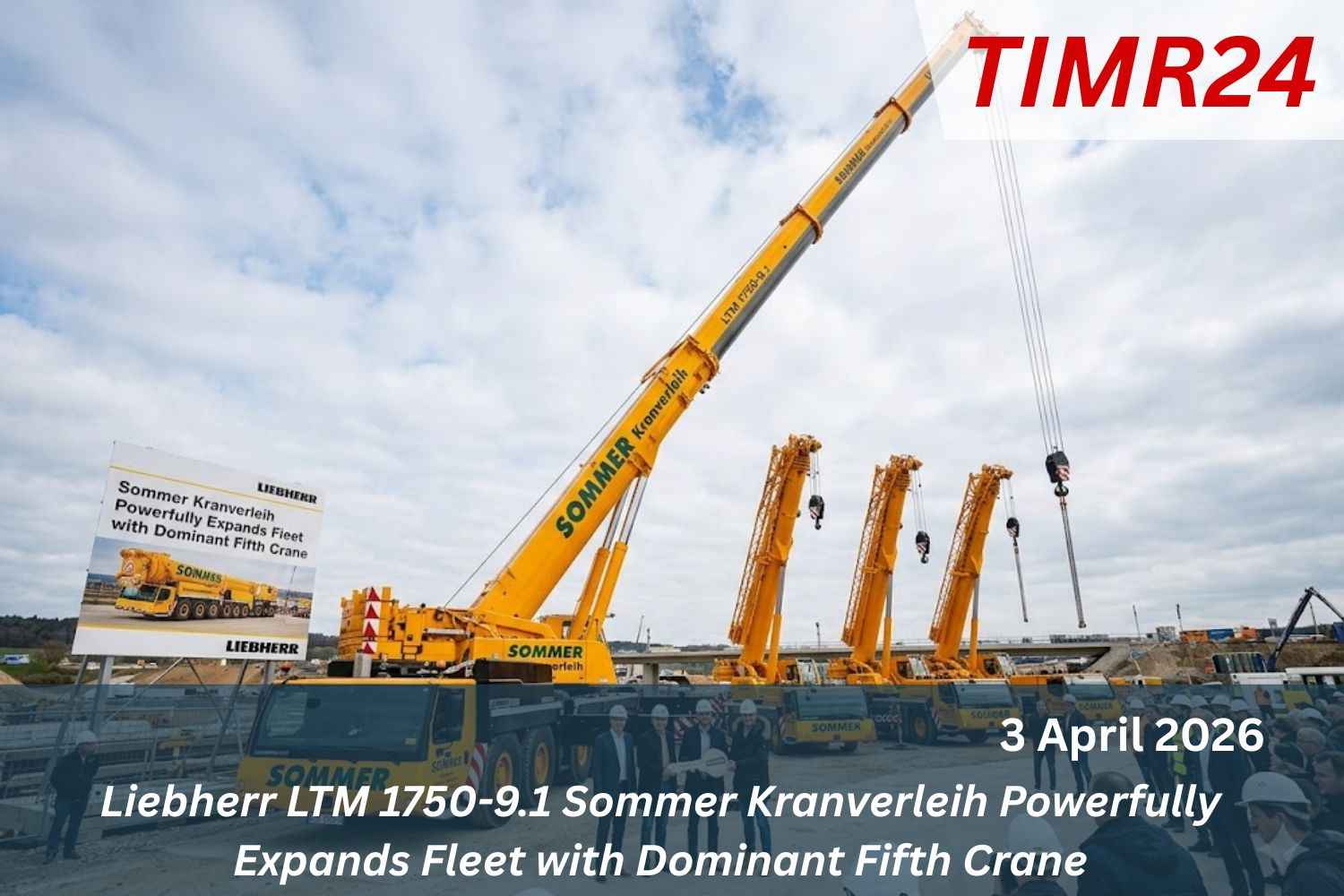

Poland’s Błażej & Roman made a significant strategic acquisition in December 2025 by purchasing the Liebherr LTM 1750-9.1 mobile crane, the first of its kind in Poland. This 800-tonne crane enhances the company’s capabilities, particularly in the expanding wind energy sector. Board Member Tomasz Kasperski noted that the investment opens up opportunities for large-scale wind projects, allowing for more complex lifting tasks and strengthening market position. The crane’s high mobility and sophisticated assembly capabilities will primarily support wind farms. With a skilled workforce and a fleet of 30 cranes, including 20 from Liebherr, the company has built.
Technological Advancement And Growing
A reputation for reliability in demanding construction and renewable energy tasks, relying on its partnership with Liebherr-Polska for professional support and equipment quality Poland’s heavy lifting and engineering sector continues to evolve with technological advancement and growing demand for renewable energy infrastructure. The strategic acquisition of the Liebherr LTM 1750-9.1 crane by Błażej & Roman marks a major step forward in expanding wind power installation capabilities and strengthening the company’s operational efficiency. The decision reflects broader industry trends where construction and energy companies invest in advanced.
Machinery to meet increasing demand for sustainable energy solutions and complex infrastructure development The newly acquired crane, manufactured by Liebherr Group, represents one of the most powerful mobile cranes available in the global market. Designed specifically for heavy-duty operations such as wind turbine installation, infrastructure construction, and large industrial projects, the equipment provides exceptional lifting capacity, precision, and mobility. Its integration into Błażej & Roman’s fleet demonstrates the company’s commitment to technological innovation and its long-term vision for supporting renewable energy development across Poland and Europe.
Handling Heavy Components At Substantial
The expansion of wind energy projects in Poland has significantly increased demand for high-performance lifting equipment. Modern wind turbines are becoming larger and more complex, requiring specialized machinery capable of handling heavy components at substantial heights. The Liebherr LTM 1750-9.1 addresses these challenges through advanced engineering features, including a powerful telescopic boom system, high load capacity, and flexible configuration options. These capabilities enable faster and more efficient turbine assembly, reducing project timelines and operational costs for energy developers The acquisition also aligns with Poland’s.
Broader transition toward renewable energy sources. As governments and industries work to reduce carbon emissions and enhance energy security, wind power has emerged as a key solution. The presence of advanced lifting equipment supports the construction of (India) wind farms, accelerates project execution, and improves the reliability of installation processes. This investment therefore contributes not only to business growth but also to national sustainability goals and environmental responsibility From an operational perspective, the crane offers enhanced mobility and efficiency. Unlike traditional stationary cranes, mobile cranes like the LTM 1750-9.1 can be transported easily between project.
Increased Competitiveness
Sites, providing flexibility for contractors managing multiple installations. This mobility reduces logistical complexity and allows companies to respond quickly to project requirements. For Błażej & Roman, this means improved service delivery, increased competitiveness, and the ability to undertake larger and more technically demanding projects The wind energy sector particularly benefits from such technological advancements. Wind turbine components, including towers, nacelles, and rotor blades, require precise handling during installation. Even minor inaccuracies can lead to structural issues or delays. The advanced control systems and safety features of the crane ensure accurate.
Positioning and secure lifting operations, which enhances both worker safety and project quality. This reliability is essential for large-scale renewable energy projects that demand consistent performance under challenging conditions Furthermore, the adoption of modern heavy lifting equipment supports infrastructure modernization across multiple industries. Beyond wind energy, the crane can be utilized in bridge construction, industrial plant assembly, and large commercial developments. Its versatility ensures that the investment provides long-term value by enabling a wide range of applications. This diversification strengthens operational resilience and positions.
The company as a leading service provider in the heavy lifting sector Technological innovation remains a driving force behind the global construction equipment market. Manufacturers continue to develop machinery with improved performance, energy efficiency, and safety features. The Liebherr LTM 1750-9.1 reflects these advancements through its efficient design, digital control systems, and optimized lifting performance. By integrating such technology, companies can achieve higher productivity levels while maintaining strict safety standards The acquisition also reflects the increasing collaboration between equipment manufacturers and service.
Technology Providers And Engineering
Providers in supporting renewable energy expansion. As demand for wind power grows, equipment suppliers play a critical role in providing specialized machinery tailored to industry requirements. This partnership between technology providers and engineering companies facilitates faster adoption of advanced solutions and accelerates infrastructure development In addition to technological and operational benefits, the investment contributes to economic growth within the construction and energy sectors. Large-scale infrastructure projects generate employment opportunities, stimulate industrial activity, and encourage technological development.
The availability of advanced lifting equipment supports project execution and enhances the efficiency of supply chains associated with renewable energy development Sustainability considerations are also central to the significance of this acquisition. Renewable energy infrastructure requires reliable construction processes that minimize environmental impact while maximizing efficiency. By enabling faster installation and reducing operational delays, advanced cranes contribute to more sustainable project execution. This supports the global shift toward cleaner energy systems and reinforces the role of engineering innovation in addressing environmental challenges.
The development highlights the evolving role of heavy lifting companies in supporting energy transition initiatives. Service providers are no longer limited to traditional construction tasks but are increasingly involved in complex renewable energy projects. This transformation requires continuous investment in technology, workforce training, and operational expertise. The addition of the Liebherr LTM 1750-9.1 positions Błażej & Roman at the forefront of this transition, enabling the company to meet the growing demands of the renewable energy sector Industry experts anticipate continued growth in wind power installations across Europe, driven by policy support.
Transformation Requires Continuous
Technological progress, and increasing demand for clean energy. As turbine sizes continue to increase, the need for high-capacity lifting equipment will remain strong. Companies that invest in advanced machinery will be better positioned to capitalize on emerging opportunities and support large-scale infrastructure projects The acquisition ultimately represents more than a fleet expansion; it reflects a strategic vision for long-term growth and sustainability. By adopting cutting-edge lifting technology, Błażej & Roman strengthens its market position, enhances operational capabilities, and contributes to the development of renewable energy infrastructure.
The investment demonstrates how engineering innovation and strategic planning can drive industry progress and support global efforts toward sustainable development As the construction and energy sectors continue to evolve, the integration of advanced equipment will play a critical role in shaping future infrastructure projects. The deployment of high-capacity mobile cranes will enable companies to undertake increasingly complex tasks while maintaining efficiency and safety. This trend underscores the importance of technological advancement in supporting economic growth, environmental sustainability, and industrial development.
The acquisition of the Liebherr LTM 1750-9.1 crane marks a significant milestone in Poland’s heavy lifting and renewable energy landscape. It strengthens operational capabilities, supports wind power expansion, and reflects the broader shift toward sustainable infrastructure (India) development. Through strategic investment in advanced machinery, companies like Błażej & Roman contribute to technological progress, energy transition, and the continued modernization of the construction industry.
Q1. What is the Liebherr LTM 1750-9.1 crane?
It is a high-capacity mobile crane designed for heavy lifting operations, especially wind turbine installation and large infrastructure projects.
Q2. Why did Błażej & Roman acquire this crane?
To expand wind energy lifting capacity and handle larger turbine components efficiently.
Q3. How does this acquisition benefit Poland’s wind energy sector?
It supports faster wind farm construction and strengthens renewable energy infrastructure.
Q4. What industries will benefit from this crane?
Wind power, construction, infrastructure, and heavy engineering sectors.
Q5. What makes the LTM 1750-9.1 unique?
Its strong lifting capacity, advanced boom system, and mobility for large-scale projects.