







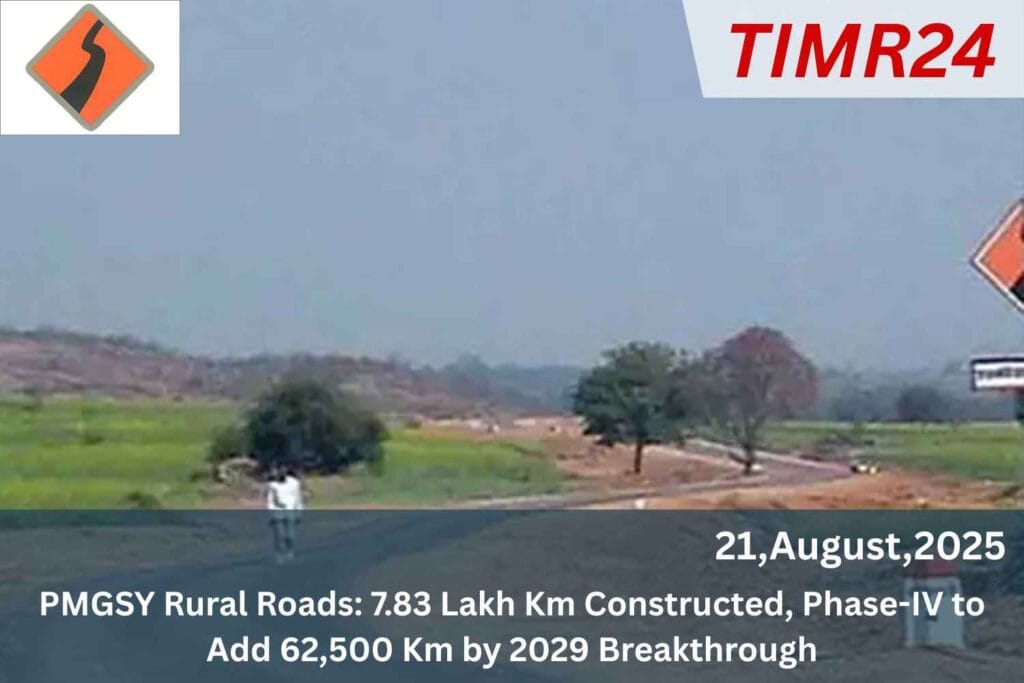
The Pradhan Mantri Gram Sadak Yojana (PMGSY), launched in 2000, has provided over 8.38 lakh km of roads to rural India since its inception. The scheme has improved access to schools, hospitals, markets, and transport hubs, and has expanded through multiple phases. PMGSY-IV, approved in 2024, aims to construct 62,500 km of new roads by 2029, connecting 25,000 newly eligible habitations. The scheme has boosted rural livelihoods and contributed to poverty reduction and socio-economic transformation. The Pradhan Mantri Gram Sadak Yojana (PMGSY) has emerged as one of the most transformative infrastructure initiatives in India, connecting rural communities through
All-weather roads and fostering inclusive development. Since its inception in 2000, the programme has played a pivotal role in bridging the gap between rural and urban areas by enhancing mobility, improving access to markets, boosting agricultural supply chains, and creating new livelihood opportunities. According to the latest government data, PMGSY has successfully constructed (Rural Roads) 7.83 lakh kilometres of roads, significantly expanding connectivity across India’s hinterlands. The announcement of Phase-IV of PMGSY, which targets the addition of another 62,500 kilometres by 2029, marks a new milestone in India’s journey towards strengthening rural infrastructure.
The scale of road development under PMGSY has not only transformed physical connectivity but also reshaped social and economic landscapes. Villages that once struggled with isolation now benefit from improved access to schools, healthcare facilities, and government services. The development of rural road infrastructure under this scheme is closely aligned with the government’s broader agenda of empowerment and sustainable growth. With better roads, farmers can transport their produce to nearby mandis without delays, small businesses can expand their reach, and communities can benefit from improved mobility, which directly contributes to poverty.
Alleviation and employment generation. In this way, PMGSY has become much more than just a road-building programme; it is a catalyst for rural prosperity PMGSY Phase-IV holds special significance because it will not only add new roads but also focus on upgrading and modernizing existing infrastructure to meet rising demands. With a target of 62,500 kilometres by 2029, this phase emphasizes sustainability, durability, and the integration of digital and green technologies in construction. The government is expected to deploy advanced construction techniques, modern materials, and monitoring systems to ensure that these roads remain resilient against climatic.
Changes while reducing long-term maintenance costs. In addition, the scheme will also prioritize roads that connect villages with higher population density, ensuring maximum impact on rural livelihoods. An important aspect of PMGSY’s success lies in its strong institutional framework and state-level execution. The scheme is implemented through a partnership model involving the central government, state governments, and local authorities, ensuring that projects are tailored to regional needs. States like Bihar, Uttar Pradesh, Madhya Pradesh, and Rajasthan have witnessed remarkable rural transformation through PMGSY roads, which have opened new avenues for industrial.
Agricultural growth. The emphasis on all-weather connectivity ensures that roads remain usable throughout the year, reducing the hardships faced by rural populations during monsoons or other adverse weather conditions. Another notable impact of PMGSY is its role in promoting gender empowerment and social inclusion. Rural women, who often bore the brunt of mobility challenges, now benefit from easier access to healthcare, markets, and educational institutions. Improved connectivity has also encouraged higher school attendance among girls, better maternal health outcomes, and greater participation of women in local economic activities. This aligns with the government’s vision of inclusive development, where no community is left behind.
The integration of green technologies and digital innovations in PMGSY Phase-IV is set to redefine rural infrastructure development. The use of recycled materials, cold-mix technology, and other eco-friendly methods will make construction more sustainable. Simultaneously, the adoption of GPS-based monitoring, real-time project tracking, and digital reporting systems will enhance transparency and efficiency in implementation. These innovations will not only ensure the timely completion of projects but also help in monitoring the quality and durability of constructed roads. The long-term vision of PMGSY is not just to build roads but to create rural connectivity.
Corridors that link villages with national highways, industrial hubs, and logistic networks. This integrated approach will accelerate rural industrialization, enhance agricultural exports, and strengthen rural tourism. For instance, villages with historical significance, cultural heritage, or eco-tourism potential can now be developed into tourist attractions, further diversifying rural income streams. By 2029, the completion of Phase-IV will ensure that India’s rural connectivity is robust, future-ready, and capable of supporting the next phase of economic transformation.
The journey of PMGSY from 2000 to today showcases how consistent investment in rural infrastructure can unlock massive social and economic benefits. With 7.83 lakh kilometres already constructed and a roadmap to add 62,500 kilometres more under Phase-IV by (Gram Sadak) 2029, the scheme continues to be a cornerstone of India’s development narrative. As the government focuses on sustainable construction, digital integration, and inclusive growth, PMGSY is poised to further uplift communities, bridge regional disparities, and contribute significantly to India’s vision of becoming a developed nation by 2047.
Q1. What is PMGSY?
Pradhan Mantri Gram Sadak Yojana (PMGSY) is a government initiative to provide all-weather road connectivity to rural areas.
Q2. How many km of roads have been constructed under PMGSY?
As of now, 7.83 lakh km of rural roads have been constructed under PMGSY.
Q3. What is planned under Phase-IV of PMGSY?
Phase-IV aims to construct an additional 62,500 km of rural roads by 2029.
Q4. How does PMGSY benefit rural communities?
It improves connectivity, access to markets, healthcare, education, and overall socio-economic development.
Q5. Who implements PMGSY projects?
The central and state governments jointly implement PMGSY through local authorities and construction agencies.