








The Pradhan Mantri Gram Sadak Yojana (PMGSY) has sanctioned 8.38 lakh km of rural road length across India, connecting over 1.62 lakh habitations with all-weather Roads. The scheme has linked 6.96 lakh rural facilities, including agricultural markets, educational centres, medical facilities, and transport and service centres. Impact assessment studies by institutions like NITI Aayog’s DMEO, World Bank, BITS Palani, IIM Ahmedabad, and ILO have consistently highlighted PMGSY’s role in transforming rural infrastructure and livelihoods. PMGSY have led to increased crop market volumes, non-farm employment, and better healthcare access. The program follows a robust three-tier monitoring system to ensure road quality and promotes the use of innovative materials and sustainable technologies.
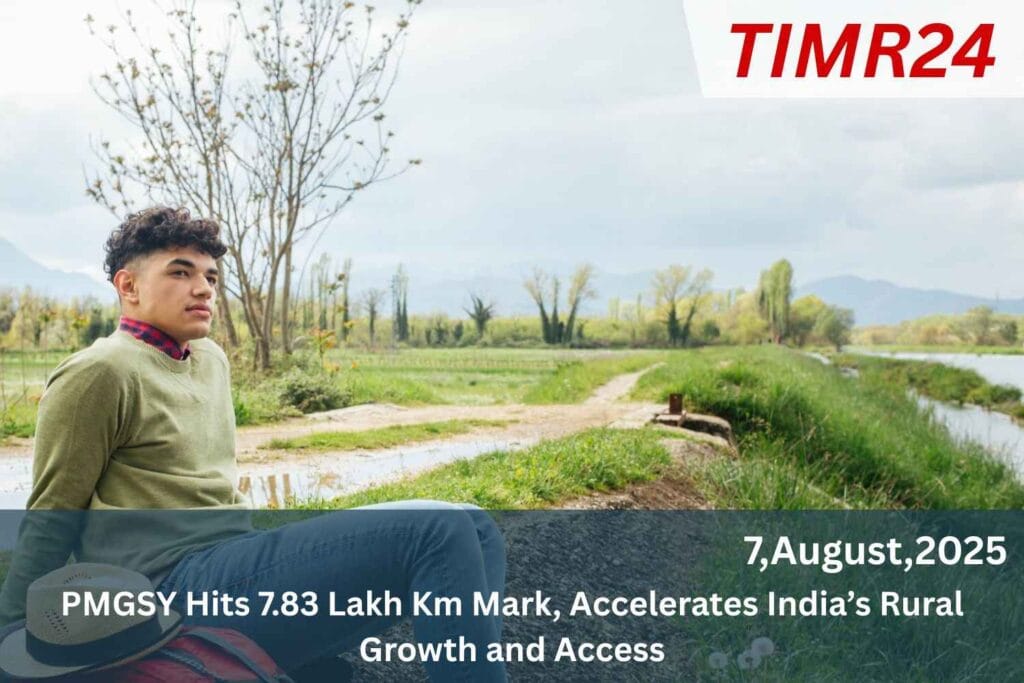
The Pradhan Mantri Gram Sadak Yojana (PMGSY) has crossed a historic milestone with the completion of 7.83 lakh kilometres of rural roads across India. This flagship scheme, launched in 2000, has played a pivotal role in reshaping rural infrastructure by ensuring all-weather connectivity to previously isolated habitations, thereby significantly uplifting the socio-economic fabric of the countryside. (National Rural Infrastructure Development)
Rural Transformation Through Connectivity
The core aim of PMGSY is to provide last-mile connectivity to rural areas, ensuring that even the remotest villages have access to all-weather roads. As of now, more than 97% of eligible habitations have been connected. This transformation has enabled villagers to access essential services such as education, healthcare, and markets. Improved connectivity has not only reduced travel time but has also drastically improved emergency response systems in rural belts. For further insights into rural road development, you can refer to (Road Construction).
Economic Empowerment of Villages
The improved network under PMGSY has directly impacted the economic productivity of rural India. Farmers now enjoy easier access to agricultural markets, cold storage facilities, and input suppliers, reducing post-harvest losses and increasing profit margins. Additionally, rural entrepreneurs, especially women-led self-help groups, have found new avenues for growth. The program’s contribution to ago-based industries and rural employment cannot be overstated. Explore related developments in (Road Construction).
Technological Innovations and Monitoring
In recent years, PMGSY has adopted modern technologies to ensure transparency and efficiency. The use of Geo-tagging, GIS-based monitoring, and e-MARG (Electronic Maintenance of Rural Roads) platforms has brought a level of accountability previously unseen in large-scale infrastructure projects. These innovations help in tracking road quality, ensuring timely maintenance, and curbing corruption. The newer phases of PMGSY have placed a growing emphasis on sustainability and climate resilience. Roads are now constructed using eco-friendly materials such as waste plastics and fly ash, while alignment planning considers water drainage and soil conservation. This is in line with the national agenda of promoting sustainable development across sectors. For updates on green initiatives.
Future Outlook
With Phase III already underway, the focus is shifting toward the upgradation of existing rural roads and integration with economic clusters. The goal is to further enhance the durability and utility of the rural road network while aligning with broader development goals such as Doubling Farmers’ Income and Digital India by enabling better mobile and internet penetration. The PMGSY continues to be a cornerstone in India’s rural development journey, linking not just roads but aspirations, opportunities, and inclusive growth across the nation.
Q1. What is the main objective of PMGSY?
The Pradhan Mantri Gram Sadak Yojana (PMGSY) aims to provide all-weather road connectivity to unconnected rural habitations across India.
Q2. How much road has been completed under PMGSY?
As of now, over 7.83 lakh kilometres of rural roads have been constructed under the PMGSY scheme.
Q3. How has PMGSY impacted rural India?
PMGSY has improved access to education, healthcare, markets, and employment, boosting rural development and quality of life.
Q4. What technologies are used in PMGSY implementation?
Technologies like Geo-tagging, GIS monitoring, and mobile apps like Meri Sadak are used for transparency and quality control.
Q5. What is the focus of PMGSY Phase III?
PMGSY Phase III focuses on upgrading existing roads, especially those connecting to economic hubs, health centres, and schools.