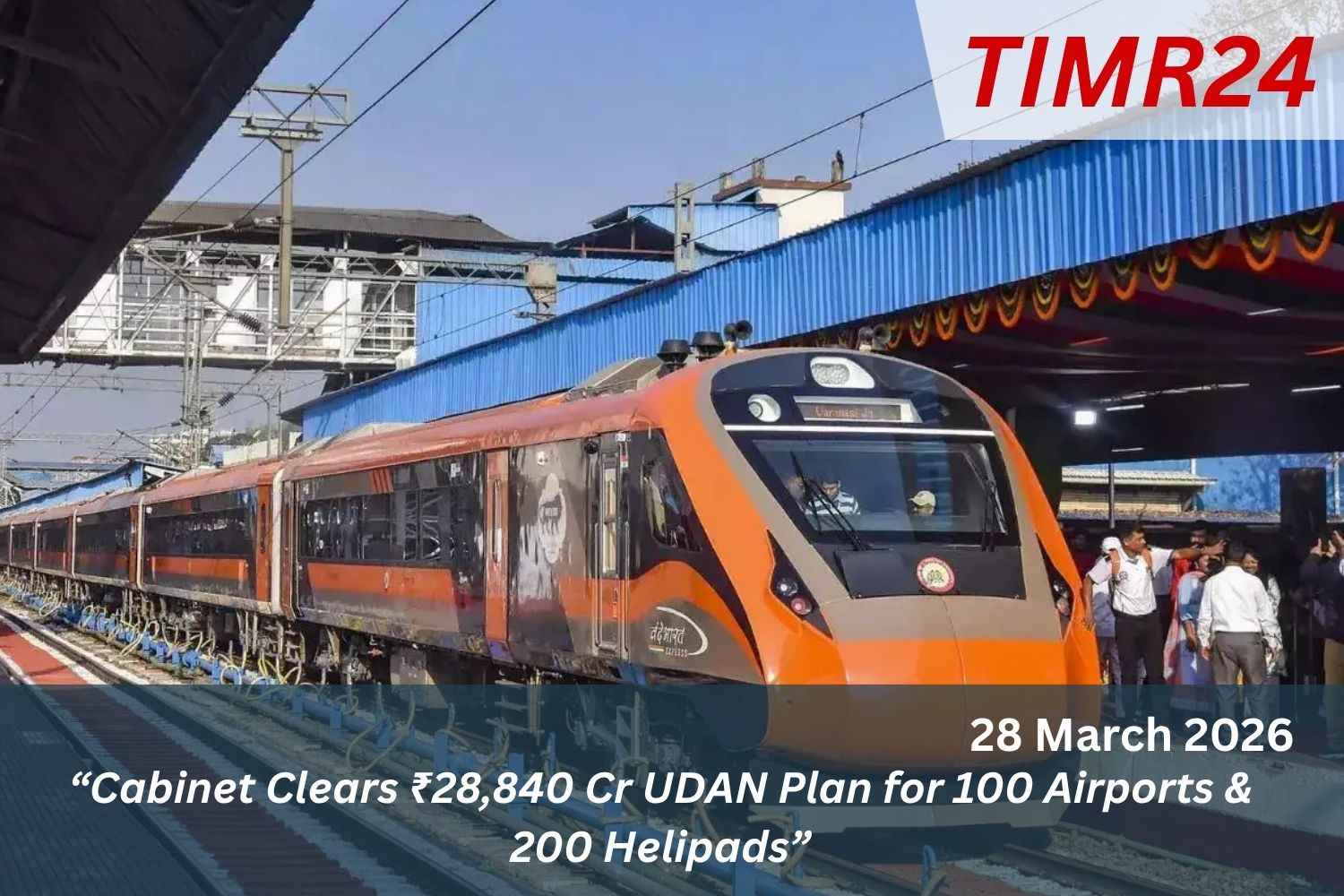



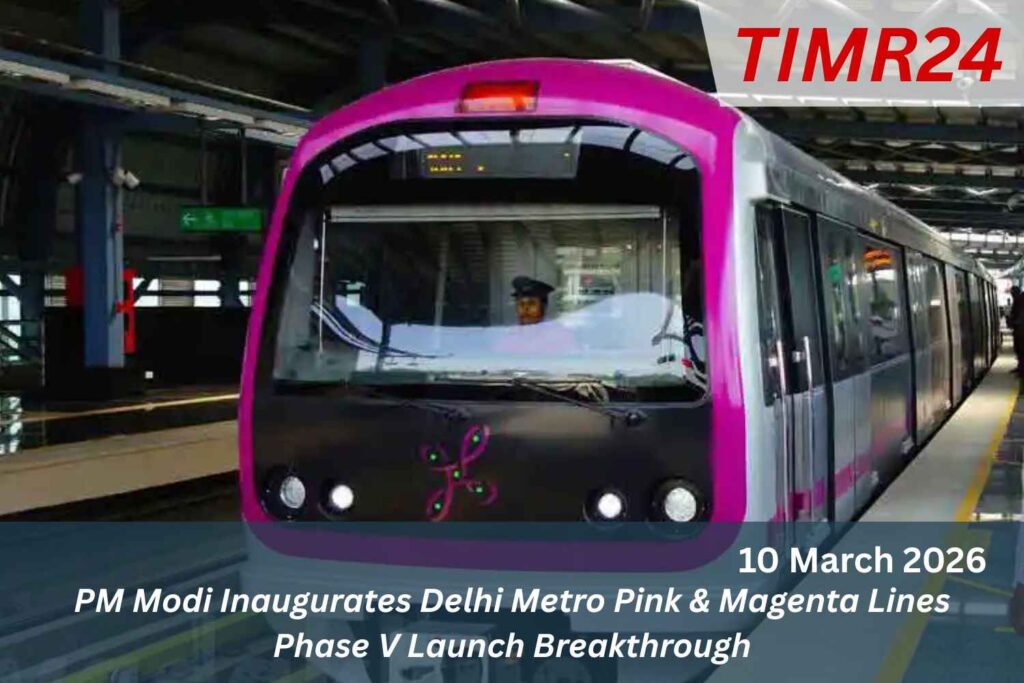
PM Narendra Modi inaugurated two new corridors for the Delhi Metro and laid the foundation for three additional routes, collectively valued at over Rs 18,300 crore, aimed at enhancing urban mobility. The 12.3 km Majlis Park–Maujpur-Babarpur section of the Pink Line, now extending 71.56 km, features India’s first fully operational Ring Metro, connecting several key areas and including a double-decker viaduct. Also inaugurated was the 9.9 km Deepali Chowk–Majlis Park section of the Magenta Line, improving northern city connectivity. The new corridors under Phase V-A, totaling 16.10 km, include routes linking R.K. Ashram Marg to Indraprastha and extensions to.
Narendra Modi Recently Inaugurated
Indira Gandhi Airport, expected to alleviate congestion and promote sustainable transport Prime Minister Narendra Modi recently inaugurated a historic milestone in the development of Delhi’s urban transit system when he officially opened two critical sections of the Delhi Metro the extension of the Pink Line from Majlis Park to Maujpur‑Babarpur and the Magenta Line extension from Deepali Chowk to Majlis Park on March 8, 2026. These expansions, part of the broader Phase V Metro expansion programme, represent a major leap in connectivity across the national capital and mark the completion of India’s first fully operational “Ring Metro” network within the megacity.
The significance of these new corridors lies not only in the improved mobility they offer to commuters but also in the engineering achievements they embody. The Pink Line extension now completing a full loop stretches approximately 12.3 km with several elevated stations, including major stops like Burari, Jagatpur‑Wazirabad, Khajuri Khas, Bhajanpura, and Yamuna Vihar on its circular route. This line now spans roughly 71.56 km in total, creating a contiguous ring that encircles large sections of Delhi and allows passengers to travel around the city efficiently without requiring transfers through central interchange hubs Inaugurating the adjacent Magenta Line.
People Commuting Between Localities
Extension, which adds 9.9 km of track from Deepali Chowk to Majlis Park, the Prime Minister underscored the importance of connecting key residential and commercial zones in the northern parts of Delhi. This stretch enhances mobility for people commuting between localities like Madhuban Chowk, Haiderpur Badli Mor, Bhalaswa, and Majlis Park, linking them with the broader metro network. The Magenta Line’s growing connectivity is expected to significantly reduce travel times and alleviate congestion on roadways, a longstanding challenge for residents in these fast‑growing neighbourhoods Taken together, these inaugurations are part of a comprehensive.
Strategy to make the Delhi Metro more interconnected, reliable, and accessible. The Ring Metro’s operationalisation is a defining achievement in the city’s transport infrastructure. It opens up new possibilities for seamless travel across Delhi without the necessity of funneling passengers through traditionally busy central stations alone. Commuters moving across northern, eastern, and northeastern corridors can now bypass multiple interchanges and enjoy direct journeys that were previously more time‑consuming The metropolitan authorities expect this expanded connectivity to generate a positive ripple effect across the urban landscape encouraging.
Sustainability Agenda And Supports
More residents to utilise public transport, reducing reliance on private vehicles, and lowering emissions and localized pollution. By integrating more neighbourhoods into the metro network, the city also advances its sustainability agenda and supports the needs of a rapidly growing commuter population In addition to the inauguration, PM Modi also laid foundation stones for three new metro corridors under Phase V‑A of the Delhi Metro expansion project. These corridors the Central Vista underground route from Ramakrishna Ashram Marg to Indraprastha, an extension from Aerocity to Indira Gandhi International Airport Terminal‑1, and an elevated from Tughlakabad to Kalindi Kunj together.
Cover approximately 16.1 km. Once completed, these routes will enhance access to major government complexes, cultural landmarks, and travel hubs such as the airport, further knitting the city’s transportation framework This forward‑looking strategy demonstrates how India’s capital is evolving into a truly interconnected urban ecosystem. Each new metro line, extension, or interchange station adds incremental value to daily life from smoother commutes to new opportunities for social and economic mobility. As the network evolves, areas previously underserved by rapid transit are now being brought into the fold, enabling residents across socio‑economic groups to benefit from faster travel options.
Step‑By‑Step Engineering Details, Planning
The Delhi Metro’s expansion under Phase V is also a testament to India’s emphasis on modern, tech‑driven urban infrastructure. For broader context on the scale and impact of the Metro network, the Delhi Metro overview on Wikipedia provides historical insights, network (India) statistics, and project updates that chart the system’s evolution from its inception in the early 2000s to its current status as one of the region’s most vital transit systems Additionally, people interested in the step‑by‑step engineering details, planning challenges, or the broader implications of the Phase V expansions can explore reports from The Economic Times and Business Standard, which offer.
Comprehensive coverage of the opened corridors and future routes The rollout of these new routes not only reflects the commitment of national and local authorities to invest in sustainable mass transit but also responds to the demands of millions of daily commuters who depend on the metro for rapid, comfortable travel. By connecting more districts, easing bottlenecks, and introducing innovative infrastructure solutions like the circular ring route.
The Delhi Metro is setting new benchmarks in urban transportation for Indian cities and beyond As construction progresses on the new corridors and future (India) extensions are planned, commuters and urban planners alike can look forward to further enhancements that will continue to shape the capital city’s transit landscape well into the next decade.
Q1. What exactly did PM Narendra Modi inaugurate in Delhi Metro Phase V?
PM Modi inaugurated two major new corridors the 12.3 km Majlis Park to Maujpur‑Babarpur stretch of the Pink Line and the 9.9 km Deepali Chowk to Majlis Park extension of the Magenta Line. This marks the completion of India’s first fully operational Ring Metro network under Delhi Metro Phase V.
Q2. What is the significance of the “Ring Metro”?
With the recent Pink Line extension forming a continuous loop of approximately 71.56 km, Delhi now boasts the country’s first continuously operational Ring Metro. This allows seamless travel around major parts of the city without requiring central interchange, improving commuter flow and reducing travel time.
Q3. How will these new metro sections benefit commuters?
The newly inaugurated stretches improve connectivity for north and north‑east Delhi areas like Burari, Khajuri Khas, Bhajanpura, Yamuna Vihar, Haiderpur, and Madhuban Chowk. They help reduce congestion on roads and provide faster, cleaner transit options for daily riders.
Q4. Are there other projects linked to this launch?
Yes PM Modi also laid foundation stones for three additional corridors as part of Phase V‑A, including the Central Vista corridor and extensions to the Indira Gandhi Airport and Kalindi Kunj, aimed at further enhancing urban connectivity.
Q5. Where can I find more details about Delhi Metro Phase V?
For broader background and ongoing expansion plans, visit the official Delhi Metro page on Wikipedia.