



















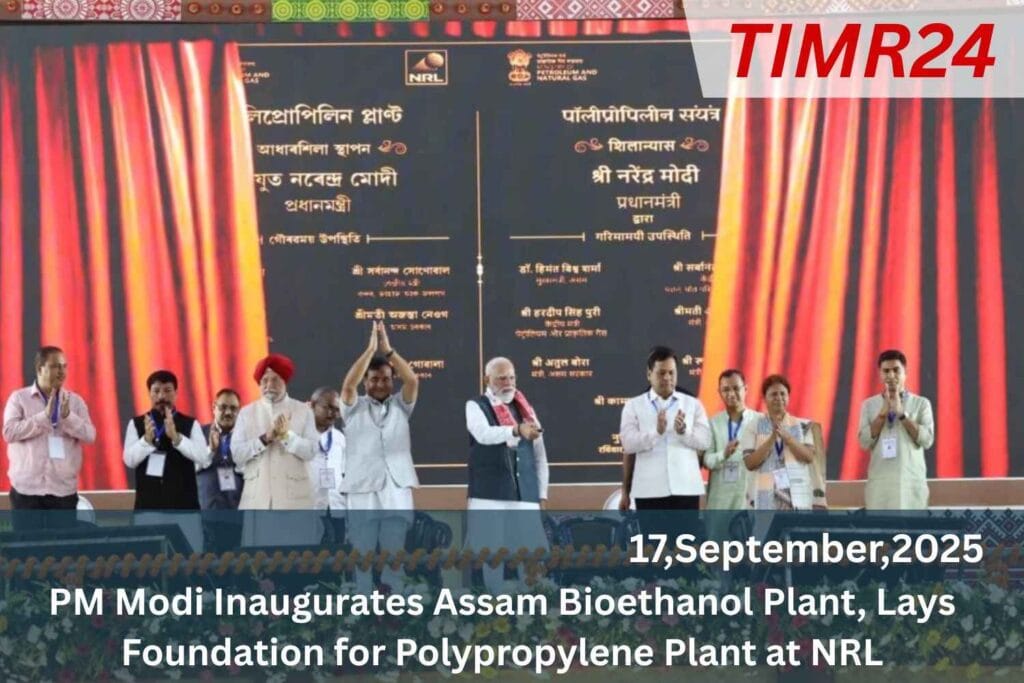
Prime Minister Narendra Modi Inaugurated the Assam Bioethanol Plant and the foundation for a polypropylene plant at Unmilitary Refinery Limited in Golghar, Assam. The initiatives aim to promote clean energy and reduce dependence on fossil fuels. Modi highlighted Assam’s role in strengthening India’s energy capabilities and reaffirmed the government’s commitment to further enhancing this strength. (PM Modi) He emphasized that India is the fastest-growing major economy in the world and is now embarking on the path of becoming self-reliant in meeting its energy requirements. On September 14, 2025, Prime Minister Narendra Modi inaugurated India’s first bamboo-based.
Bioethanol plant and laid the foundation stone for a polypropylene unit at Unmilitary Refinery Limited (NRL) in Golghar, Assam. This dual initiative underscores India’s commitment to sustainable energy solutions and industrial diversification, aligning with the nation’s broader goals of achieving energy self-reliance and fostering economic growth in the Northeastern region The Assam Bioethanol Plant, developed as a joint venture between NRL and Finnish partners, marks a significant milestone in India’s bioenergy sector. Utilizing bamboo a renewable resource abundant in Assam the plant is designed to process up to 300,000 metric tonnes of bamboo annually, producing.
Approximately 49,000 metric tonnes of bioethanol. This second-generation bioethanol facility not only provides an eco-friendly alternative to fossil fuels but also contributes to reducing carbon emissions, thereby supporting India’s climate action commitments The establishment of this plant is expected to create a robust bamboo supply chain, benefiting local farmers and tribal communities engaged in bamboo cultivation. By integrating sustainable agricultural practices with industrial processes, the project aims to enhance rural livelihoods and promote inclusive development in the region Concurrently, the foundation stone for a 360 KTPA (kilo tonnes per annum) polypropylene.
Plant was laid at NRL. With an investment exceeding ₹7,000 crore, this facility is poised to bolster Assam’s petrochemical sector by increasing the Petrochemical Intensity Index by 4%. Polypropylene, a versatile polymer used in various industries including packaging, automotive, and healthcare, will be produced at this plant, catering to both domestic and international markets The establishment of the polypropylene unit is expected to generate significant employment opportunities, particularly for the youth in Assam. It will also stimulate ancillary industries and infrastructure development, contributing to the overall economic growth of the region Moreover.
Economic and Social Impacts
The project aligns with the ‘Make in India’ and ‘Aatmanirbhar Bharat’ initiatives, promoting domestic manufacturing and reducing dependence on imported petrochemical products Collectively, these projects are anticipated to inject approximately ₹18,000 crore into Assam’s economy. The bioethanol plant will generate direct and indirect employment for thousands of individuals, particularly benefiting farmers, tribal communities, and local entrepreneurs. The polypropylene unit will further enhance industrial activity, creating additional job opportunities and fostering skill development among the local workforce Furthermore, the integration of sustainable energy solutions with industrial.
Development underscores a holistic approach to economic growth, ensuring that environmental considerations are embedded in the region’s development trajectory. This approach not only addresses energy security but also promotes social equity and environmental stewardship The inauguration of the bioethanol plant and the foundation laying for the polypropylene unit are aligned with India’s broader energy strategy, which focuses on reducing reliance on imported fossil fuels and enhancing domestic energy production. By promoting alternative fuels like bioethanol and expanding the petrochemical industry, India aims to achieve greater energy self-reliance and contribute to global sustainability efforts.
These initiatives also support the government’s commitment to achieving net-zero emissions by 2070, as outlined in the Nationally Determined Contributions (NDCs) under the Paris Agreement. By investing in renewable energy infrastructure and promoting sustainable industrial practices, India is taking concrete steps towards a low-carbon economy The inauguration of the Assam Bioethanol Plant and the foundation laying for the polypropylene unit at NRL represent significant strides towards achieving sustainable development in Assam and India at large. These projects not only contribute to the nation’s energy security and industrial growth but also empower local communities.
Promote environmental sustainability, and strengthen the socio-economic fabric of the region As India continues to transition towards a green economy, initiatives like these serve as exemplars of how sustainable (PM Modi) practices can be integrated into industrial development, paving the way for a prosperous and environmentally responsible future.
Q1. What is the significance of the Assam Bioethanol Plant inaugurated by PM Modi?
Q2. How will the polypropylene plant at NRL impact Assam’s economy?
The polypropylene plant at Unmilitary Refinery Limited (NRL), with an investment of over ₹7,000 crore, is expected to boost Assam’s petrochemical sector by enhancing the Petrochemical Intensity Index by 4%. It will create employment opportunities and strengthen the state’s industrial infrastructure.
Q3. What role does bamboo play in the bioethanol production process?
Q4. How does the inauguration align with India’s energy self-reliance goals?
The inauguration of the bioethanol and polypropylene plants aligns with India’s commitment to energy self-reliance by promoting alternative fuels and reducing dependence on imported fossil fuels. These projects contribute to the broader ‘Aatmanirbhar Bharat’ initiative, fostering sustainable development.
Q5. What are the expected benefits for local communities in Assam?
The new plants are expected to generate significant employment opportunities, particularly for local farmers and tribal communities involved in bamboo cultivation. Additionally, the projects aim to stimulate the local economy by integrating bamboo-based industries and enhancing regional development.