









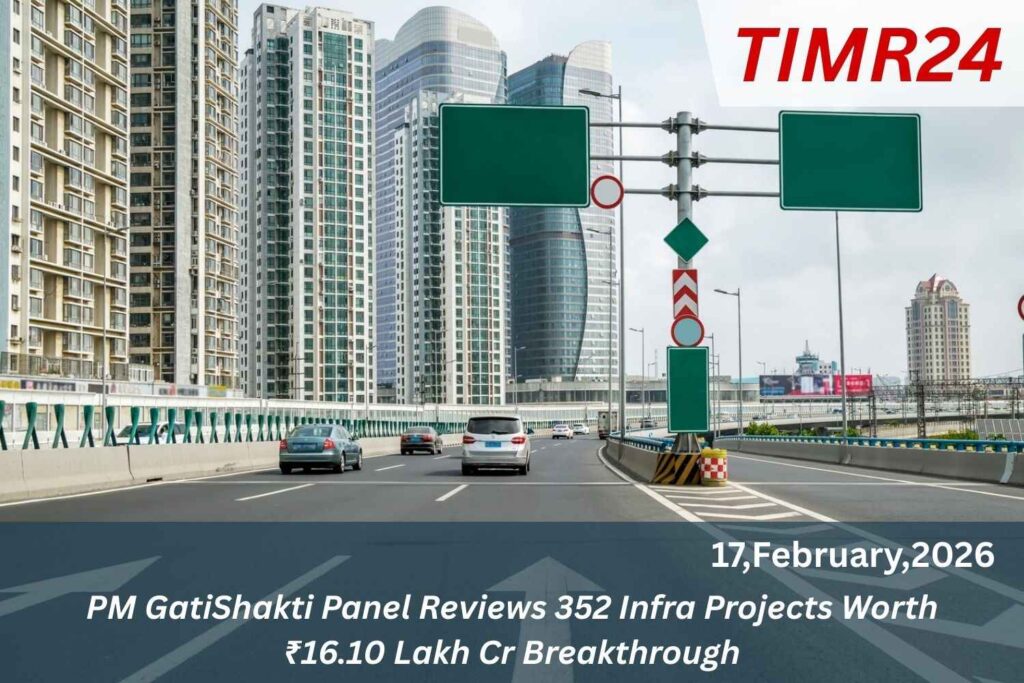
PM GatiShakti National Master Plan (PMGS-NMP) was launched in October 2021 to enhance infrastructure planning and development in India. The Network Planning Group (NPG) assesses critical Central Government projects, promoting integrated and multimodal planning, with 352 projects evaluated totaling ₹16.10 Lakh Crore. Among these, 201 projects are sanctioned, with 167 under implementation. A provision of ₹5000 crores has been made for state infrastructure through a 50-year interest-free loan. Ongoing projects are monitored by the Ministry of Statistics and Programme Implementation (MoSPI), with a report on costs and status available from July 2025 on the PAIMANA portal.
Ensuring Swift Management
To expedite project execution, the Project Monitoring Group implements a 5-tier Escalation framework for issue resolution, ensuring swift management of large-scale projects India’s infrastructure growth strategy has taken a major step forward as the Network Planning Group under the PM GatiShakti initiative reviewed 352 large-scale infrastructure projects valued at ₹16.10 lakh crore. This development reflects the country’s strong commitment to modernizing connectivity, improving logistics efficiency, and accelerating economic growth through integrated planning and execution. The review highlights how coordinated infrastructure development is becoming central to.
India’s long-term economic vision and its ambition to become a global manufacturing and logistics hub The PM GatiShakti initiative represents a transformative approach to infrastructure planning, bringing multiple ministries and departments together on a unified digital platform. Traditionally, infrastructure projects in India often faced delays due to lack of coordination between agencies responsible for roads, railways, ports, and urban development. The new framework addresses these challenges by promoting synchronized planning, reducing duplication of work, and ensuring optimal resource utilization. By reviewing hundreds of projects simultaneously.
Modern Economic Growth Requires
The Network Planning Group ensures that infrastructure expansion is aligned with national priorities and regional development needs One of the most important aspects of the review process is the focus on multimodal connectivity. Modern economic growth requires seamless movement of goods and passengers across different transport networks. The projects assessed under the GatiShakti framework aim to integrate roadways, railways, air transport, and waterways into a unified system that improves efficiency and reduces transportation time. This integration not only enhances logistics performance but also strengthens supply chains, enabling businesses to.
Operate more competitively in domestic and international markets. Improved connectivity between industrial clusters, ports, and logistics hubs is expected to significantly boost trade and investment The review of 352 projects also highlights the government’s emphasis on reducing logistics costs, which currently account for a substantial portion of India’s economic expenditure. High logistics costs can impact industrial competitiveness and increase the price of goods. Through better infrastructure planning, faster cargo movement, and improved connectivity, PM GatiShakti seeks to bring down these costs and create a more efficient logistics ecosystem.
Regional Economic Balance Infrastructure
The initiative also aims to enhance last-mile connectivity, ensuring that remote and rural regions are integrated into the national economic framework, thereby promoting inclusive development Another major focus area of the reviewed projects is regional economic balance. Infrastructure development plays a critical role in reducing regional disparities by connecting underdeveloped areas with economic centers. The PM GatiShakti framework prioritizes projects that improve access to markets, facilitate industrial growth, and enhance mobility in emerging regions. By strengthening infrastructure in less-developed states and districts, the initiative supports employment.
Generation, industrial expansion, and improved living standards. This balanced development strategy is essential for sustainable economic progress and social stability Digital technology forms the backbone of the PM GatiShakti initiative. The program utilizes advanced mapping and data analytics tools to identify infrastructure gaps, assess project feasibility, and monitor implementation progress. This technology-driven approach ensures transparency, accountability, and efficient decision-making. By leveraging geospatial data, planners can visualize existing infrastructure networks and design projects that maximize impact while minimizing environmental and logistical challenges.
Modern Infrastructure Development
The use of digital tools also enables real-time monitoring of project progress, helping authorities address bottlenecks and accelerate completion timelines Environmental sustainability is another important dimension of the infrastructure review. Modern infrastructure development must balance economic growth with environmental protection. The GatiShakti initiative promotes eco-friendly planning by encouraging optimized routes, reduced fuel consumption, and efficient land use. Integrated planning helps minimize unnecessary construction and supports the development of green transport solutions. By incorporating environmental considerations into infrastructure design.
The initiative aligns with global sustainability goals while supporting national development objectives The economic implications of reviewing projects worth ₹16.10 lakh crore are substantial. Infrastructure investment has a multiplier effect on the economy, stimulating demand across multiple sectors such as construction, manufacturing, and services. The large-scale projects evaluated under PM GatiShakti are expected to create employment opportunities, boost industrial productivity, and enhance investor confidence. Improved infrastructure also strengthens India’s position as an attractive destination for foreign investment by providing.
Reliable logistics and efficient transport networks The initiative also emphasizes collaboration between central and state governments, recognizing that infrastructure development requires coordinated efforts across multiple levels of administration. The Network Planning Group provides a platform for dialogue, enabling stakeholders to address challenges, share expertise, and ensure alignment with national priorities. This collaborative governance model helps streamline project approvals and facilitates faster implementation In addition to economic benefits, improved infrastructure contributes significantly to social development. Better transport networks enhance access.
Impacts Beyond Economic Growth
To healthcare, education, and employment opportunities. Efficient connectivity reduces travel time, improves mobility, and enhances quality of life for citizens. The projects reviewed under PM GatiShakti therefore have far-reaching impacts beyond economic growth, contributing to overall social welfare and national development India’s infrastructure transformation under PM GatiShakti also reflects the country’s vision of becoming a global economic powerhouse. As global supply chains evolve, countries with strong logistics and transport systems gain competitive advantages in trade and manufacturing. By investing in integrated infrastructure, India aims to strengthen.
Its position in global markets and support long-term economic resilience. The review of 352 projects demonstrates the scale and ambition of this vision The focus on future-ready infrastructure is another key feature of the initiative. The reviewed projects incorporate (India) advanced technologies, smart logistics systems, and modern construction practices to ensure long-term efficiency and adaptability. Future-ready infrastructure supports emerging industries, digital commerce, and evolving transportation needs, ensuring that the country remains prepared for changing economic and technological landscapes The PM GatiShakti initiative also enhances transparency in infrastructure.
Centralized Framework For Project Evaluation
Planning by providing a centralized framework for project evaluation and monitoring. This transparency improves accountability and reduces the risk of project delays or cost overruns. By ensuring efficient use of public resources, the initiative strengthens public trust and supports responsible governance Overall, the review of 352 infrastructure projects worth ₹16.10 lakh crore represents a major milestone in India’s development journey. The PM GatiShakti framework is reshaping how infrastructure is planned, implemented, and managed, emphasizing integration, efficiency, and sustainability. Through coordinated planning, digital innovation, and strategic.
Investment, the initiative aims to create a modern infrastructure ecosystem that supports economic growth, enhances connectivity, and improves the quality of life for citizens As India continues to expand its infrastructure capabilities, initiatives like GatiShakti will play a (India) crucial role in shaping the nation’s future. The emphasis on integrated planning, technological innovation, and sustainable development reflects a forward-looking approach to national growth. By aligning infrastructure investment with economic priorities and regional needs, the initiative lays the foundation for a more connected, efficient, and prosperous India.
Q1. What is GatiShakti?
GatiShakti is an integrated infrastructure planning initiative by the Government of India to improve coordination among ministries and enhance connectivity across transport networks.
Q2. What did the panel review?
The Network Planning Group evaluated 352 infrastructure projects worth ₹16.10 lakh crore focusing on logistics, transport, and connectivity improvements.
Q3. What sectors are covered under these projects?
Projects include railways, roads, ports, airports, logistics parks, and urban infrastructure.
Q4. How will PM GatiShakti benefit the economy?
It aims to reduce logistics costs, improve supply chain efficiency, boost trade, and generate employment.
Q5. What is the objective of integrated infrastructure planning?
The goal is to ensure coordinated project execution, minimize delays, and create seamless multimodal connectivity.