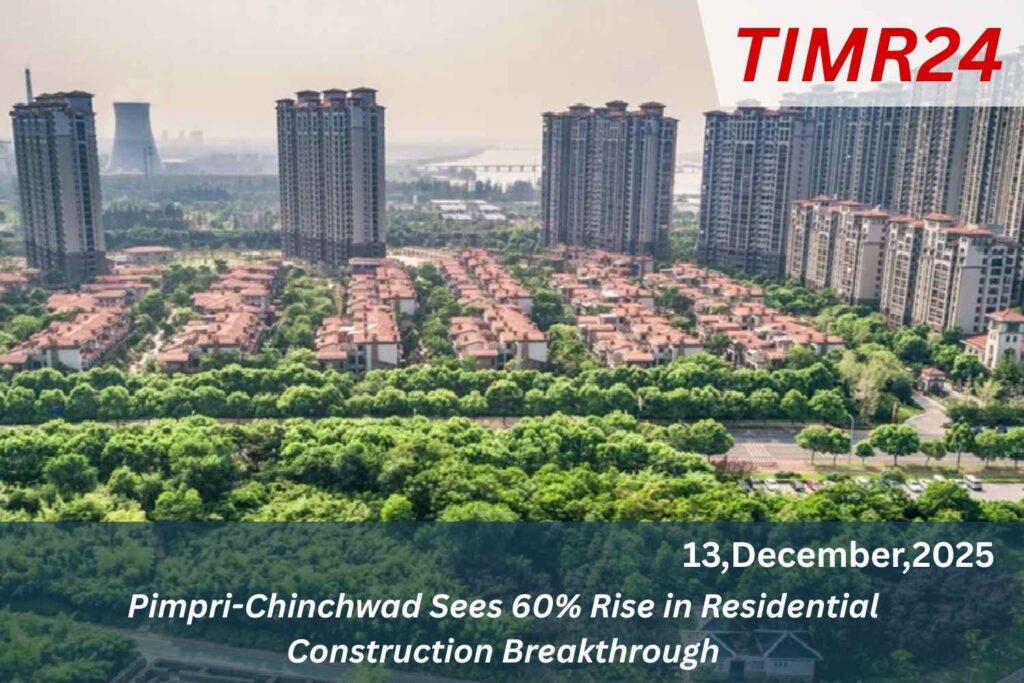
Pimpri-Chinchwad has experienced a significant increase in residential construction, with 60% of its developed area under construction in the past year, attributed to enhanced livability and infrastructure improvements. Recognized by the central government as a leading livable city, it has focused on public space enhancements, cultural landmarks, and recreational areas under the Smart City initiative. Notable attractions include Bhakti-Shakti and the Auto Cluster Science Park. The Pimpri Chinchwad Municipal Corporation is prioritizing civic amenities to support growth, with improved connectivity via metro and BRT services and strengthened water supply systems.
Growing Residential Markets, Witnessing
Over 5,000 new construction projects have been approved in three years to accommodate a doubling population, aligning infrastructure planning with development needs Pimpri-Chinchwad has emerged as one of Maharashtra’s fastest-growing residential markets, witnessing a remarkable 60% rise in residential construction activity over the past year. This surge reflects a combination of economic expansion, infrastructure upgrades, employment growth, and a clear shift in homebuyer preference toward suburban urban centers. Located strategically near Pune, Pimpri-Chinchwad Municipal Corporation (PCMC) has transformed from an industrial satellite town into a self-sustained.
Urban ecosystem attracting developers, investors, and end-users alike. The scale of new housing approvals, project launches, and under-construction inventory indicates that the region is entering a sustained phase of real estate growth rather than a short-term spike One of the most significant contributors to this rise is the robust infrastructure push undertaken by PCMC and the Maharashtra government. The expansion of the Pune Metro, improved road connectivity via the Mumbai–Pune Expressway, and upgraded arterial roads within the city have drastically reduced commute times. Areas such as Wakad, Hinjewadi Phase 3, Ravet, Tathawade, Moshi, and Punawale are now seamlessly.
Premium Segments Another key
Connected to Pune’s IT hubs and commercial districts. These connectivity improvements have increased residential demand, encouraging developers to accelerate project execution and launch new housing schemes across budget, mid-income, and premium segments Another key driver behind the construction boom is employment-led housing demand. Pimpri-Chinchwad is home to major automobile, engineering, and manufacturing companies, along with a growing IT and startup presence spilling over from Pune. Industrial areas such as Bhosari, Chakan, and Talawade continue to generate steady employment, while the Hinjewadi IT Park fuels demand from tech.
Professionals seeking homes closer to workplaces. This employment stability has translated into genuine end-user demand rather than speculative buying, making residential construction more sustainable Government policy support has further strengthened developer confidence (India) in Pimpri-Chinchwad. Initiatives like Maharashtra RERA compliance, faster online approvals, and transparent project registration have improved buyer trust and eased project execution. Affordable housing incentives under central and state schemes have encouraged developers to focus on mass housing projects, particularly in emerging micro-markets like Moshi and Chikhali.
Changing Lifestyle Preferences Post
These localities are seeing a rise in integrated townships offering schools, healthcare, retail, and recreational spaces within residential complexes, reflecting evolving buyer expectatio The rise in residential construction is also closely tied to changing lifestyle preferences post-pandemic. Homebuyers are increasingly prioritizing larger homes, better ventilation, green spaces, and work-from-home friendly layouts. Pimpri-Chinchwad offers relatively affordable pricing compared to central Pune, allowing buyers to upgrade to spacious configurations without significantly higher budgets. Developers have responded by redesigning projects to include amenities such as co-working spaces, fitness zones.
Landscaped gardens, and community areas. This lifestyle-driven demand has pushed construction volumes higher, particularly in gated communities and mixed-use developments From an investment perspective, Pimpri-Chinchwad has gained prominence due to its strong rental yields and capital appreciation potential. With continuous migration of professionals and students, rental demand remains robust across major residential clusters. Investors view the current construction surge as a sign of long-term growth rather than oversupply, especially since most new projects are aligned with actual demand The municipal corporation has played.
PCMC’s Focus On Sustainable Development
A proactive role in managing growth through improved urban planning and service delivery. Upgrades in water supply, sewage treatment, waste management, and digital governance systems have enhanced livability across residential zones. PCMC’s focus on sustainable development, including electric mobility infrastructure and green building norms, has made the city attractive to environmentally conscious buyers the sharp rise in construction, market experts suggest that Pimpri-Chinchwad remains relatively balanced compared to overheated urban cores. Land availability, planned zoning, and phased project launches have helped prevent extreme price volatility.
Developers are increasingly focusing on timely delivery and quality construction to differentiate themselves in a competitive market. Financial institutions have also shown increased willingness to fund residential projects in the region, reflecting confidence in demand stability the residential construction momentum in Pimpri-Chinchwad is expected to continue over the medium to long term. Upcoming infrastructure projects, including metro extensions, ring road development, and industrial.
Expansion zones, will further strengthen the city’s growth trajectory. As Pune’s urban boundaries expand, Pimpri-Chinchwad is likely to function not just as a satellite city (India) but as an independent real estate and economic hub. The current 60% rise in residential construction may therefore mark the beginning of a sustained transformation rather than a peak cycle.
Q1. Why has residential construction increased by 60% in Pimpri-Chinchwad?
Due to infrastructure expansion, employment growth, affordable housing demand, and improved connectivity.
Q2. Which areas in Pimpri-Chinchwad are seeing maximum housing growth?
Wakad, Ravet, Tathawade, Moshi, Punawale, and Hinjewadi belt.
Q3. Is the housing demand end-user driven or speculative?
Primarily end-user driven, supported by job creation and rental demand.
Q4. Are property prices still affordable compared to Pune city?
Yes, Pimpri-Chinchwad offers more space at relatively lower prices than central Pune.
Q5. Will residential construction continue to grow in coming years?
Yes, supported by metro expansion, industrial growth, and urban infrastructure upgrades.