




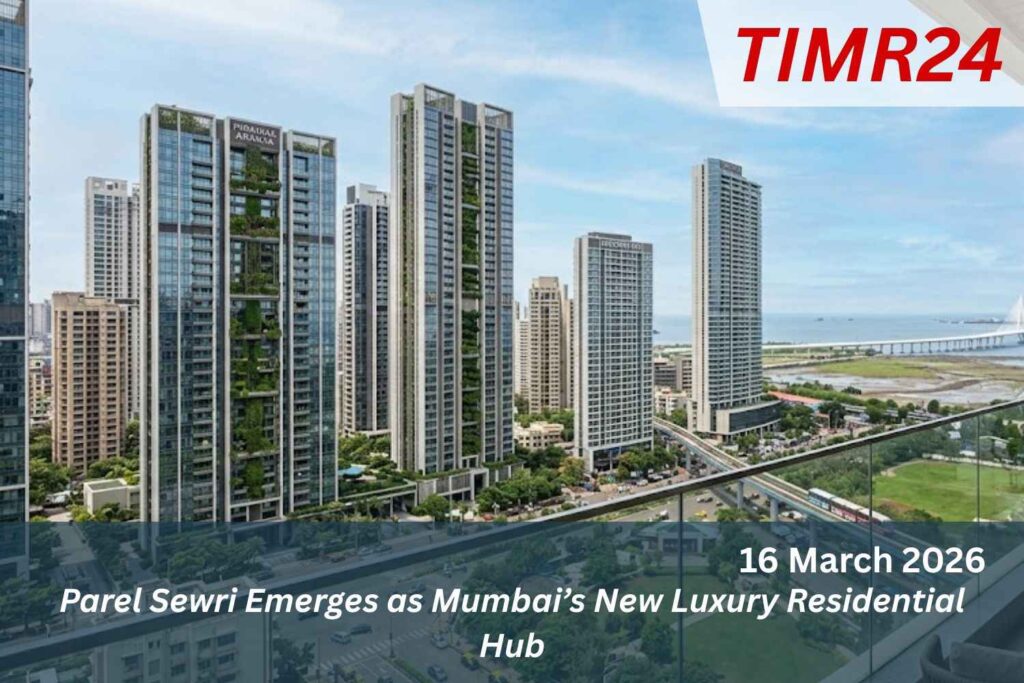
Parel–Sewri, historically a transitional zone in Mumbai, is evolving into a luxury residential hub due to key infrastructure developments like the Mumbai Trans Harbour Link (MTHL) and the proposed Sewri–Worli elevated connector, enhancing connectivity and accessibility. Industry experts highlight Parel’s established luxury market and the redevelopment potential in Sewri, where larger land parcels and ongoing upgrades support integrated residential and commercial projects. This area’s transformation from industrial to urban residential is attracting significant investment, with developers exploring large-format, wellness-oriented projects that differentiate it from traditional luxury markets.
Evolution Of The Parel Sewri Corridor
Overall, Parel–Sewri is positioned to offer a unique blend of space, accessibility, and lifestyle amenities in Mumbai’s evolving housing landscape The evolution of the Parel–Sewri corridor from an industrial‑legacy zone into a promising luxury residential hub marks one of the most compelling shifts in Mumbai’s real estate narrative. Historically, Parel matured from mill lands into a thriving business and residential district, propelled by redevelopment and its central location near Lower Parel and Dadar hubs of commerce, lifestyle, and connectivity. In contrast, Sewri retained a more industrial cadence for decades, defined by its port and maritime infrastructure.
Today, however, these two neighborhoods are converging into a cohesive luxury residential micro‑market that challenges established high‑end locales At the heart of this transformation is a series of infrastructure advancements that recalibrate the locale’s accessibility and potential. The recently completed Mumbai Trans Harbour Link (MTHL) also known as Atal Setu provides direct cross‑harbour connectivity to Navi Mumbai, drastically reducing travel time and connecting residents to emerging economic zones and the upcoming international airport. Complementing this is the proposed Sewri–Worli Connector, an elevated arterial route.
Improving Accessibility To Job Centers Like
Expected to further integrate the eastern and western parts of Mumbai, linking the corridor seamlessly to central business districts. These enhancements are not just logistical upgrades; they reshape daily life by shortening commutes, improving accessibility to job centers like Bandra‑Kurla Complex (BKC), and elevating the corridor’s appeal to high‑income professionals and families The real estate response to these catalysts has been swift and significant. Large, contiguous land parcels that were previously underutilized or earmarked for industrial purposes are now being aggregated for large‑format, premium residential projects. For instance, a recent joint development agreement between.
Lodha Developers and Sahana Group spread over a substantial tract in the Parel–Sewri area underscores serious commitment from marquee developers to this emerging hub. Such agreements valued in the hundreds of crores signify confidence and long‑term investment bets on the locale’s trajectory This shift also manifests in the design ethos, which increasingly favors lifestyle excellence over mere location. Developers are proposing expansive layouts, beachfront views, resort‑style amenities, landscaped open spaces, and high‑end finishes that reflect global residential sensibilities. These amenities are not ancillary; they are central attractions for affluent buyers seeking homes.
Luxury Addresses Proximity To Lower Parel
That blend urban convenience with premium lifestyle experiences. Waterfront living, open promenades along the harbor, and community‑centric design elements create differentiated offerings that set Parel–Sewri apart from conventional luxury addresses Proximity to Lower Parel remains one of the area’s strongest anchors. This well‑established node boasts corporate offices, premium retail outlets, high‑end dining, and cultural attractions like High Street Phoenix and Palladium Mall. Its transformation from mill lands into a cosmopolitan magnet offers a blueprint for Parel–Sewri’s own evolution. Today’s buyers value this proximity not just for lifestyle but for.
Its practicality: short commutes, immediate access to world‑class amenities, and connectivity via rail and road networks. The underlying real estate data shows increasing demand for properties in this corridor, with residential launches seeing strong traction and premium pricing trajectories The corridor’s rising demand is also supported by the broader Mumbai real estate market trends. As traditional luxury micro‑markets such as Worli and Lower Parel reach saturation and command premium valuations often reaching record price per square foot levels savvy buyers and investors look for emerging alternatives that offer future growth without compromising core urban location advantages.
Parel–Sewri fits this profile, positioned as a next wave luxury zone that combines centrality with value potential. Recent publications highlight top real estate investment hotspots for 2026 and rank the Parel–Sewri belt prominently for its upgraded connectivity and (India) evolving residential appeal Another compelling aspect of this corridor is its lifecycle value proposition. Unlike crowded western locales, Parel–Sewri offers relatively larger land holdings, allowing developers to design communities that prioritize space, green areas, and wellness‑oriented planning. Homebuyers increasingly seek such environments spaces that balance high‑density city living with quality of life.
Diverse Buyer Base Professionals Working
Viewed through this lens, Parel–Sewri’s growth is less speculative and more infrastructure‑driven and lifestyle‑oriented, aligning with global trends in urban residential preferences It’s also worth noting how the corridor appeals to a diverse buyer base. Professionals working in central business districts appreciate the shorter commute times and connectivity; successful entrepreneurs and C‑suite residents value lifestyle sophistication; and investors see strong appreciation potential backed by infrastructure and limited aspirational alternatives at similar price points. As the residential inventory tightens in established zones and price points climb.
The Parel–Sewri stretch offers an alternative that remains centrally connected yet provides room for planned, large‑scale development a mix that is rare in Mumbai’s dense urban fabric While still emerging and evolving, Parel–Sewri’s repositioning from an industrial (India) corridor to a luxury residential address encapsulates modern Mumbai’s dynamism. Connectivity enhancements that once seemed distant infrastructure projects are now reality, unlocking a real estate narrative that blends accessibility, lifestyle, and investment potential. As more developers unlock parcels, launch branded residential projects, and community infrastructure matures, this corridor is likely.
Q1. Why is Parel–Sewri emerging as a luxury residential hub?
Parel–Sewri’s transformation is driven by enhanced connectivity such as the Mumbai Trans Harbour Link and proposed Sewri Worli Connector, unlocking central Mumbai access and attracting luxury developers to large land parcels formerly under industrial use.
Q2. What infrastructure is boosting residential demand here?
Major projects like MTHL, improved road networks, and proximity to business hubs like Lower Parel and Worli are improving commute efficiency and lifestyle convenience.
Q3. Which developers are active in this corridor?
Branded developers such as Lodha, Prestige, and L&T Realty are investing or planning large‑scale residential projects, highlighting confidence in the micro‑market’s potential.
Q4. How does Parel–Sewri compare with traditional luxury zones?
Unlike traditionally constrained micro‑markets like Worli and Lower Parel, Parel–Sewri offers larger parcel sizes, waterfront potential, and modern planned communities at relatively competitive price points.
Q5. Is this area good for long‑term investment?
Yes ongoing infrastructure and land availability, coupled with strong central location fundamentals, make it attractive for both end‑users and investors seeking appreciation over time.