

















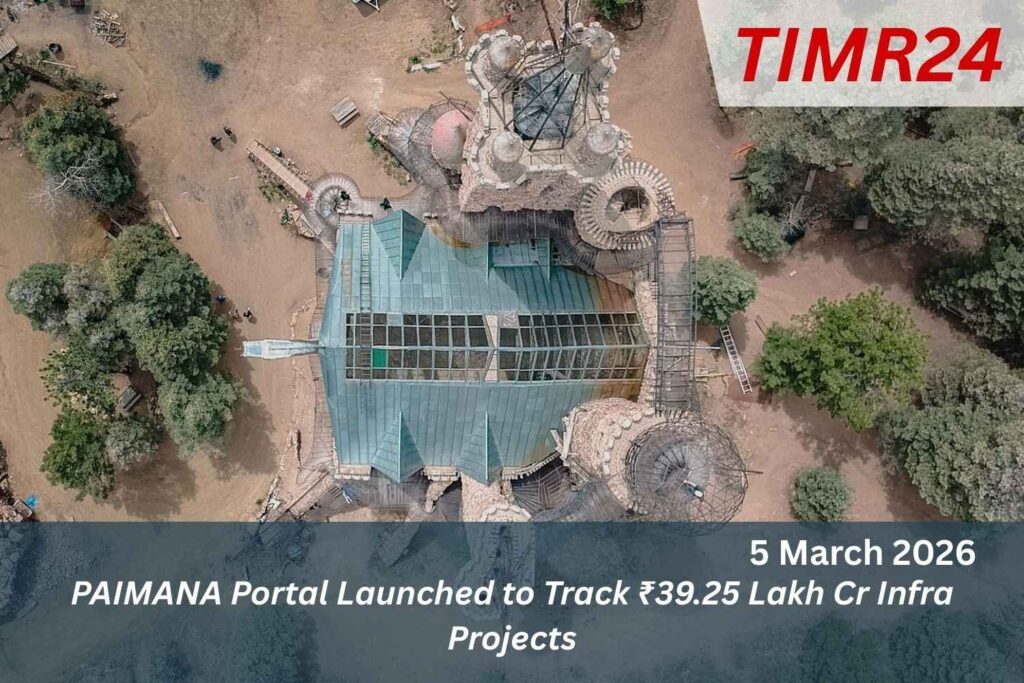
The Ministry of Statistics and Programme Implementation has launched the PAIMANA portal to monitor Central Sector infrastructure projects valued over Rs 150 crore, replacing the previous Online Computerised Monitoring System. Integrated with DPIIT’s portal, PAIMANA automates data flow, enhancing efficiency as 60 percent of projects are now updated automatically. As of January 2026, 1,702 projects worth Rs 39.25 lakh crore are under monitoring across 17 ministries, with expenditures at Rs 20.02 lakh crore. Key sectors include Transport and Logistics with 1,180 projects and Energy with Rs 10.84 lakh crore in investments. The portal, developed with over 20 ministries, aims to improve.
Infrastructure Investments Continue
Transparency and decision-making in infrastructure development India has taken another major step toward strengthening digital governance and infrastructure monitoring with the launch of the PAIMANA portal. The platform has been introduced to improve the tracking and evaluation of large infrastructure projects across the country. As infrastructure investments continue to grow rapidly, the government has recognised the need for a centralized and transparent monitoring system that can provide real-time insights into project progress, financial expenditure, and implementation challenges. The PAIMANA portal is designed to address these requirements by bringing together.
Detailed project data from multiple ministries and departments onto a single digital platform The portal has been launched by the Ministry of Statistics and Programme Implementation to monitor Central Sector Infrastructure Projects costing ₹150 crore and above. It replaces the earlier Online Computerized Monitoring System (OCMS-2006), which had been used for project monitoring for many years. The new system is far more advanced and integrates modern data analytics, digital dashboards, and automated reporting mechanisms. This shift reflects the government’s broader strategy of using digital tools to improve governance, accountability, and decision-making in large public infrastructure programs.
Scale of These Investments Highlights
At present, more than 1,700 infrastructure projects are being tracked on the PAIMANA portal with a combined revised cost of approximately ₹39.25 lakh crore. These projects belong to 17 different central ministries and departments and cover a wide range of sectors such as transportation, energy, health, housing, and urban development. The scale of these investments highlights the massive expansion of infrastructure activities taking place across India, which is considered a key driver of economic growth and employment generation The portal also provides a detailed snapshot of the progress of these projects. Data shows that many of the monitored projects are already at.
Advanced stages of implementation. A significant portion of projects have crossed the 80 percent physical progress mark, indicating that they are nearing completion. Similarly, several projects have achieved high levels of financial completion, demonstrating steady progress in expenditure and implementation. The availability of such real-time information allows policymakers and administrators to quickly identify delays, cost overruns, and implementation bottlenecks Another important feature of the portal is its role as a central repository for infrastructure data. Instead of relying on fragmented information sources across multiple ministries.
Assess Project Performance And Prioritize
PAIMANA consolidates all project information in a single platform. This helps government officials, analysts, and decision-makers access accurate data quickly and efficiently. The portal includes advanced analytical tools that generate automated reports, visual dashboards, and performance indicators. These features make it easier for authorities to assess project performance and prioritize interventions when required The scale of infrastructure monitoring through the portal reflects the government’s strong emphasis on connectivity-driven growth. A large share of projects currently tracked on the platform belongs to the transport and logistics sector.
Investments in highways, railways, airports, ports, and logistics networks account for a significant portion of the total project cost. These investments are expected to enhance connectivity between cities, industrial corridors, and economic zones across the country. Improved transportation infrastructure not only reduces logistics costs but also supports trade, tourism, and regional development Energy infrastructure is another major focus area within the monitored projects. Large investments are being made in electricity generation, transmission networks, renewable energy systems, and petroleum infrastructure. Expanding energy capacity is essential for sustaining industrial growth.
Supporting urbanization, and ensuring reliable electricity supply across the country. By monitoring these projects closely through the PAIMANA portal, the government aims to ensure that large investments are implemented efficiently and within scheduled timelines One of the most important technological aspects of the portal is its integration with other government monitoring systems. The PAIMANA platform has been linked with the Integrated Project Monitoring Portal managed by the Department for Promotion of Industry and Internal Trade. Through application programming interfaces, project data can be shared automatically between platforms.
Sess Project Performance And Prioritize
Reducing duplication and manual data entry. This integration follows the “one data, one entry” principle, which aims to improve data accuracy and eliminate inconsistencies across different government systems The portal also introduces role-based access for different stakeholders involved in infrastructure projects. Officials from ministries, implementing agencies, and monitoring bodies can access the system according to their roles and responsibilities. Interactive dashboards allow users to track project timelines, financial expenditures, and completion stages. Additionally, the system includes modules for reporting issues and identifying data gaps, which helps authorities take corrective action more quickly.
The launch of PAIMANA is part of a broader transformation in the way India manages large infrastructure programs. Over the past decade, the government has significantly increased capital expenditure on roads, railways, energy, and urban development projects. However, large infrastructure investments often face challenges such as delays, cost overruns, land acquisition issues, and coordination problems between agencies. Digital monitoring systems like PAIMANA help address these challenges by providing continuous oversight and detailed analytics Transparency is another key advantage of the new system. By maintaining a structured database of infrastructure projects.
The portal improves accountability in public spending. Officials can track project milestones, monitor expenditure patterns, and ensure that resources are being utilized effectively. This transparency also helps strengthen investor confidence and encourages private sector participation in infrastructure development The portal is expected to play an important role in improving coordination between different ministries and departments involved in infrastructure projects. Many large projects require collaboration between multiple government agencies, state authorities, and implementing organizations. Without a unified monitoring platform, coordination can become complicated and delays may occur.
PAIMANA helps overcome these challenges by providing a single source of information that can be accessed by all relevant stakeholders Another advantage of the platform is its ability to identify early warning signals for project delays. When projects begin to fall behind schedule or (India) exceed their cost estimates, the portal can highlight these issues through analytical reports and dashboards. This allows policymakers to intervene at an early stage and resolve problems before they escalate into major delays. Such proactive monitoring can significantly improve the efficiency of infrastructure execution across the country The introduction of the portal also aligns with India’s long-term infrastructure development strategy.
The government has launched several large initiatives aimed at modernizing transport networks, expanding energy infrastructure, and improving urban facilities. These programs involve massive investments and require effective monitoring systems to ensure successful implementation. PAIMANA serves as a key digital tool supporting these initiatives by enabling data-driven governance The cumulative expenditure on projects currently tracked on the portal has already crossed ₹20 lakh crore, indicating (India) substantial progress in infrastructure implementation. With hundreds of projects nearing completion and many more under construction, the portal will continue to.
Play an essential role in monitoring progress and maintaining accountability in public infrastructure spending As India continues to expand its infrastructure capacity, digital platforms like PAIMANA are expected to become increasingly important. They provide policymakers with accurate information, help improve project management, and ensure that large investments deliver their intended economic benefits. The portal represents a significant step toward smarter infrastructure governance, combining technology, analytics, and transparency to support the country’s long-term development goals.
Q1. What is the PAIMANA portal?
PAIMANA is a digital platform developed to monitor large Central Sector infrastructure projects across India.
Q2. Which projects are tracked on the portal?
Projects costing ₹150 crore or more across multiple sectors such as transport, energy, and urban development are tracked.
Q3. How many projects are currently monitored?
More than 1,700 infrastructure projects with a total revised cost of about ₹39.25 lakh crore are monitored.
Q4. What replaced the earlier monitoring system?
The portal replaced the Online Computerized Monitoring System (OCMS-2006).
Q5. Why is the portal important?
It improves transparency, project tracking, data accuracy, and decision-making in infrastructure development.