


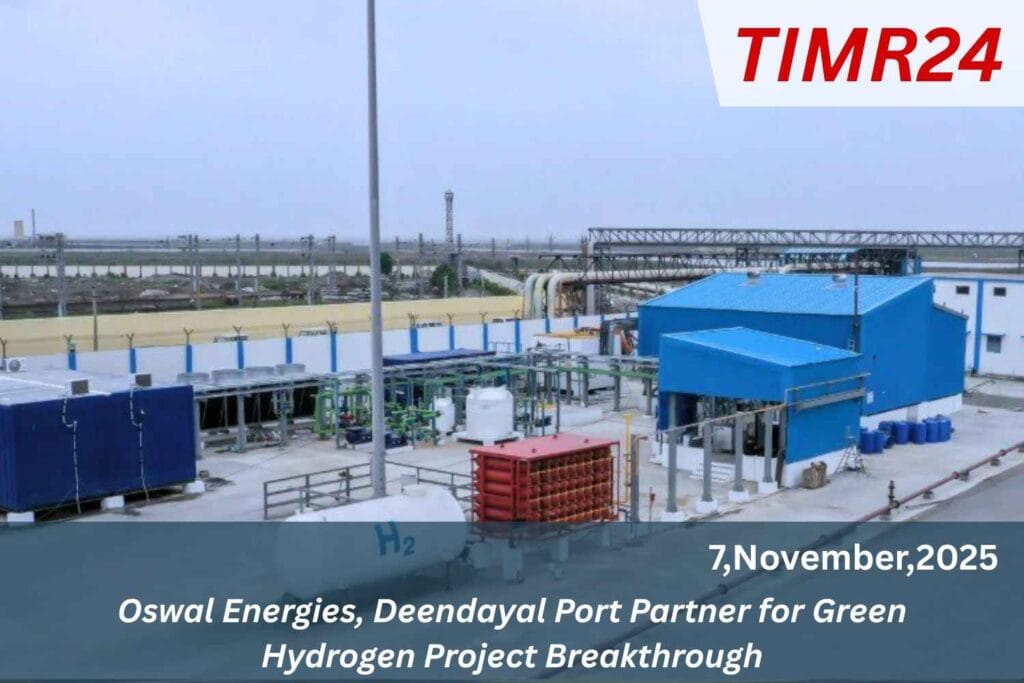
Oswal Energies and the Deendayal Port Authority have signed an MoU to jointly develop green hydrogen, green methanol, green ammonia, and a 100 MLD desalination plant under the National Green Energy Initiative. This collaboration aims to enhance the port’s role in sustainable energy systems, supporting India’s net-zero and energy security goals. Oswal Energies will oversee the development of facilities for hydrogen generation, methanol and ammonia conversion, and the high-capacity desalination plant, positioning the project as a model for renewable energy and water integration within port ecosystems. The agreement was signed during India Maritime Week 2025 in Mumbai.
Q1. What exactly will Oswal Energies and Deendayal Port do together?
They will collaborate to develop a large-scale green hydrogen, green methanol and green ammonia production complex at the port. This includes electrolyser installation, infrastructure for production, storage, export logistics and a 100 MLD desalination plant.
Q2. What is the current status of the hydrogen plant at DPA?
The first module (1 MW) has been commissioned at DPA’s Kandla port, capable of roughly 140 metric tonnes per year of hydrogen. This forms part of an intended 10 MW facility in the near term.
Q3. Why is DPA chosen as a green hydrogen hub?
DPA has been designated as a green hydrogen hub by the Indian government, has allocated significant land (3,400 acres) for hydrogen/ammonia projects, coastal location for logistics/export and accesses on-site renewable energy potential.
Q4. What is the role of Oswal’s electrolyser contract?
Oswal Energies has placed a sizeable order (₹320 crore) with Greenzo Energy to supply electrolysers for a 20 MW hydrogen project. This underscores Oswal’s capability in hydrogen production and infrastructure.
Q5. What are the expected industrial and environmental outcomes?
Expected outcomes include decarbonising port operations and industrial feedstock sectors (fertiliser, chemicals), enabling export of green fuels, reducing carbon intensity of maritime logistics, and building indigenous hydrogen-equipment manufacturing capacity.