




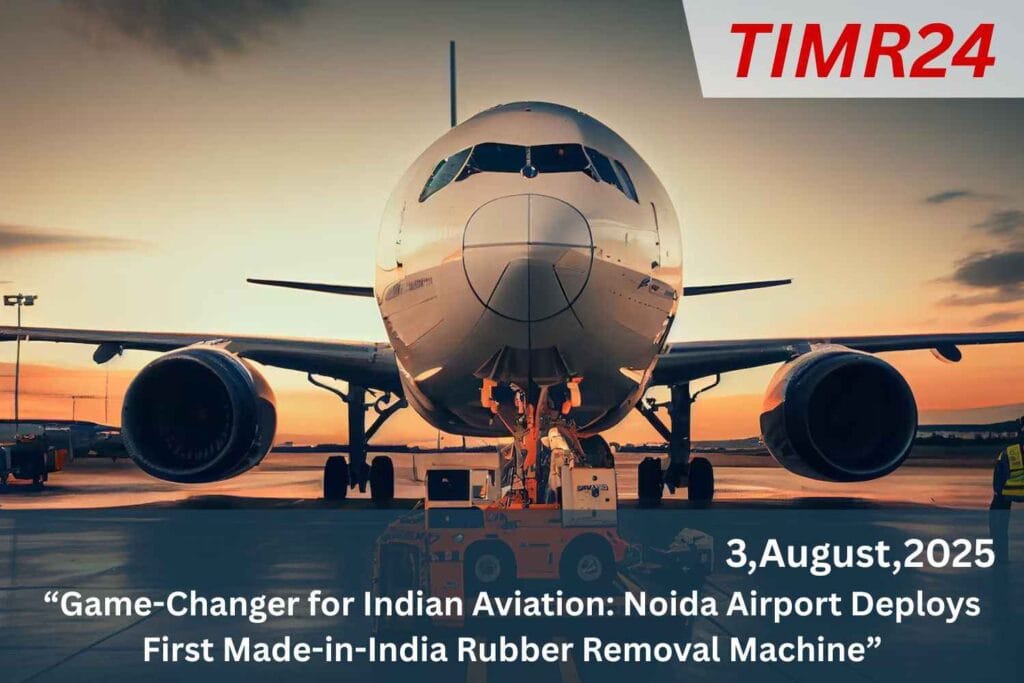
Noida International Airport (NIA) has partnered with Anlin Technology Solutions Limited to deploy India’s first indigenously developed Runway Rubber Removal Machine (RRM). The Clean jet RRM, built on the Eicher Pro 6028 chassis, is designed for high-performance runway maintenance and will enhance runway safety and operational efficiency. It uses ultra-high-pressure water jets to remove rubber deposits, paint markings, and oil spills from runways, taxiways, and aprons. The machine is powered by a Bharat Stage-VI compliant diesel engine and has an integrated suction system for efficient cleaning.
In a significant boost to India’s aviation self-reliance, the Noida International has deployed the country’s first indigenous runway rubber removal machine. Developed locally by the CSIR-Central Road Research Institute (CRRI), this deployment marks a step forward in adopting Make in India solutions for critical airport operations. The machine plays a crucial role in maintaining runway safety by effectively removing rubber deposits left by aircraft landings, which can otherwise reduce surface friction and pose a safety hazard. (Bangalore International Airport’s)
Why Rubber Removal Is Crucial
Aircraft tires leave behind rubber residues every time they land, especially during braking. Over time, these rubber layers accumulate and reduce the friction between the aircraft tires and the runway surface. This can lead to issues like hydroplaning during wet conditions and reduced braking efficiency, increasing the risk of runway excursions. Regular removal of these rubber deposits is essential for ensuring safe take-offs and landings. With the deployment of this indigenous machine at Noida, the process becomes more efficient, cost-effective, and tailored to Indian runway conditions.
Indigenous Innovation and Make in India
This development is a shining example of the Make in India initiative’s success in the aviation sector. The machine, designed and developed by Indian engineers, is specifically adapted for Indian environmental and runway conditions. It reduces the dependency on expensive imported equipment, enhances operational autonomy, and supports the domestic manufacturing ecosystem. This milestone also aligns with India’s broader vision to become self-reliant in critical infrastructure technologies. (CSIR-Central)
Environmental and Operational Benefits
Compared to traditional methods, the new rubber removal machine offers several advantages. It uses high-pressure water jets in a controlled and eco-friendly manner to strip rubber deposits without damaging the runway surface. This minimizes operational downtime and ensures faster runway turnaround times. Moreover, since the machine is electric-powered and locally serviced, it brings down maintenance costs and environmental impact. The deployment at Noida also sets a precedent for other airports across the country to adopt similar technology, promoting sustainable airport management.
Impact on Noida International Airport’s Development
Noida International is emerging as a model of smart, green infrastructure in India. With its commitment to sustainability and innovation, the airport continues to adopt technologies that improve safety, efficiency, and environmental responsibility. The introduction of India’s first indigenous rubber removal machine reinforces this position. As construction and development progress, such innovations will further elevate the airport’s standing as a world-class aviation hub. The air-conditioned cabin is ergonomically designed for operator comfort and safety. The machine’s quick deployment and versatility make it a significant milestone in India’s airport operations.
Future Prospects for Indian Airports
The successful deployment at Noida sets a roadmap for other Indian airports. The CRRI is likely to see increased demand for this equipment from managed by the Airports Authority of India (AAI) and private operators. It’s also expected to encourage further R&D in airside maintenance and ground support equipment. With India’s aviation sector poised for rapid growth, such indigenous innovations will be key to building resilient, efficient, and self-sufficient airport infrastructure.
q1. What is the purpose of a runway rubber removal machine?
It removes rubber deposits left by aircraft landings to maintain runway friction and ensure safe take-offs and landings.
q2. How often do runways require rubber removal?
Runways at busy airports may need rubber removal every few weeks or months, depending on traffic and weather conditions.
q3. Why is Noida Airport’s deployment of this machine significant?
It’s the first Indian airport to use an indigenous solution, reducing import dependence and supporting the Make in India initiative.
q4. How does the machine work without damaging the runway?
It uses high-pressure water jets to safely strip rubber deposits without harming the runway surface.
q5. Will other airports in India adopt this machine?
Yes, the successful deployment at Noida sets a precedent, and other airports under AAI are expected to follow.