















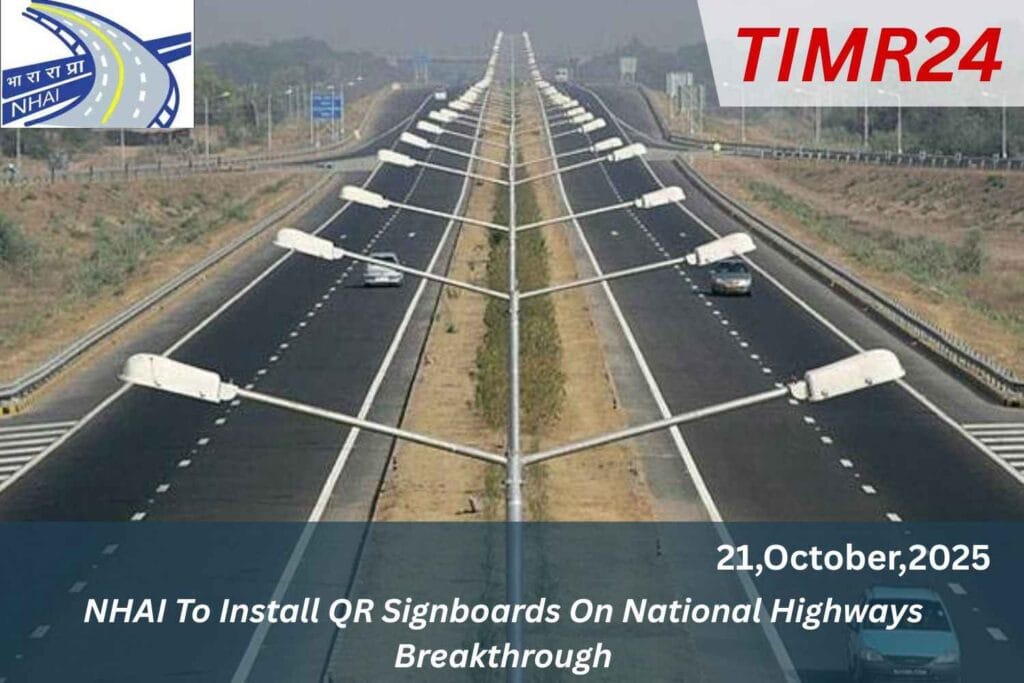
The National Highways Authority of India (NHAI) plans to install QR code-enabled project information signboards along the National Highway network to provide commuters with essential information and emergency helpline numbers. The signboards will be strategically placed at various locations to enhance road safety, improve user experience, and increase public awareness about the national highway system. The National Highways Authority of India (NHAI) is taking a monumental step towards revolutionizing India’s road infrastructure through the installation of QR code signboards across the national highway network. This move reflects India’s rapid shift towards a digitally integrated.
Transportation ecosystem under the vision of Digital India and Smart Infrastructure Development. The initiative aims to create a more transparent, traveller-friendly, and data-driven system for monitoring highway projects and improving road safety. With over 1.4 lakh kilometres of highways under its management, NHAI’s decision marks the beginning of a new era in intelligent road connectivity and modern governance (NHAI).
Revolutionizing Road Information with QR Technology
The introduction of QR code signboards by NHAI is designed to transform how information is delivered to road users. Each signboard will feature a scannable QR code that instantly redirects users to official NHAI project pages, offering real-time updates on road status, construction progress, toll rates, and nearby facilities such as fuel stations, rest stops, and emergency services. This system removes the dependence on outdated physical signs and provides travelers with accurate, verified, and location-specific data straight from the source. The project highlights how technology and infrastructure can merge to simplify travel while enhancing transparency and accountability in public works.
NHAI’s primary goal is to improve accessibility to road-related data and build public trust through transparency. QR signboards will help citizens verify details about ongoing and completed projects, identify responsible contractors, and even report maintenance issues through online channels. This initiative ensures every commuter has the power to access authentic government information instantly, without relying on intermediaries or manual updates. Moreover, it supports India’s commitment to good governance, digital transformation, and citizen engagement in infrastructure development Each QR signboard will be connected to NHAI’s centralized digital database.
Which stores detailed project-related information. Once a user scans the code using their smartphone camera, they are directed to a secure web page containing all relevant data for that particular highway segment. This includes project timelines, budget details, safety measures, and contact information for regional offices. The system is integrated with GIS (Geographic Information System) platforms, ensuring accurate location mapping and dynamic updates in real time In addition to basic project data, future updates may include AI-based monitoring tools to record traffic patterns, identify Damaged sections, and generate predictive maintenance alerts.
Benefits for Travelers and Transport Operators
This combination of QR and AI technology represents the growing trend of smart mobility solutions shaping India’s infrastructure For regular commuters, logistics operators, and tourists, the QR signboard initiative brings multiple benefits. By scanning a code, travelers can instantly access information about the road’s condition, nearby rest areas, weather alerts, and toll details. In emergencies, users can quickly locate hospitals, police stations, or towing services nearby. Truck drivers and logistics companies will also benefit from the availability of verified route data, which improves transport planning and delivery timelines NHAI can track user engagement, monitor signboard.
Performance, and identify locations that require better communication infrastructure. The collected data will assist in policy formulation and road maintenance planning, enabling the authority to respond swiftly to public concerns.
(NHAI) Transparency is a cornerstone of NHAI’s latest move. By digitizing information, the authority ensures that every project update, cost detail, and progress report is accessible to the public. This minimizes the risk of misinformation and promotes a sense of accountability among contractors and project managers. Citizens can verify whether the promised work on highways is being executed as scheduled In addition, the QR-based system can act.
Integration with National Digital Initiatives
As a feedback mechanism. Travelers can share suggestions or complaints directly through the linked web pages, helping NHAI maintain a two-way communication channel with the public. This interactive approach enhances trust in government-led infrastructure projects while ensuring continuous improvement in service quality. The QR code project aligns closely with major government programs such as PM Gati Shakti, Digital India, and Make in India. Under PM Gati Shakti, the government seeks to integrate multiple infrastructure sectors through data-driven decision-making. By merging highway data with digital platforms, NHAI contributes to a unified logistics and infrastructure ecosystem.
The Digital India initiative emphasizes transparency, accessibility, and innovation. The QR signboard system brings these principles to road management, offering a paperless and eco-friendly solution that reduces administrative delays. Moreover, it supports the Sustainable Development Goal (SDG 9) focusing on building resilient infrastructure and fostering innovation through technology As part of its environmental commitment, NHAI is also using recyclable and weather-resistant materials for QR signboards, ensuring long-term durability while minimizing waste. This approach contributes to India’s mission of creating green and sustainable infrastructure.
Implementation and Future Expansion
The rollout of QR signboards is already underway across major national highways and expressways, beginning with pilot projects in key corridors such as Delhi-Mumbai Expressway, Eastern Peripheral Expressway, and the Bengaluru Chennai Industrial Corridor. Once successfully implemented, the initiative will be scaled nationwide NHAI plans to collaborate with private technology firms and startups to strengthen data security and develop user-friendly interfaces. Future versions of the system might include voice-assisted navigation, real-time traffic updates, and multilingual support, ensuring accessibility for all categories of road users NHAI is exploring integration with.
Digital payment platforms, enabling travelers to pay tolls or report issues through a single QR scan. These innovations will eventually create a fully connected (Smart Highway) smart highway ecosystem where communication, safety, and navigation work seamlessly together As India expands its infrastructure footprint, integrating technology with traditional road systems has become essential. QR signboards represent a milestone in this journey, blending digital convenience with public infrastructure efficiency. The initiative ensures that every traveller, whether a daily commuter or a long-distance driver, has access to verified information within seconds.
Driving India into a Digital Future
The NHAI’s decision to install QR signboards on national highways is more than a technological upgrade—it is a symbol of India’s progress toward smart governance, transparency, and traveller empowerment. It bridges the gap between citizens and government authorities by ensuring information is accessible, reliable, and instantly available. With this digital leap, NHAI has set a new benchmark in public infrastructure management and paved the way for future innovations in the transport sector This initiative not only makes highways smarter but also strengthens India’s position as a global leader in digital infrastructure and sustainable mobility.
Q1. What is the purpose of NHAI QR signboards?
To provide real-time highway information, project updates, and safety details to travelers.
Q2. How can travelers use these QR codes?
By scanning the QR code on the signboard with a smartphone to access NHAI’s official data.
Q3. What information will the QR signboards show?
Details like toll rates, road conditions, project status, emergency contacts, and nearby facilities.
Q4. When will NHAI start installing QR signboards?
Installation has begun in phases across major national highways in India.
Q5. How does this support Digital India?
It promotes transparency, smart governance, and digital connectivity on road networks.