




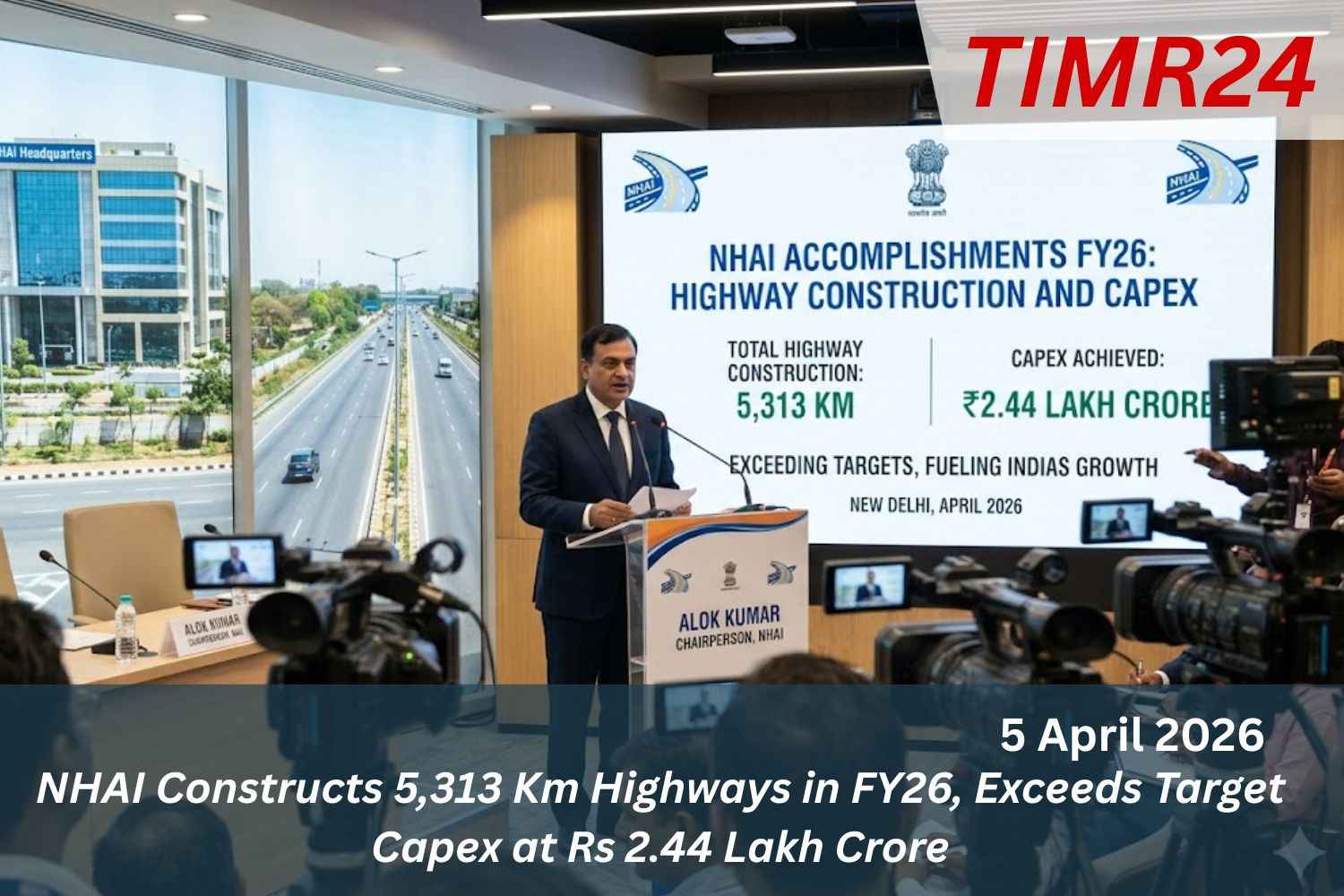









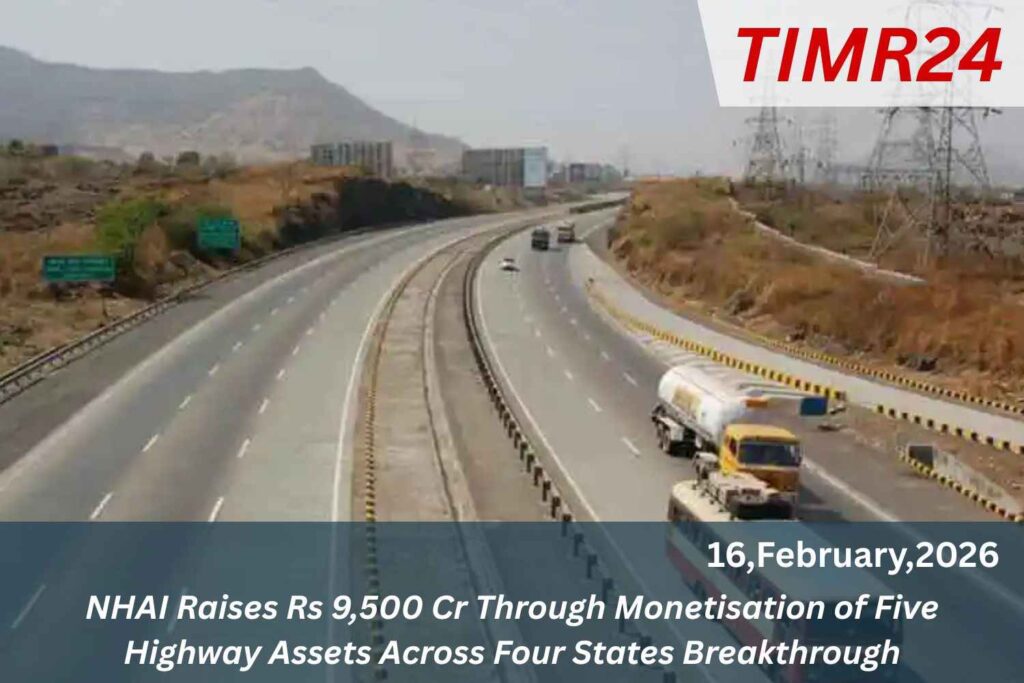
The National Highways Authority of India (NHAI) has accepted Rs 9,500 crore from Raajmarg Infra Investment Trust for the monetisation of five highway sections totaling over 260 km in four states. This initiative is part of the government’s asset recycling strategy to fund new infrastructure projects. The sections include stretches in Jharkhand, Andhra Pradesh, Tamil Nadu, and Karnataka. NHAI Chairman Santosh Kumar Yadav highlighted the benefits for retail investors, emphasizing enhanced participation in infrastructure management through Public InvIT. The plan aligns with the National Monetisation Pipeline and aims to unlock further asset potential in the coming years.
Operational Highway Assets Across
Reinforcing investor confidence in India’s infrastructure The National Highways Authority of India (NHAI) has taken a significant step in strengthening India’s infrastructure financing ecosystem by raising ₹9,500 crore through the monetisation of five operational highway assets across four states. This strategic move reflects the government’s growing emphasis on innovative funding models that allow public infrastructure to generate revenue while maintaining operational efficiency and quality service delivery. The initiative is part of India’s broader infrastructure expansion strategy, which focuses on leveraging existing assets to support future development projects and improve nationwide connectivity.
The funds raised through this monetisation drive are expected to play a crucial role in financing new highway construction and enhancing the country’s transport infrastructure network Highway monetisation is a process through which operational road assets are leased to private investors for a fixed period, allowing the government to unlock the economic value of these assets without transferring ownership. Under this model, private entities are responsible for maintaining and operating the highway while paying an upfront concession fee or periodic payments. The government then reinvests the generated funds into new infrastructure projects, ensuring.
Predictable Revenue Streams, And Supportive
Continuous development without placing excessive pressure on public finances This latest monetisation round demonstrates the increasing confidence of private investors in India’s infrastructure sector. With stable traffic volumes, predictable revenue streams, and supportive government policies, national highway assets have become attractive investment opportunities. By monetising operational highways, authorities ensure efficient asset utilisation while encouraging private sector participation in infrastructure management. This collaborative approach between public and private sectors strengthens service quality, promotes technological integration, and enhances long-term.
Sustainability in transportation infrastructure The ₹9,500 crore capital raised will significantly support the development of new highway corridors, expressways, and connectivity projects across the country. India’s rapid economic growth and urbanisation have (India) created increasing demand for efficient road networks, making infrastructure expansion essential for supporting trade, logistics, and regional connectivity. Improved highways reduce travel time, enhance fuel efficiency, and lower transportation costs, directly contributing to economic productivity. One of the key benefits of highway monetisation is its contribution to financial sustainability in infrastructure development.
Enabling Faster Implementation
Traditional infrastructure projects often rely heavily on public funding, which can strain government budgets. Monetisation offers an alternative funding mechanism that generates immediate capital from existing assets, enabling faster implementation of new projects. This approach aligns with India’s long-term infrastructure roadmap and supports the country’s ambition to develop world-class transportation networks capable of supporting economic growth for decades The initiative also plays an important role in improving operational efficiency within highway management systems. Private operators typically introduce advanced monitoring.
Technologies, improved maintenance practices, and efficient toll collection systems, ensuring better road conditions and enhanced user experience. These improvements contribute to safer travel, reduced congestion, and increased reliability of transportation networks. Furthermore, the involvement of private players encourages innovation and performance-based service delivery, raising overall standards in infrastructure management Another significant aspect of the monetisation strategy is its alignment with the National Monetisation Pipeline, which aims to unlock the value of public assets across multiple sectors, including roads, railways, airports, and energy infrastructure.
Public Resources And Promoting
By systematically monetising operational assets, the government seeks to create a self-sustaining infrastructure development cycle in which existing assets generate funds for future investments. This strategy supports economic growth while ensuring efficient use of public resources and promoting long-term fiscal discipline The monetisation of highway assets also has a positive impact on employment generation and regional development. Infrastructure projects create direct and indirect job opportunities across construction, maintenance, logistics, and related sectors. Improved road connectivity further supports industrial growth, enhances market access for businesses, and promotes tourism.
Development in connected regions. As transportation networks expand, rural and semi-urban areas gain better access to economic opportunities, contributing to balanced regional growth and improved living standards From an investor perspective, highway monetisation provides stable and predictable returns due to consistent traffic flow and established toll revenue mechanisms. The structured concession agreements ensure transparency and accountability while protecting the interests of both investors and public authorities. This model encourages long-term investment in infrastructure and strengthens India’s position as a preferred destination for global infrastructure funding.
Efficient Project Execution, Better Risk
Q1. What is highway monetisation by NHAI?
Highway monetisation involves leasing operational road assets to private investors to generate funds for new infrastructure projects.
Q2. How much fund has NHAI raised?
NHAI has raised ₹9,500 crore through monetisation of five highway assets.
Q3. How many states are covered under this project?
The highway assets are spread across four Indian states.
Q4. What is the purpose of this monetisation initiative?
The funds will be used for developing new highways, improving connectivity, and strengthening infrastructure financing.
Q5. How does this benefit the economy?
It boosts infrastructure investment, creates jobs, enhances logistics efficiency, and improves transportation networks.