

















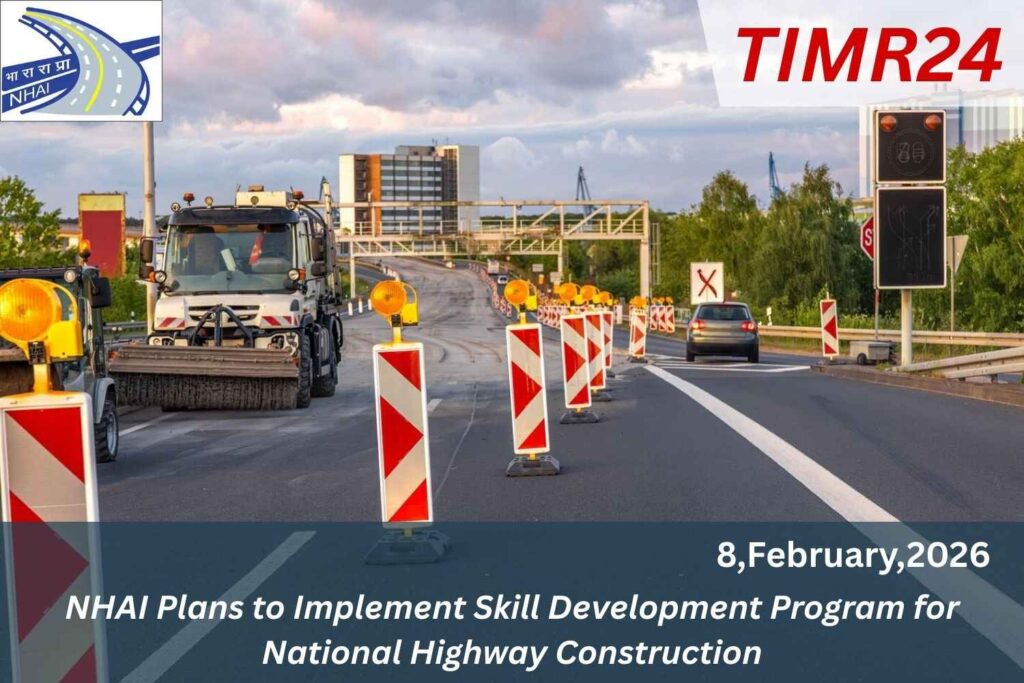
NHAI is launching a structured skill development program to enhance the capabilities of workers in National Highway construction, aiming to meet emerging quality standards. The initiative includes detailed mapping of construction labor origins across 49 districts in eight states to tailor skill training closer to workers, improving accessibility and retention. Local institutions like ITIs and engineering colleges will serve as training centers, with experienced workers being upskilled to become master trainers. The program, supported by National Highway construction companies and NHAI funding, includes creating a dedicated training website for resources.
Background And Rationale Of The Skill Development Initiative
This initiative seeks to elevate workforce skills, employability, and overall construction quality, fostering sustainable maintenance of the expanding National Highway infrastructure India’s massive highway expansion drive is entering a new phase as the National Highways Authority of India (NHAI) plans to implement a dedicated skill development program for national highway construction. With highway construction reaching record levels under flagship infrastructure initiatives, the demand for skilled manpower across engineering, construction, operations, and maintenance has grown rapidly. NHAI’s proposed skill development initiative aims to bridge.
this workforce gap while improving construction quality, safety standards, and long-term asset performance across the national highway network. Over the past decade, India’s national highway construction has accelerated under programs such as Bharatmala Pariyojana and PM Gati Shakti, transforming logistics and regional connectivity. However, the sector continues to face a shortage of trained workers, site supervisors, machine operators, and technical professionals. NHAI’s skill development program is being designed to address this structural challenge by creating a steady pipeline of industry-ready talent for highway construction projects.
Scope of the NHAI Skill Development Program
By aligning workforce skills with modern construction technologies, NHAI aims to reduce project delays, cost overruns, and quality issues that often arise due to inadequate training. The proposed program will cover a wide range of construction-related skills relevant to national highway development. Training modules are expected to include road construction techniques, pavement engineering, bridge and tunnel construction, use of advanced machinery, digital project monitoring tools, and on-site safety practices. Special emphasis will be placed on emerging construction technologies such as automated batching plants, drone-based surveys, and intelligent traffic management systems.
Institutional Partnerships and Training Framework
This initiative complements NHAI’s broader digital and sustainability goals, which are already reflected in several ongoing highway modernization projects across India. NHAI plans to implement the skill development program through partnerships with technical institutes, industrial training centers, and private sector stakeholders. Institutions such as IITs, NITs, polytechnic colleges, and skill universities are expected to play a role in curriculum design and certification. The authority may also collaborate with organizations under the Ministry of Skill Development and Entrepreneurship to ensure alignment with national skill qualification frameworks.
Employment Generation and Workforce Upskilling
Similar collaborative models have already been explored in infrastructure sectors One of the key objectives of the NHAI skill development program is employment generation, particularly for youth from semi-urban and rural areas located along national highway corridors. By offering structured training and certification, the program aims to improve employability while providing stable livelihoods in infrastructure construction. Skilled workers trained under this initiative are expected to be absorbed by EPC contractors, concessionaires, and maintenance agencies working on NHAI projects.
This aligns with India’s broader goal of inclusive growth, where infrastructure development directly contributes to job creation and economic mobility Quality and safety remain critical concerns in large-scale highway construction. NHAI’s skill development initiative places strong emphasis on safety training, quality control procedures, and adherence to standardized construction practices. Trained personnel are more likely to follow engineering specifications, safety protocols, and environmental guidelines, leading to durable highway assets and fewer accidents during construction. This focus supports NHAI’s ongoing efforts to reduce road fatalities and improve highway safety outcomes
Sustainability is becoming a core priority in India’s highway development strategy. The skill development program is expected to include training on green construction practices, use of recycled materials, waste management, and energy-efficient processes. As NHAI expands initiatives such as green highways, electric vehicle infrastructure, and eco-friendly construction methods, a skilled workforce becomes essential to implement these innovations effectively. This initiative complements India’s climate commitments and infrastructure sustainability roadmap
Integration with Sustainable and Green Highway Goals
NHAI’s skill development program has the potential to transform the highway construction ecosystem by professionalizing the workforce and standardizing skill levels across regions. A trained labor force can improve project execution timelines, enhance investor confidence, and attract global construction firms to participate in Indian highway projects. This is particularly relevant as India seeks to scale up public-private partnerships and monetize highway assets through models such as.
The skill development initiative aligns closely with India’s national infrastructure vision of building world-class transport networks. By focusing on human capital (India) alongside physical assets, NHAI is addressing a critical yet often overlooked aspect of infrastructure development. The program supports the government’s long-term objective of creating a resilient, efficient, and technology-driven highway network that can support economic growth for decades.
Challenges and Implementation Outlook
While the proposed skill development program holds significant promise, its success will depend on effective implementation, monitoring, and industry participation. Ensuring uniform training quality across regions, updating curricula to match evolving technologies, and (India) maintaining strong industry linkages will be key challenges. However, with NHAI’s institutional capacity and policy backing, the initiative is expected to gain momentum in the coming years and become a cornerstone of India’s highway development strategy.
Q1. What is the objective of NHAI’s skill development program?
The main objective is to create a trained and certified workforce for national highway construction, improving project quality, safety, and employment opportunities across India.
Q2. Who will benefit from this program?
Construction workers, engineers, supervisors, and local youth living near highway corridors are expected to benefit through training, certification, and employment opportunities.
Q3. Which organizations will collaborate with NHAI?
NHAI is likely to partner with technical institutes, training centers, and government skill bodies to design and implement the program effectively.
Q4. How will this program impact highway project timelines?
A skilled workforce can reduce delays, improve execution efficiency, and minimize rework, leading to faster and more cost-effective project delivery.
Q5. Is the program linked to national infrastructure initiatives?
Yes, it aligns with major initiatives such as Bharatmala Pariyojana, PM Gati Shakti, and India’s broader infrastructure and employment generation goals.