




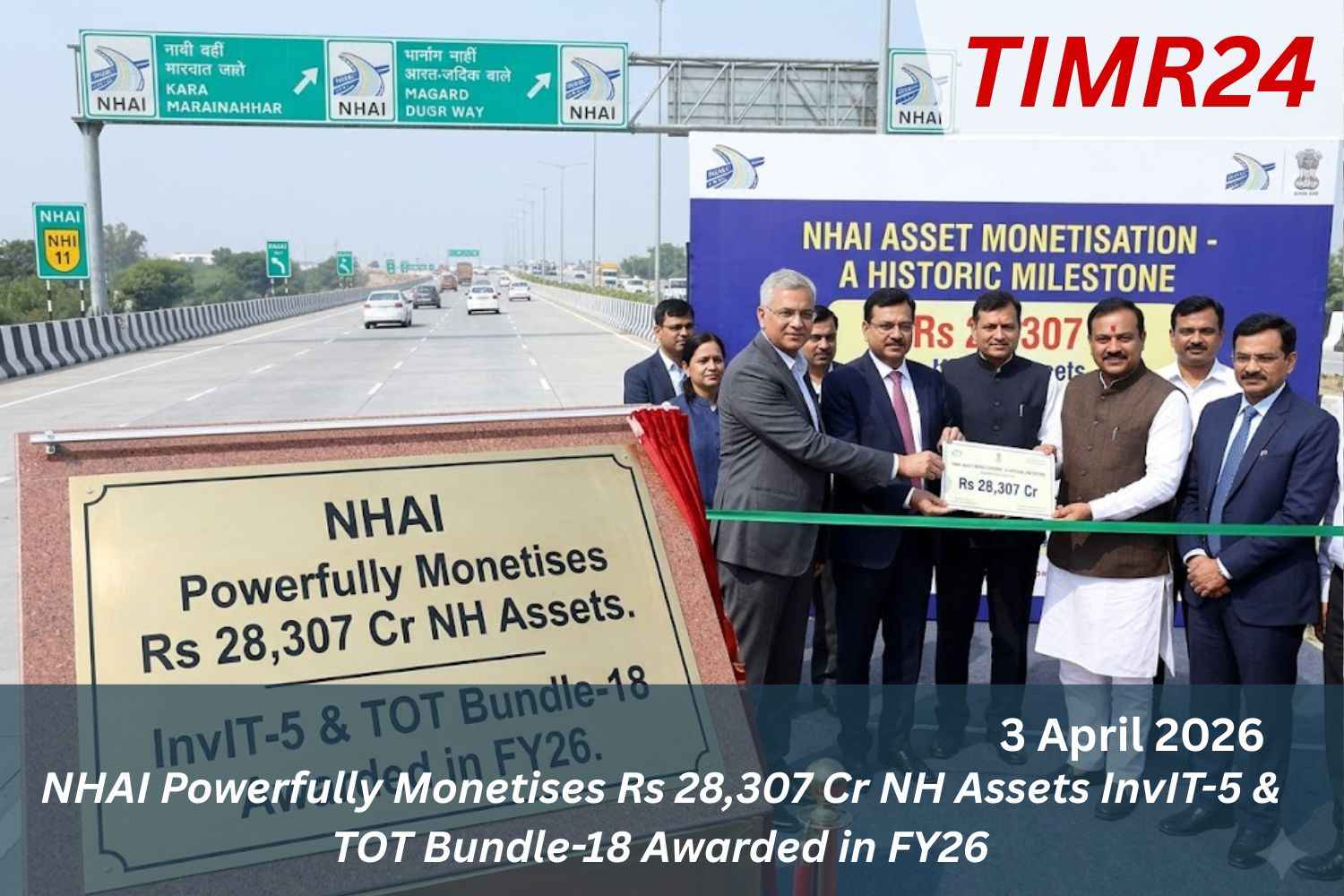

In a significant step towards enhancing integrated infrastructure development, the National Highways Authority of India (NHAI) and Konkan Railway Corporation Limited (KRCL) signed a Memorandum of Understanding (MoU) to optimize resources and explore collaborative opportunities. The MoU aims to harness the strengths of both organizations to boost India’s infrastructure growth and connectivity. Key areas of cooperation include planning integrated National Highway and Rail infrastructure, developing rail-cum-road bridges, and enhancing multimodal logistics. The collaboration will leverage KRCL’s expertise in difficult terrains and include shared best practices in project management.
National Highways Authority
Environmental management. A Joint Working Group (JWG) will oversee project identification and implementation. The MoU is valid for five years, signaling a commitment to utilize public resources effectively and develop modern infrastructure The signing of a Memorandum of Understanding between the National Highways Authority of India and Konkan Railway marks a decisive moment in India’s long-term infrastructure strategy, reflecting a growing policy focus on integrated transport networks rather than isolated modes of development. For decades, highways and railways in India have largely expanded in parallel, often without adequate coordination, leading to.
Inefficiencies in freight handling, duplication of assets, and missed opportunities for seamless connectivity. This new partnership aims to correct that structural gap by bringing two of the country’s most important infrastructure institutions onto a common platform to jointly plan, design, and implement projects that combine road and rail capabilities into a truly multimodal system. By doing so, the MoU directly supports the broader national vision of creating a unified logistics ecosystem that can sustain India’s ambitions of becoming a manufacturing and export powerhouse From a strategic perspective, this collaboration is not merely administrative in nature but deeply.
Align Project Corridors,
Aligned with ongoing national programs such as the PM Gati Shakti National Master Plan, which emphasizes coordinated planning across ministries and agencies. Through this MoU, NHAI and Konkan Railway will be able to share data, align project corridors, and co-develop infrastructure assets such as logistics parks, freight terminals, rail sidings, and last-mile road links. This integrated planning approach is expected to eliminate bottlenecks that arise when highway alignments fail to match rail freight routes, a challenge that has historically increased logistics costs and extended delivery timelines The Konkan Railway, known for its technically challenging alignment along.
India’s western coast, brings to this partnership a wealth of engineering experience in difficult terrain, tunneling, and coastal infrastructure. Its network already plays a critical role in connecting Maharashtra, Goa, and Karnataka, regions that are major contributors to port-led trade and tourism. By aligning this rail network more closely with national highways, the MoU opens new possibilities for developing multimodal hubs near ports, industrial clusters, and mineral-rich hinterlands. Such hubs can function as transfer points where goods move seamlessly from rail wagons to trucks, reducing handling time and minimizing damage, which is particularly important for high-value and time-sensitive cargo.
Integrated Transport Planning
Q1. What is the MoU between NHAI and Konkan Railway about?
It focuses on joint development of rail-road and multimodal connectivity projects.
Q2. Why is this MoU important for infrastructure?
It improves logistics efficiency and integrates highways with rail networks.
Q3. Which regions will benefit most?
Western and coastal regions along the Konkan corridor and national freight routes.
Q4. How will this impact freight movement?
It will reduce transit time and logistics costs through seamless multimodal transport.
Q5. Who will implement the projects?
NHAI and Konkan Railway will jointly plan, design and execute the initiatives.