











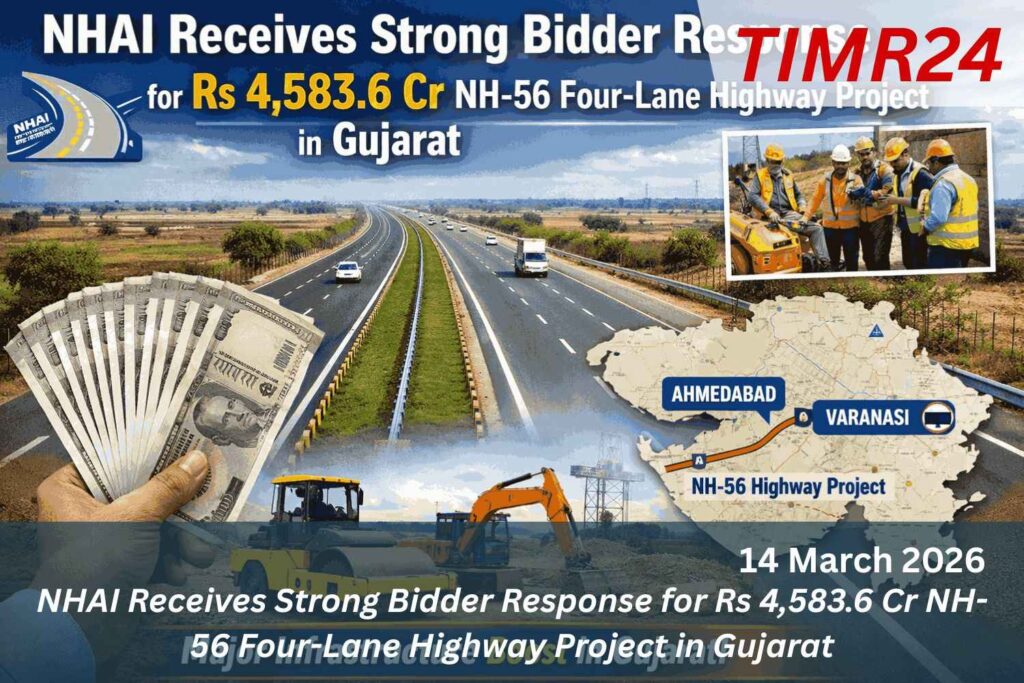
National Highways Authority of India (NHAI) has garnered significant bidder interest for the four-laning of two sections in Gujarat under the Hybrid Annuity Model (HAM). The Cabinet Committee on Economic Affairs, led by Prime Minister Narendra Modi, approved the project, covering 107.6 km, with a total cost of Rs 4,583.6 crore. The Dhamasiya–Bitada/Movi section received six bids, while the Nasarpore–Malotha section received seven bids, indicating robust competition. Targeted speeds of 100 km/h will reduce travel time by 40%. The project is expected to generate substantial employment and improve connectivity in tribal areas, enhancing economic growth and tourism.
Highways And Expressways India’s
Particularly to the Statue of Unity. Overall, the completed projects will ease congestion and strengthen connectivity to major highways and expressways India’s highway development sector continues to witness strong participation from infrastructure companies, as the National Highways Authority of India (NHAI) received an impressive bidder response for the ₹4,583.6 crore four-lane highway project on National Highway 56 in Gujarat. The project represents another major step toward strengthening the country’s highway network and improving regional connectivity. With the Indian government prioritizing large-scale infrastructure development.
Highway expansion projects such as this are attracting considerable interest from construction firms and infrastructure developers The NH-56 four-lane project is designed to upgrade a critical highway corridor that supports transportation, logistics, and industrial connectivity in western India. Gujarat has long been recognized as one of the country’s most industrially active states, hosting major manufacturing clusters, ports, and logistics hubs. By expanding the highway to four lanes, the project aims to reduce traffic congestion, improve safety, and provide smoother connectivity between key commercial regions. The improved highway infrastructure will also support.
Continued Confidence Of Infrastructure Developers
The growing movement of goods and passengers across the state The strong bidder participation for the project highlights the continued confidence of infrastructure developers in India’s road sector. Several reputed construction companies submitted bids, demonstrating the attractiveness of highway projects being tendered by NHAI. Over the past decade, India’s highway sector has undergone significant transformation, driven by policy reforms, faster project approvals, and improved financing models. The government’s commitment to expanding the national highway network has encouraged private sector participation and global interest in infrastructure projects.
The NH-56 project forms part of a broader national strategy aimed at expanding and modernizing India’s road infrastructure. Programs like Bharatmala Pariyojana have accelerated highway construction across the country by focusing on economic corridors, border roads, and logistics connectivity. Under these initiatives, several highways are being widened, upgraded, or newly constructed to accommodate the rapidly increasing traffic demand and economic growth Gujarat, improved highway infrastructure plays a crucial role in sustaining industrial development and strengthening connectivity to ports. The state houses several important maritime gateways, including.
Mundra Port and Kandla Port, which serve as major export and import hubs for the country. Efficient road networks connecting these ports to inland industrial zones are essential for ensuring smooth cargo transportation. The NH-56 expansion is expected to improve (India) freight efficiency and reduce travel time for trucks transporting goods to and from these ports Infrastructure experts believe that projects like the NH-56 four-lane highway will significantly contribute to regional economic growth. Better road connectivity encourages industrial investment, promotes tourism, and enhances accessibility to smaller towns and rural areas. When highways are widened and modernized.
Large Highway Projects Typically Include
Travel becomes faster and safer, which benefits both businesses and commuters. The project will also generate employment opportunities during the construction phase and support local economies through increased economic activity The project’s cost of ₹4,583.6 crore reflects the scale and complexity involved in upgrading major highway corridors. Large highway projects typically include several components such as land acquisition, road widening, construction of bridges and flyovers, drainage systems, and modern safety infrastructure. Advanced engineering techniques and improved construction technologies are increasingly being used in such projects to ensure durability and efficiency.
In addition to improving connectivity, the NH-56 four-lane project will focus on road safety improvements. Modern highways are designed with safety features such as service roads, proper signage, pedestrian crossings, crash barriers, and intelligent traffic management systems. These measures help reduce accident risks and ensure smoother traffic flow. Safety enhancements have become a major priority in India’s highway development programs as the government works to reduce road accidents across the country The strong response from bidders also indicates the growing competitiveness within the infrastructure construction sector.
Indian infrastructure companies have significantly improved their project execution capabilities over the years. With experience gained from major projects such as expressways, metro systems, and large bridges, many companies now possess advanced engineering expertise and financial strength to undertake complex infrastructure developments Highway projects like NH-56 are also expected to support logistics efficiency and supply chain improvement. Efficient transportation corridors reduce travel time and transportation costs, which ultimately benefits businesses and consumers. Improved road infrastructure also strengthens connectivity between production centers.
Healthcare, Education, And Employment Opportunities
Agricultural markets, and urban consumption hubs. This integrated connectivity plays a crucial role in supporting India’s expanding economy Another important aspect of such highway development projects is their role in regional connectivity. Many towns and semi-urban (India) areas located along major highways benefit from improved access to markets, healthcare, education, and employment opportunities. The NH-56 project is expected to enhance connectivity for several communities in Gujarat, contributing to balanced regional development India’s infrastructure growth strategy places strong emphasis on highways because roads remain the backbone of the country’s transportation system.
A significant portion of freight and passenger traffic moves through road networks, making highway expansion critical for economic growth. By investing in large projects like the NH-56 corridor upgrade, the government aims to create a faster, safer, and more efficient transportation network In recent years, NHAI has successfully executed several large highway projects across India. These projects have helped expand the national highway network and improve connectivity between major cities and industrial regions. Continued investor participation in highway tenders indicates confidence in India’s infrastructure development policies and project execution mechanisms.
As the NH-56 four-lane project moves toward the next stages of evaluation and award, industry observers expect strong competition among bidders. The winning contractor will play a key role in delivering a high-quality highway corridor that meets modern engineering standards. Once completed, the upgraded highway will contribute significantly to Gujarat’s transportation infrastructure and support long-term economic development The project also reflects India’s broader infrastructure vision of creating world-class highways that facilitate trade, mobility, and economic growth. By continuously expanding the highway network and upgrading critical corridors.
Q1. What is the NH-56 four-lane highway project in Gujarat?
It is a ₹4,583.6 crore project by NHAI to upgrade a section of National Highway-56 into a four-lane highway to improve connectivity and traffic flow.
Q2. Who is responsible for the project?
The project is being developed by the National Highways Authority of India (NHAI).
Q3. Why is the project important?
It will reduce travel time, improve road safety, and strengthen logistics connectivity in Gujarat.
Q4. What does strong bidder response mean?
It means multiple infrastructure companies have shown interest and submitted bids for the project.
Q5. How will the highway benefit Gujarat’s economy?
The improved highway will support freight movement, industrial growth, and regional connectivity.