









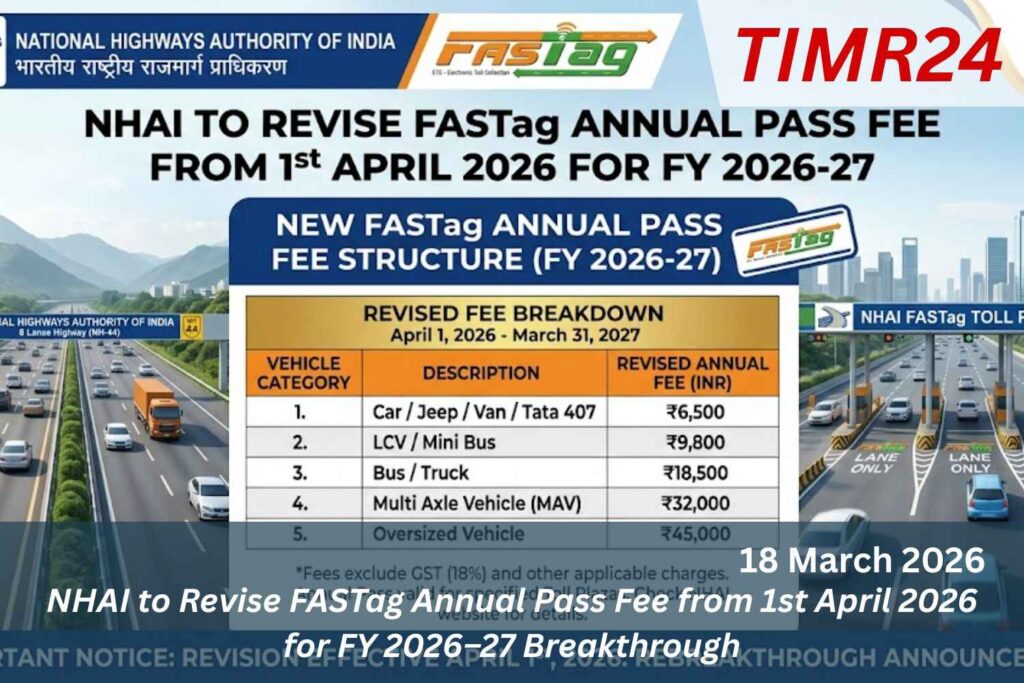
National Highways Authority of India has revised the FASTag Annual Pass fee from Rs. 3,000 to Rs. 3,075 for the Financial Year 2026–27, effective from April 1, 2026. This fee adjustment follows the National Highways Fee Rules, 2008. The pass, which caters to approximately 56 lakh users, is available for eligible non-commercial vehicles at about 1,150 fee plazas on National Highways and Expressways. It simplifies toll payments with a one-time annual fee and activates within two hours of payment via the Rajmarg Yatra App or the NHAI website. Launched on August 15, 2025, the FASTag Annual Pass offers a convenient and cost-effective travel option for users.
Decision Reflects The Government’s Continuous
The National Highways Authority of India is preparing to implement a revised FASTag annual pass fee starting from 1st April 2026 for the financial year 2026–27, marking another important step in India’s evolving digital toll collection system. This decision reflects the government’s continuous effort to modernize highway infrastructure and improve revenue collection efficiency while ensuring smoother travel for millions of commuters across the country. FASTag, which has already transformed the toll payment ecosystem by enabling cashless transactions, is now entering a new phase where pricing structures are being adjusted to match the growing demands of highway development and maintenance.
Over the past few years, FASTag has become an essential part of highway travel in India, eliminating long queues at toll plazas and significantly reducing travel time. With the revised annual pass fee, NHAI aims to create a more balanced and sustainable system that can support expanding road networks and increasing vehicle traffic. This update is expected to impact both private vehicle owners and commercial transport operators, as the revised charges may vary depending on vehicle category, usage frequency, and toll road coverage. While exact fee structures may differ, the primary objective remains improving operational efficiency and ensuring better service quality on highways.
Promoting Transparency And Accountability
The introduction of revised FASTag fees also highlights the growing importance of digital payment systems in India’s transportation sector. As part of the broader Digital India initiative, FASTag has played a crucial role in promoting transparency and accountability in toll collection. By linking toll payments directly to bank accounts or prepaid wallets, the system minimizes cash handling and reduces the risk of revenue leakage. With the upcoming changes, users are encouraged to stay informed about updated plans and recharge options through official platforms such as /fastag-recharge-guide-india and authorized bank portals to avoid any inconvenience during travel.
Another key aspect of this revision is its potential impact on highway infrastructure development. The funds generated through toll collection are directly used for road construction, maintenance, and expansion projects across the country. With India rapidly building new expressways and upgrading existing highways, the need for consistent and reliable funding has become more critical than ever. The revised FASTag fee structure is expected to contribute to these efforts, ensuring that highways remain safe, efficient, and capable of handling increasing traffic volumes. Travelers can also explore updates on ongoing projects through /latest-highway-projects-india to better understand how toll revenues are being utilized.
For frequent travelers, especially those who regularly commute on national highways, the revised annual pass system may offer both challenges and opportunities. While some users may experience a slight increase in costs, others could benefit from more structured (India) pricing plans that align with their travel patterns. For instance, frequent users might find value in annual or subscription-based passes that offer cost savings over time compared to per-trip toll payments. Understanding these options will be essential for users looking to optimize their travel expenses while maintaining convenience The revision also reflects NHAI’s commitment to enhancing user experience through better technology integration.
Interoperability Across Toll Plazas
FASTag systems are continuously being upgraded to support faster processing, improved accuracy, and seamless interoperability across toll plazas. As the system evolves, users can expect fewer technical issues, quicker transactions which explains the technology behind FASTag and its benefits for everyday commuters In addition to technological improvements, the revised FASTag fee structure may also encourage more disciplined and efficient use of highways. By aligning pricing with usage patterns, the system can promote better traffic.
Distribution and reduce congestion on heavily used routes. This approach not only improves travel efficiency but also contributes to environmental sustainability by minimizing fuel consumption and emissions caused by idling vehicles at toll plazas. Such benefits make FASTag an essential component of modern transportation infrastructure in India It is also important to note that FASTag will remain mandatory for all vehicles using national highways, and non-compliance may result in penalties or double toll charges. Therefore, users should ensure that their FASTag accounts are active, adequately funded, and updated with the latest information The revision of FASTag annual pass fees is not just.
Supporting Economic Growth And Improving
A pricing update but a strategic move toward a more efficient and future-ready transportation system. As India continues to invest heavily in infrastructure development, initiatives like FASTag will play a crucial role in supporting economic growth and improving connectivity across regions. By adopting digital solutions and refining operational frameworks, NHAI is setting the stage for a smarter and more sustainable highway network.
The upcoming FASTag fee revision from April 2026 is a significant development that will affect millions of road users across India. While the changes may require some adjustment, they also bring opportunities for improved travel experiences, better infrastructure, and (India) enhanced system efficiency. Staying informed, planning ahead, and utilizing available resources will help users adapt smoothly to the new system and continue enjoying the benefits of seamless highway travel.
Q1. When will the new FASTag annual fee be लागू?
1 April 2026 se new charges लागू honge.
Q2. FASTag fee increase sab vehicles ke liye same hoga?
Nahi, alag-alag vehicle categories ke hisaab se vary karega.
Q3. Kya FASTag compulsory rahega?
Haan, FASTag national highways par mandatory hi rahega.
Q4. Kya recharge process change hoga?
Nahi, recharge process same rahega, sirf charges update honge.
Q5. Official update kahan check karein?
Aap NHAI ya bank FASTag portals par check kar sakte hain.