













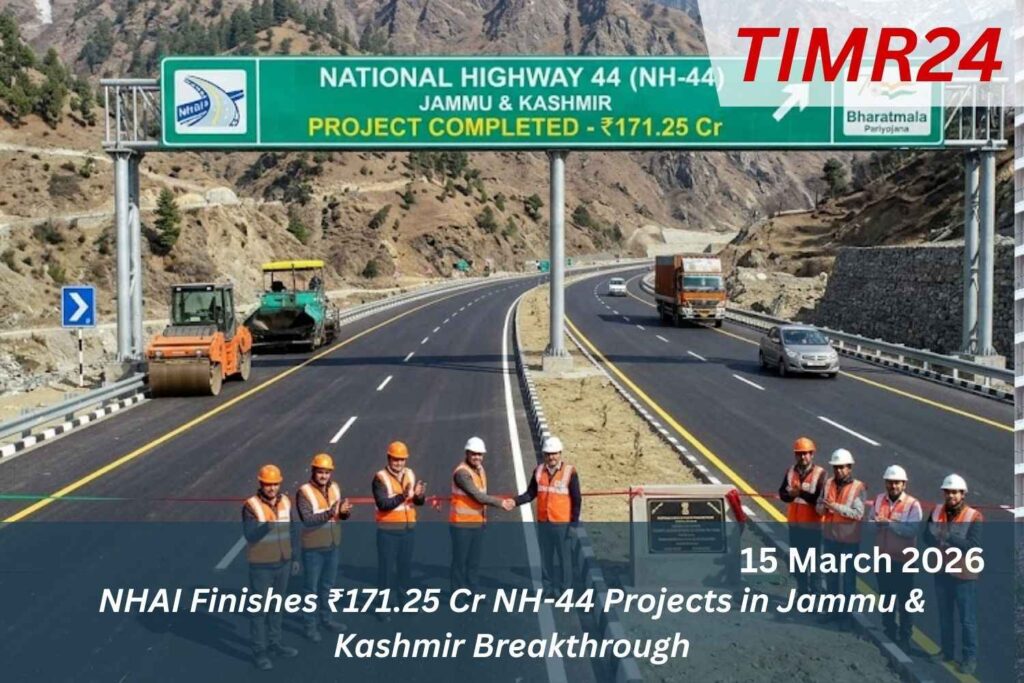
National Highways Authority of India has completed safety and commuter facility projects on National Highway 44 in Jammu and Kashmir, costing approximately Rs 171.25 crore. Key works include blackspot rectification, the construction of a light vehicle underpass, and modern wayside amenities at identified accident-prone zones. These improvements enhance road safety, traffic flow, and provide necessary amenities for commuters. NH-44 serves as a crucial connection between the Jammu region and the Kashmir Valley, with these enhancements aiming to facilitate safer transit for passengers and freight India’s highway infrastructure continues to expand.
Jammu & Kashmir These projects Aim
Rapidly, and the latest milestone comes from the National Highways Authority of India, which has successfully completed safety and wayside amenity projects worth ₹171.25 crore along the important stretch of National Highway 44 in Jammu & Kashmir. These projects aim to significantly improve road safety, driver convenience, and overall travel experience on one of the most strategically important highways in the country NH-44 is the longest national highway in India and serves as a crucial north–south corridor connecting multiple states and regions. In Jammu & Kashmir, the highway plays a vital role in connecting major cities, facilitating tourism, strengthening.
Logistics networks, and improving accessibility for remote regions. Recognizing the importance of this corridor, the National Highways Authority of India has implemented several safety-focused improvements and traveler facilities along this stretch. The newly completed projects include modern safety infrastructure, improved road engineering features, and the development of well-equipped wayside amenities for passengers and drivers The ₹171.25 crore investment highlights the central government’s commitment to strengthening transportation infrastructure in Jammu & Kashmir. Over the past few years, the region has witnessed a significant push toward modern road networks, tunnels.
NH-44, Commuters Can Expect
Bridges, and highway upgrades to improve connectivity and boost economic development. With these new developments along NH-44, commuters can expect a safer and more comfortable journey. Safety enhancements include improved signage systems, crash barriers, lane markings, reflective indicators, and better lighting in key areas. Such improvements are particularly important in mountainous regions like Jammu & Kashmir, where weather conditions and terrain often create challenging driving situations Another major component of the project is the development of modern wayside amenities, which provide essential services for travelers.
These facilities typically include rest areas, clean washrooms, food courts, parking spaces, fuel stations, and emergency medical support. The aim is to ensure that drivers traveling long distances have access to comfortable and safe stopping points. Wayside amenities are becoming an increasingly important part of highway development across India because they not only improve traveler convenience but also encourage tourism and local economic activity. Small businesses, restaurants, and service providers often benefit from the increased traffic generated by these facilities The completion of these projects also aligns with the Government of India’s broader infrastructure vision under.
Modern Highway Facilities To Reduce Accidents
Initiatives promoted by the Ministry of Road Transport and Highways. Over the past decade, the ministry has prioritized road safety and modern highway facilities to reduce accidents and improve transport efficiency. India has historically faced high accident rates on highways, and safety improvements such as better signage, dedicated stopping areas, and modern road engineering are crucial to addressing this issue. By integrating safety infrastructure with traveler amenities, the NH-44 upgrades in Jammu & Kashmir represent a holistic approach to highway development In addition to improving safety and convenience, these developments also support.
The economic growth of Jammu & Kashmir. Improved highways reduce travel time and logistics costs, making it easier for goods and services to move across regions. Local industries, tourism operators, and agricultural producers benefit from faster transportation and better connectivity to markets across the country. NH-44 is especially important for the tourism sector because it connects travelers to major destinations in Jammu & Kashmir, including pilgrimage routes, scenic valleys, and cultural landmarks The infrastructure improvements also strengthen strategic connectivity in the region. Jammu & Kashmir is located in a sensitive.
Regional Stability By Investing In Safer
Geographical area, and efficient road networks play an important role in ensuring mobility and access for both civilian and administrative needs. Enhanced highway infrastructure supports emergency services, disaster response operations, and overall regional stability. By (India) investing in safer and more efficient roads, the government is not only improving daily transportation but also reinforcing long-term regional development The completion of the ₹171.25 crore projects demonstrates the continuous progress being made in India’s highway modernization efforts. Across the country, several major road development initiatives are underway to upgrade.
National highways, expand expressway networks, and introduce smart infrastructure solutions. NHAI has been actively working on projects that integrate technology, sustainability, and safety into road development. From digital monitoring systems to green highway initiatives, the organization is increasingly adopting innovative approaches to build future-ready infrastructure Another important aspect of the NH-44 projects is the emphasis on improving traveler experience. Highways are no longer viewed solely as transportation corridors but as integrated mobility ecosystems that provide safety, comfort, and services. The addition of wayside amenities ensures.
Projects Reflect The Government’s Vision
That drivers have access to rest and refreshment facilities during long journeys, which can significantly reduce fatigue-related accidents. Well-designed rest stops also encourage better driving practices by allowing drivers to take regular breaks these projects reflect the government’s vision of transforming India’s road network into a world-class infrastructure system. Over the past few years, the country has seen the launch of several large highway programs such as Bharatmala and expressway development initiatives aimed at improving connectivity across regions. With continued investments in infrastructure, India is steadily moving toward building faster, safer, and more reliable,
Transportation networks that support economic growth and social development As highway infrastructure continues to evolve, the successful completion of the (India) NH-44 safety and wayside projects in Jammu & Kashmir serves as another important milestone. The investment not only enhances travel safety and convenience but also strengthens regional connectivity and economic potential. With modern amenities, improved safety features, and better road engineering, commuters traveling along this vital corridor can look forward to a smoother and more comfortable journey.
Q1. What project has NHAI completed on NH-44 in Jammu & Kashmir?
NHAI has completed safety and wayside amenity projects worth ₹171.25 crore to improve highway safety and traveler convenience.
Q2. Why is NH-44 important for Jammu & Kashmir?
NH-44 is a major highway that connects the region with other parts of India and supports tourism, logistics, and regional mobility.
Q3. What facilities are included in wayside amenities?
Wayside amenities include rest areas, washrooms, parking, food courts, fuel stations, and emergency services.
Q4. How will the project improve road safety?
The project includes improved signage, crash barriers, lane markings, lighting, and other safety infrastructure.
Q5. Which authority implemented the project?
The project was implemented by the National Highways Authority of India under the Ministry of Road Transport and Highways.