





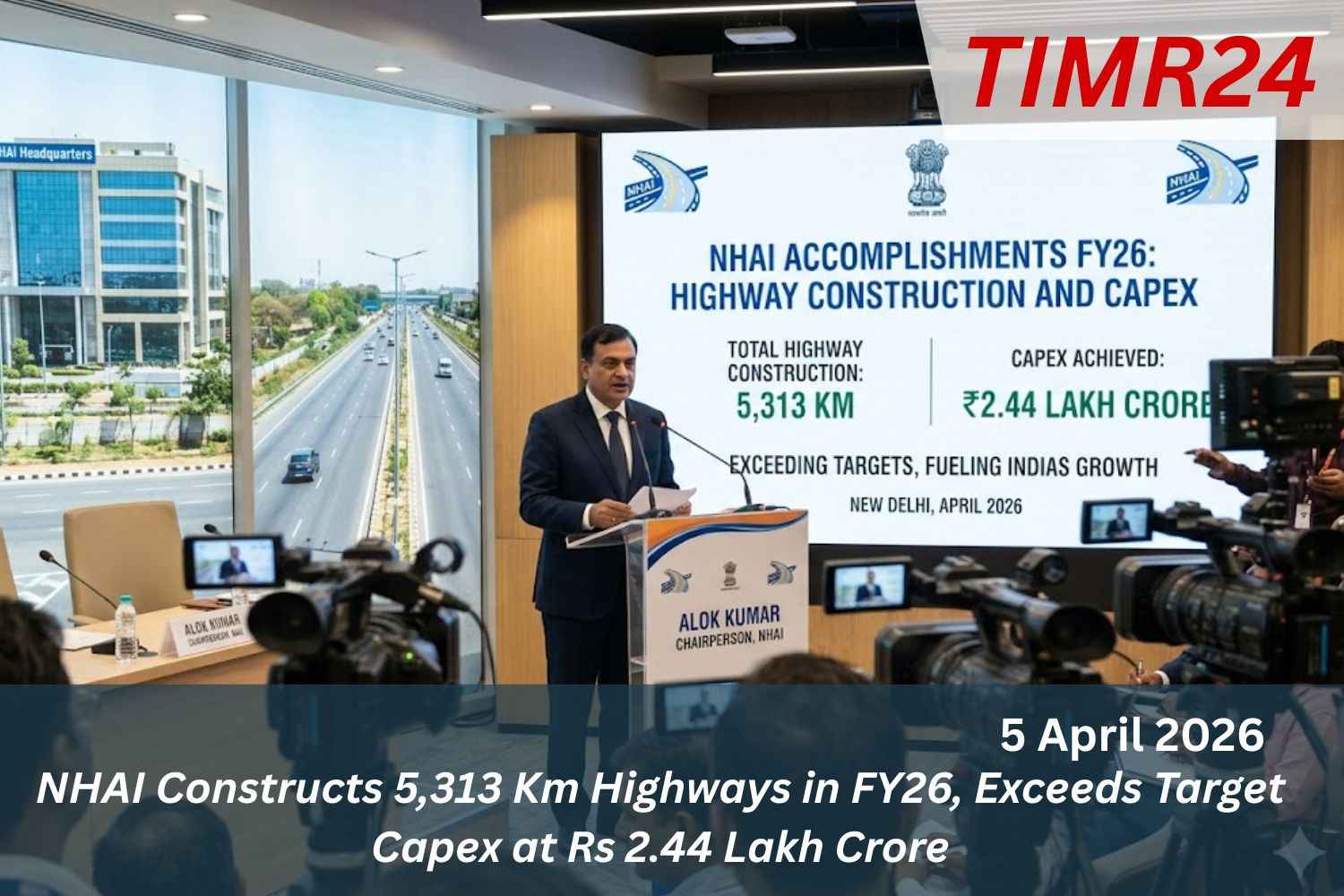











National Highways Authority of India (NHAI) constructed 5,313 km of National Highways in FY 2025–26, exceeding its target of 4,640 km by 15%. The authority’s capital expenditure reached Rs 2,44,362 crore, surpassing the government’s budgetary support of Rs 2,38,384 crore by 2.5%. An additional Rs 5,978 crore was sourced from NHAI’s resources, reflecting its commitment to enhance highway development and provide quality road infrastructure for economic growth The National Highways Authority of India (NHAI) has once again demonstrated its execution strength by constructing 5,313 kilometers of highways in FY26, exceeding its planned targets.
Dual Accomplishment Reflects Government’s
This achievement is not just a numerical milestone but a strong indicator of India’s accelerating infrastructure development. Along with the record construction, NHAI has also surpassed its capital expenditure target, reaching an impressive ₹2.44 lakh crore. This dual accomplishment reflects the government’s continued commitment to improving road infrastructure and strengthening the backbone of the Indian economy India’s highway network plays a crucial role in supporting trade, logistics, and mobility. Over the years, the focus has shifted from merely building roads to developing high-quality, access-controlled expressways and economic corridors.
In this context, NHAI’s performance in FY26 highlights a transition toward faster, safer, and more efficient transportation systems. The increase in construction pace also aligns with national initiatives aimed at reducing logistics costs and improving supply chain efficiency One of the major factors behind this success is the adoption of advanced construction technologies and better project management practices. NHAI has increasingly relied on digital tools, data-driven monitoring, and streamlined approval processes to ensure timely completion of projects. This approach has minimized delays and enhanced transparency in execution.
Existing Roads, And Development Of Associated
The integration of modern techniques has also helped maintain quality standards while accelerating construction speed The significant capital expenditure of ₹2.44 lakh crore reflects the scale at which infrastructure development is being undertaken. This investment is not limited to building highways but also includes land acquisition, modernization of existing roads, and development of associated infrastructure such as bridges, tunnels, and logistics parks. The increased spending is expected to have a multiplier effect on the economy, generating employment opportunities and boosting related sectors like cement, steel, and construction.
Improved highway connectivity has a direct impact on economic growth. Faster and smoother transportation reduces travel time, lowers fuel consumption, and enhances the overall efficiency of logistics operations. This is particularly beneficial for industries that rely heavily on transportation, such as manufacturing, agriculture, and e-commerce. With better connectivity, businesses can expand their reach to new markets, leading to increased economic activity across regions Another important aspect of NHAI’s performance is its contribution to regional development. By connecting remote and underdeveloped areas with major cities and industrial hubs.
Government’s Vision Of Inclusive Growth
Highways play a key role in reducing regional disparities. Improved connectivity enables better access to education, healthcare, and employment opportunities, thereby enhancing the quality of life for people in these regions. This aligns with the government’s vision of inclusive growth and balanced regional development The expansion of highways also supports key national initiatives such as the PM Gati Shakti Master Plan, which aims to create a seamless multi-modal transport network. By integrating highways with railways, ports, and airports, the government is working toward a more efficient and coordinated logistics system. NHAI’s achievements in FY26 contribute.
Significantly to this vision, laying the foundation for a more connected and competitive economy In addition to economic benefits, highway development also plays a crucial role in improving road safety. Modern highways are designed with better safety features, including proper lane markings, crash barriers, and intelligent traffic management systems. These improvements help reduce accidents and ensure safer travel for commuters. NHAI has also been focusing on awareness campaigns and enforcement measures to further enhance road safety standards Environmental sustainability is another area where NHAI has been making efforts.
Infrastructure Development With Environmental
The authority has been incorporating eco-friendly practices such as the use of recycled materials, plantation drives along highways, and measures to reduce carbon emissions. These initiatives are aimed at balancing infrastructure development with environmental conservation, ensuring long-term sustainability From an investment perspective, NHAI’s strong performance sends a positive signal to both domestic and international investors. The consistent execution of large-scale projects and the ability to exceed targets enhance confidence in India’s infrastructure sector. This is likely to attract more private participation through models such as public-private partnerships (PPP), further accelerating development.
For the real estate sector, improved highway connectivity opens up new opportunities for growth. Areas located near major highways and expressways often (India) witness increased demand for residential, commercial, and industrial developments. This leads to the emergence of new growth corridors and urban expansion. Developers and investors closely monitor infrastructure developments to identify potential investment hotspots.
- National Highways Authority of India (NHAI) Official Website
- Ministry of Road Transport and Highways (MoRTH)
- Press Information Bureau (PIB) India
India’s Infrastructure Sector NHAI
These platforms provide authentic data, policy updates, and project announcements related to India’s infrastructure sector NHAI is expected to maintain its growth momentum by focusing on new projects and completing ongoing ones. The emphasis will likely remain on building high-speed corridors, improving existing infrastructure, and adopting innovative technologies. As India continues its journey toward becoming a $5 trillion economy, infrastructure development will play a central role, and NHAI will remain a key driver of this transformation.
Construction of 5,313 km of highways and the achievement of ₹2.44 lakh crore capex in FY26 mark a significant milestone for NHAI and India’s infrastructure sector. This accomplishment not only reflects efficient execution but also highlights the broader vision of (India) creating a modern, connected, and sustainable transport network. With continued focus and investment, India is well on its way to building a world-class infrastructure system that supports long-term economic growth and development.
Q1. How many highways did NHAI construct in FY26?
NHAI constructed 5,313 km of highways in FY26.
Q2. What was the total capex achieved?
The authority achieved ₹2.44 lakh crore in capital expenditure.
Q3. Why is this achievement important?
It boosts connectivity, economic growth, and logistics efficiency.
Q4. How does highway development impact real estate?
It increases demand and property value near highways and corridors.
Q5. What initiatives support this growth?
Programs like PM Gati Shakti and infrastructure investments.