
















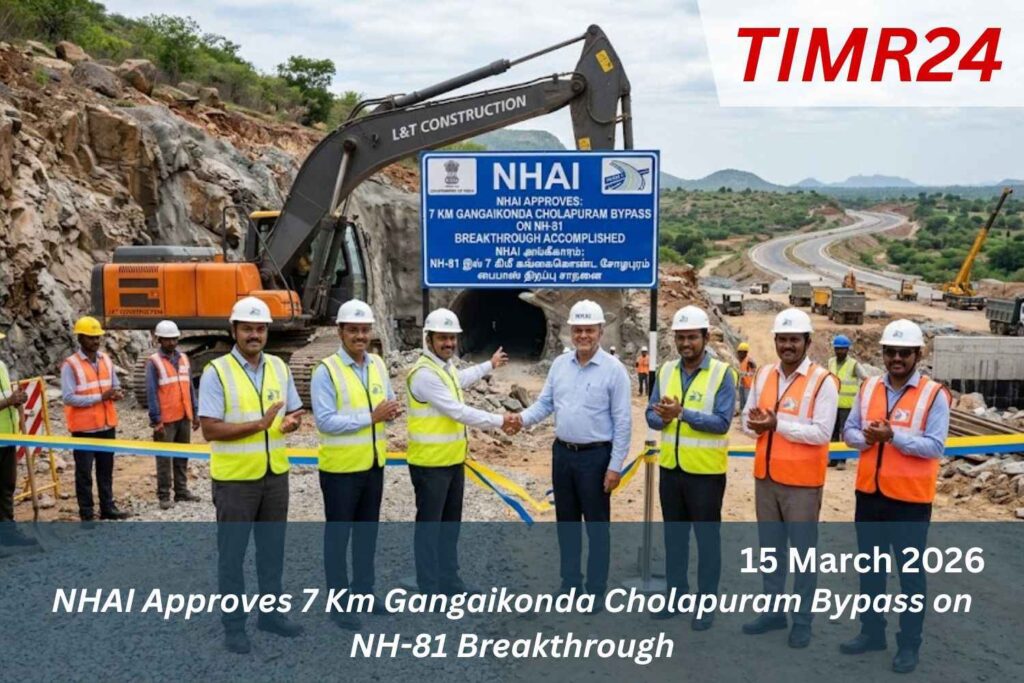
National Highways Authority of India awarded a contract for a 7 km two-lane greenfield bypass at Gangaikonda Cholapuram along NH-81 in Tamil Nadu, with the foundation stone laid by Prime Minister Narendra Modi. The project includes 3.47 km of service roads, two minor bridges, two VUPs, three LVUPs, and eight box culverts. This bypass aims to alleviate traffic congestion near the UNESCO-listed Brihadeeswara Temple, enhancing safety for pilgrims, reducing air pollution, and protecting the temple’s inscriptions. Additionally, it will shorten travel times to other regional temples and bolster the local economy, providing a better travel experience for national highway users.
India’s highway infrastructure continues to evolve rapidly as the government focuses on improving connectivity, logistics efficiency, and regional development. A recent infrastructure decision highlights this commitment, as the National Highways Authority of India (NHAI) has approved a 7-kilometre greenfield bypass around Gangaikonda Cholapuram on the important National Highway 81 corridor in Tamil Nadu The project has been designed to reduce traffic congestion, improve safety, and enhance regional transportation efficiency. Gangaikonda Cholapuram is a historic town known for its rich Chola-era heritage and temple architecture, which attracts tourists from across India and around the world.
However, increasing highway traffic passing through the town has created congestion and logistical challenges for both local residents and long-distance travellers With the approval of this bypass project, authorities aim to ensure smoother vehicle movement while protecting the town’s cultural and historical environment.
Importance of the NH-81 Corridor
The National Highway 81 is a crucial highway that connects key districts and economic centers across Tamil Nadu. The highway plays a vital role in transporting goods, agricultural produce, and passengers across the region. Over the years, traffic volume on the corridor has increased due to economic growth, industrial expansion, and tourism activity This rise in traffic has particularly affected smaller towns located along the highway route, including Gangaikonda Cholapuram. Heavy vehicles such as trucks and inter-state buses passing through narrow town roads often slow down traffic movement and create safety concerns for pedestrians and local commuters.
The proposed bypass will allow long-distance vehicles to avoid the town center, enabling faster and more efficient travel. By diverting through-traffic away from urban areas, the project is expected to significantly reduce congestion and improve travel reliability for highway users.
Project Overview And Alignment
According to officials from the National Highways Authority of India, the bypass will span approximately 7 kilometres and will follow a greenfield alignment around the town. Greenfield infrastructure projects involve constructing entirely new road corridors rather than expanding existing roads.
The new bypass will connect with the existing highway at designated junction points, ensuring seamless integration with the broader national highway network. The design will include modern highway engineering features such as safe intersections, improved drainage systems, and better road geometry to ensure efficient traffic movement By creating a dedicated route for through-traffic, the bypass will reduce pressure on the existing roads within Gangaikonda Cholapuram. This will help improve the overall transportation environment for both residents and visitors.
Benefits For Local Communities
The bypass project is expected to bring significant benefits to local communities living in and around Gangaikonda Cholapuram. One of the most immediate advantages will be the reduction in heavy vehicle traffic passing through the town Currently, large trucks and commercial vehicles often pass through residential areas and near the historic temple complex. This creates noise pollution, air pollution, and safety risks for pedestrians and local commuters. Once the bypass becomes operational, most long-distance traffic will shift to the new alignment, improving the quality of life for residents.
Reduced congestion will also make local travel easier for residents who rely on the town’s internal road network for daily activities such as commuting to work, school, and markets.
Boost To Tourism And Heritage Protection
Gangaikonda Cholapuram is home to one of the most remarkable monuments of the Chola period, the Brihadisvara Temple, Gangaikonda Cholapuram. The temple is part of the Great Living Chola Temples heritage group and attracts historians, architecture enthusiasts, and tourists from around the world. Heavy traffic passing through the town can affect the visitor experience and pose potential risks to heritage structures. By diverting through-traffic outside the town, the bypass project will help protect the cultural environment and improve accessibility for tourists.
Better road connectivity will also make it easier for visitors to travel between important heritage destinations across Tamil Nadu. Improved highway infrastructure often leads to an increase in tourism activity, which can benefit local businesses such as hotels, restaurants, and handicraft markets.
Economic And Logistics Advantages
Efficient transportation infrastructure plays a crucial role in economic growth. Highways are the backbone of logistics and supply chains, especially in states like Tamil Nadu that have strong manufacturing and agricultural sectors The bypass on NH-81 will improve freight movement by reducing travel delays caused by congestion in urban areas. Commercial vehicles transporting goods across the state will benefit from smoother traffic flow and reduced travel time.
Lower travel time also means reduced fuel consumption, which contributes to lower logistics costs. Over time, these improvements can enhance the competitiveness of regional industries and encourage new investments in surrounding districts In addition, improved connectivity helps integrate smaller towns into larger economic networks. Businesses in nearby areas will gain easier access to major markets and transportation hubs.
Government’s Infrastructure Vision
The approval of this bypass aligns with the broader infrastructure development strategy of the Government of India. In recent years, the government has launched several highway modernization initiatives aimed at strengthening transportation corridors across the country Projects implemented by the National Highways Authority of India focus on building expressways, expanding existing highways, and constructing bypasses around urban areas. These initiatives aim to reduce congestion, improve safety, and support economic development.
By prioritizing infrastructure development, the government aims to create a more efficient logistics ecosystem that supports industrial growth, tourism expansion, and regional connectivity.
Environmental And Safety Considerations
Modern highway projects also emphasize environmental sustainability and road safety. During the planning phase of the bypass, environmental assessments are typically conducted to minimize the impact on surrounding ecosystems The design of the road will likely include safety features such as proper lane markings, reflective signage, and adequate lighting in critical areas. Drainage systems will also be incorporated to ensure that the highway remains safe during heavy rainfall.
Road safety improvements are especially important in (India) areas where highways intersect with local roads and rural communities. Properly designed bypasses reduce accident risks by separating high-speed highway traffic from slower local traffic.
Future Impact on Regional Connectivity
Once completed, the Gangaikonda Cholapuram bypass will become an important component of the regional highway network. The project will improve connectivity between key districts and support smoother travel across the state Infrastructure improvements often trigger further development in surrounding areas. Over time, the improved highway corridor may encourage commercial establishments, logistics hubs, and tourism services to develop near the bypass route.
These developments can create employment (India) opportunities for local communities and strengthen regional economic activity.
Conclusion
The approval of the 7-kilometre bypass around Gangaikonda Cholapuram marks another step forward in India’s highway modernization efforts. By diverting through-traffic away from the town, the project will reduce congestion, improve road safety, and protect the area’s cultural heritage For travellers and logistics operators using NH-81, the bypass promises faster and more efficient journeys. For local residents, it will bring a quieter and safer urban environment. At the same time, improved infrastructure will enhance tourism potential and support economic development in the surrounding region.
As the National Highways Authority of India continues to implement strategic infrastructure projects across the country, initiatives like this bypass demonstrate how targeted highway development can benefit both local communities and the national transportation network.
Q1. What is the Gangaikonda Cholapuram bypass project?
It is a 7-kilometre greenfield bypass approved by the National Highways Authority of India to divert highway traffic away from the town.
Q2. Which highway will the bypass be part of?
The project is part of National Highway 81 in Tamil Nadu.
Q3. Why is the bypass being constructed?
The bypass aims to reduce congestion, improve road safety, and protect the historic town area from heavy traffic.
Q4. How will the project benefit tourism?
By reducing traffic inside the town, the project will improve access to heritage sites such as the Brihadisvara Temple, Gangaikonda Cholapuram.
Q5. What economic benefits will the bypass provide?
The project will improve logistics efficiency, reduce travel time, and support regional economic growth.