














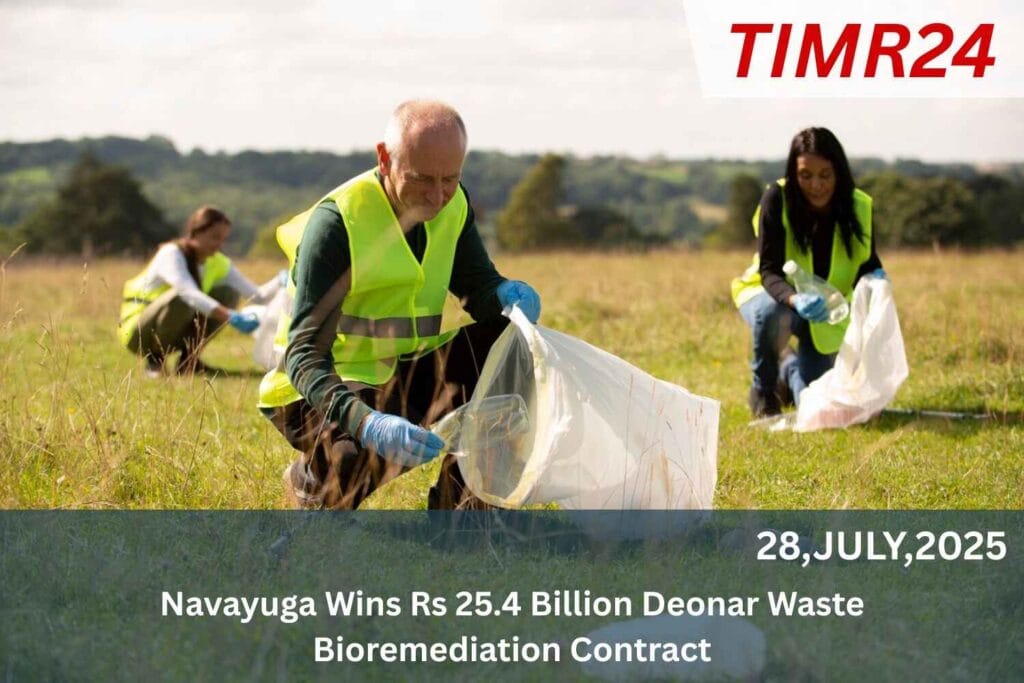
Hyderabad-based Navayuga Engineering Company Ltd. has won a contract to bioremediate 18.5 million tonnes of legacy waste at the Deonar dumping ground in India. The project will reclaim 110 hectares of land and allocate it for residential construction under the Dharavi Redevelopment Project (DRP), a collaboration between the Adani Group and the Maharashtra government’s Slum Rehabilitation Authority. The contract spans three years and includes allowances for mobilization and monsoon delays. The project is part of the Adani-led DRP, which aims to provide rental housing for residents ineligible for free housing within Dharavi.
Navayuga Deccan Ventures Ltd (NDVL) has been awarded a ₹25.4 billion contract for the bioremediation of Mumbai’s Deonar landfill, one of Asia’s oldest and most toxic dumping grounds. This milestone initiative, led by the Municipal Corporation of Greater Mumbai (MCGM), aims to reclaim over 120 acres of land filled with over 16 million tonnes of legacy waste. The move comes in line with India’s broader waste management reforms. (India’s Solid Waste Management Rules, 2016)
Introduction to the Contract Award
Navayuga Deccan Ventures Ltd (NDVL), a leading infrastructure contractor, has secured a major Rs 25.4 billion contract to rehabilitate the Deonar dumping ground, one of Mumbai’s largest and oldest landfills. This prestigious contract marks a significant escalation in the government’s efforts to tackle urban waste management challenges. The project includes comprehensive bioremediation and waste-to-energy components, with an expected completion timeline spanning several years…(Indian Projects)
Scope and Objectives of the Bioremediation Project
Under the agreement, Navayuga will execute state-of-the-art bioremediation techniques to stabilize and decompose solid waste through microbial and aerobic methods. The contract also calls for the installation of gas collection systems and possibly waste-to-energy initiatives to harness methane, aiming to reduce greenhouse gas emissions significantly. Overall goals include reducing leachate contamination, improving air quality, and making the site safe for future redevelopment or green usage.
Key Stakeholders and Government Collaboration
This contract was awarded by the Maharashtra government, in collaboration with the Municipal Corporation of Greater Mumbai (MCGM) and environmental agencies. Navayuga has partnered with technology suppliers, environmental consulting firms, and local contractors to meet regulatory and technical requirements. The project aligns with national sustainability goals under the Swachh Bharat Mission and India’s climate resilience strategies.
Environmental and Social Impact
The Deonar site has long been a source of health and environmental concern for nearby communities, with persistent air pollution and leachate issues. Navayuga’s bioremediation process aims to stabilize the waste, reduce odor, and control methane emissions — positively impacting local residents’ quality of life. Further, waste-to-energy options could generate renewable power, contributing to energy security. Social outreach plans include community engagement, employment opportunities, and environmental awareness initiatives.
Technological Methods Employed
Navayuga will deploy a combination of in-situ and ex-situ bioremediation. In-situ biodegradation involves bio-augmentation and aeration injected directly into waste layers, while ex-situ techniques will treat excavated waste in controlled biocells or composting sites. Gas extraction systems will capture methane for flaring or energy conversion. Continuous environmental monitoring—using sensors for temperature, gas composition, groundwater quality—will guide adaptive management.
Project Timeline and Milestones
The contract spans several phases over an estimated 5‑year timeline. Initial tasks include site surveys, environmental baseline studies, and pilot remediation plots. Full-scale treatment and gas capture systems installation are expected in subsequent phases, followed by potential waste-to-energy commissioning. Regular monitoring, reporting, and regulatory compliance are integral throughout.
Challenges and Risk Mitigation
Managing a decades-old dumping ground presents challenges such as unpredictable gas emissions, complex legacy waste composition, and monsoon-season groundwater interference. Navayuga plans to mitigate these risks through thorough site characterization, phased execution, advanced monitoring, and contingency protocols. Stakeholder coordination, community outreach, and adherence to environmental norms are built into the project plan.
Strategic Outlook and Future Implications
Addressing Deonar’s environmental burden through bioremediation and possible energy recovery not only resolves long-standing public health concerns but also creates a model for managing other Indian megacity landfills. Successful execution could encourage similar contracts in Chennai, Delhi, and Kolkata, shaping future policy on urban waste infrastructure. Navayuga contract win elevates its position in urban environmental engineering and signals increased investor interest in clean‑tech infrastructure.
Q1. What is the Deonar Waste Bioremediation Project?
It’s a large-scale initiative to clean up Mumbai’s Deonar landfill using eco-friendly techniques like bioremediation and waste-to-energy solutions.
Q2. Who has been awarded the contract for this project?
Navayuga Deccan Ventures Ltd (NDVL) secured the ₹25.4 billion contract from the Municipal Corporation of Greater Mumbai.
Q3. What is the main goal of the project?
To safely treat and remove over 16 million tonnes of legacy waste, reduce pollution, and reclaim land for future use.
Q4. What technologies will be used in this project?
Navayuga will use in-situ and ex-situ bioremediation, gas collection systems, and advanced waste segregation methods.
Q5. How long will the project take to complete?
The project is planned in multiple phases and is expected to take approximately five years.